Who is involved in the H2Map-Educate project?
Project leader: Prof. Dr Michael Sterner
Research assistants: Anton Achhammer, Alexander Meisinger, Leon Schumm
What is the title of the research project?
Full title of the proposal: Hydrogen Maps and Hydrogen Education to support intercontinental collaboration and education in the hydrogen industry (H2Map-Educate)
What is your research project about?
The H2Map-Educate project aims to support the hydrogen economy in Namibia, South Africa and Turkey by combining technological innovation with academic capacity building. At the heart of the project is the development of a modular, open-source web application for mapping hydrogen potential, infrastructure and demand. In addition, a ‘Learning Factory’ is being established on the NUST campus in Namibia, offering physical and digital training environments for vocational and academic education. The integration of sustainability indicators will also enable a comprehensive analysis of socio-ecological risks.
What excites you about the project?
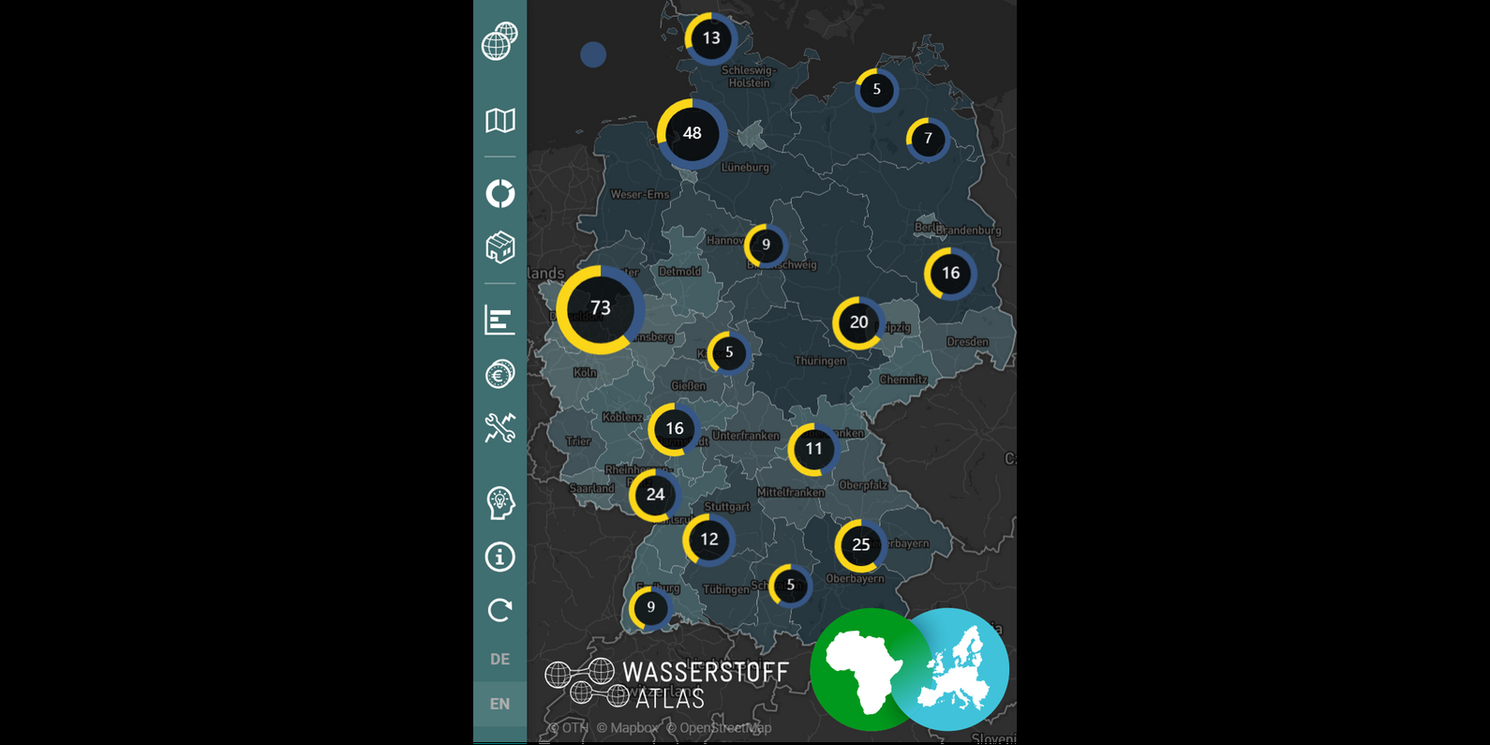
I am particularly inspired by the transdisciplinary approach, which adapts the tried-and-tested methods of FENES’s ‘Hydrogen Atlas of Germany’ to the African context, thereby enabling a direct transfer of knowledge. I am fascinated by the combination of data modelling with concrete, local value creation and on-site training. A standout aspect is the explicit aim of promoting equal opportunities by including historically disadvantaged groups and targeting a female participation rate of at least 40 per cent. Furthermore, collaboration within such a diverse international consortium, which brings together academia, industry and local stakeholders, is a crucial lever for a just global energy transition.
How can insights from the project be applied in practice?
The web app developed serves as a transparent basis for decision-making for investors, research institutions and policy-makers in the expansion of the hydrogen economy. By incorporating sustainability analyses – such as water footprint calculations – decision-makers can identify and avoid local resource conflicts at an early stage. The ‘Learning Factory’ at NUST uses accredited curricula to specifically prepare the local population for the hydrogen industry’s labour market, which directly boosts employment and local value creation. Finally, through close collaboration with industry partners and the establishment of a network, directly implementable guidelines and policy recommendations for the hydrogen sector are being developed.
Answers from Anton Achhammer, OTH Regensburg
You can find an overview of OTH Regensburg’s current funded projects on our website.