Who is involved in the P2X-III project?
Project leader: Prof. Dr Michael Sterner
Research assistants: Michael Heberl, Daniel Rank
What is the title of the research project?
Research, validation and implementation of ‘Power-to-X’ concepts – sub-project: site analysis and assessment (P2X-III)
What is your research project about?
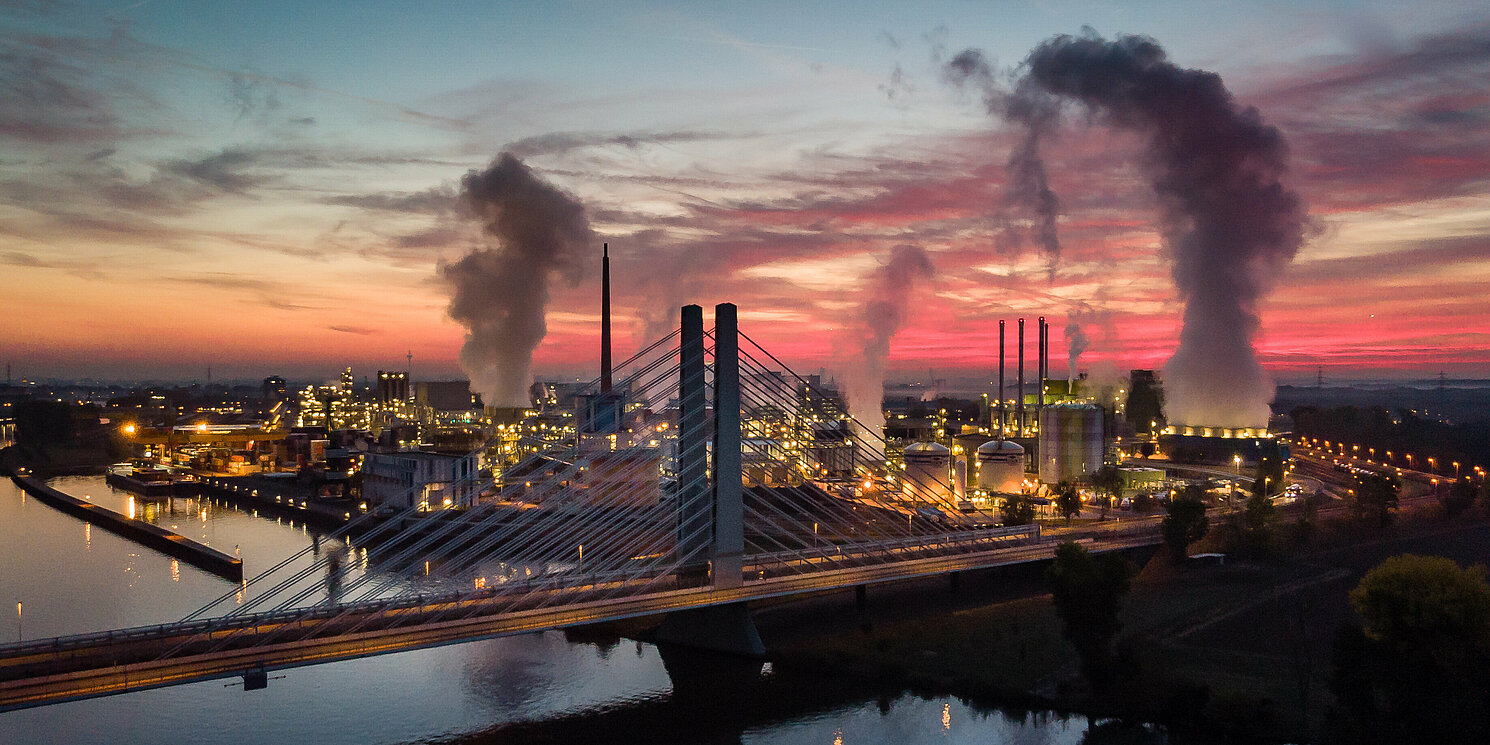
The P2X Phase III project investigates how Power-to-X technologies can be used to store renewable energy and produce climate-friendly products. The focus is on the P2Fuels demonstration project, in which synthetic crude oil is to be processed into standard-compliant e-kerosene at the Höchst Industrial Park. The project partners are analysing the technical, environmental, economic and regulatory frameworks of various national and international sites, as well as different value chains. The aim is to draw well-founded conclusions regarding emissions, costs and infrastructure requirements, thereby supporting the industrial implementation of sustainable PtX products.
What excites you about the project?
What I find particularly exciting about the project is the opportunity to play an active role in the development of climate-friendly fuels and, thereby, in the energy transition. It is fascinating to see scientific research linked to a concrete industrial application in the Power-to-X sector. Furthermore, the project offers insights into technical, economic and environmental issues across the entire value chain. The international perspective and the analysis of different locations make the work particularly varied and forward-looking. Finally, it is motivating to work on solutions that can make an important contribution to the decarbonisation of aviation.
How can findings from the project be applied in practice?
The project’s results can be applied in the aviation sector in particular to provide sustainable synthetic fuels (e-kerosene) and reduce CO₂ emissions. Furthermore, they provide a valuable basis for the planning and operation of future Power-to-X plants. The insights gained regarding economic viability, infrastructure and emissions balances can assist companies and policy-makers in making investment and regulatory decisions. Furthermore, the concepts developed can be applied to other sectors, such as the chemical industry or heavy goods transport. In this way, the project results contribute to the wider use of renewable energy and the decarbonisation of various industrial sectors.
Answers from Michael Heberl, OTH Regensburg
On our website, you will find an overview of OTH Regensburg’s current funded projects.