Research Areas

  • The lab’s work enables predictive and interpretable computational models for medical applications, complementing data-driven approaches with models grounded in first principles, verification, and experimental validation.

    Key research directions include:

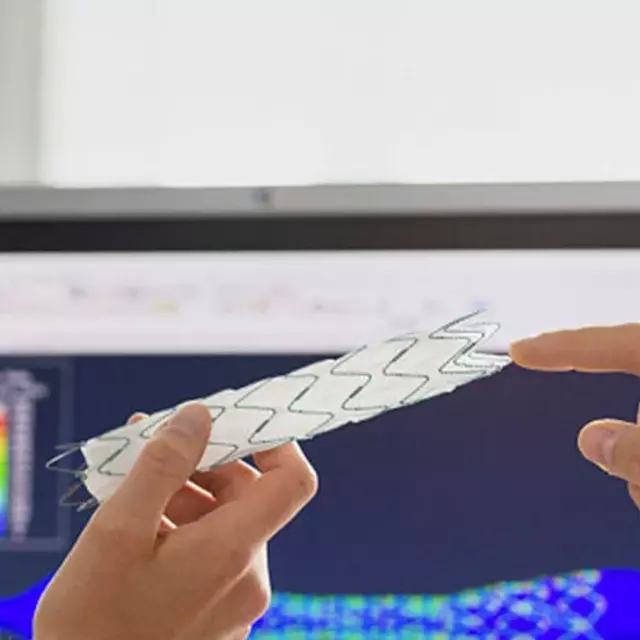
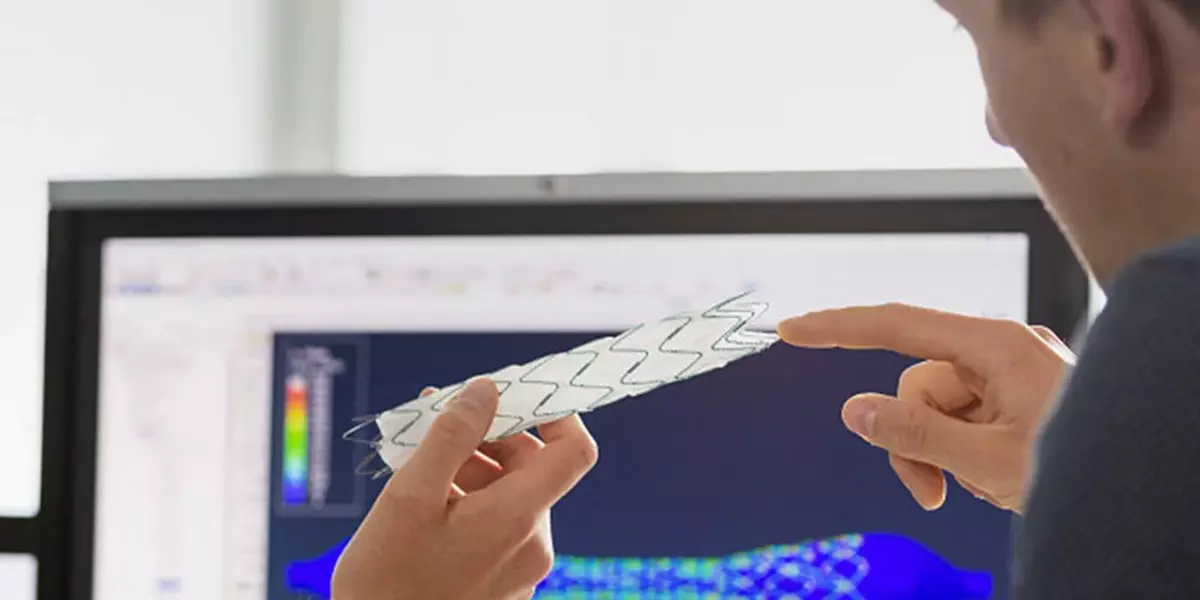
    • Cardiovascular mechanics and medical devices: computational and experimentally informed analysis of patient- and geometry-specific vascular implants, including stents, with explicit consideration of tissue–structure interaction, manufacturing-induced variability, and mechanical performance under physiological loading.
    • Mechanobiology and disease modeling: multiscale coupling of tissue mechanics with biological processes to support mechanistic understanding of disease progression and therapy response.
    • Virus and cell mechanics: physics-based inference of mechanical properties from nano-indentation experiments and multiscale simulations, demonstrating how mechanical characterization can inform biological function and response to external physical stimuli.

    These activities position the CMM Lab at the interface of computational mechanics, bioengineering, and digital medicine, spanning women’s health, cardiovascular systems, and mechanobiological processes.
  • The lab combines fracture mechanics, fluid–structure interaction, and experimentally validated numerical methods to support reliable integrity assessment and risk-informed decision making.

    Core research topics include:

    • Pipeline integrity and fracture mechanics: modeling of crack initiation, propagation, and arrest in pressurized pipelines, including advanced fluid–structure interaction (FSI) approaches validated against experimental and full-scale test data.
    • Hydrogen and mixed-gas transport: integrity assessment of pipeline steels, welded joints, and components exposed to hydrogen-containing media, supporting safe and reliable infrastructure for the energy transition.
    • Digital twins for monitoring and predictive maintenance: development of digital-twin-based concepts for real-time condition monitoring, anomaly detection, and predictive maintenance of energy networks.

    Through these activities, the CMM Lab contributes to the resilience, safety, and sustainability of critical infrastructure, bridging fundamental mechanics with industrial and regulatory requirements.


Services

    • Validation of design and engineering calculations through experimental testing under operating conditions
    • Mechanical characterization of materials using state-of-the-art high-performance measurement technology
    • Integration with finite element (FE) structural analysis

    Selection of Test Geometries Based on Component Operating Conditions

    • Stress state effects
    • Application of relevant industry standards

    Application-Specific Testing Conditions

    • Mechanical anisotropy
    • Thermal testing conditions
    • Strain rate effects
    • Cyclic loading conditions

    • Modeling and Simulation Capabilities
    • Consideration of nonlinear deformation behavior
    • Crack propagation simulation using continuum damage mechanics models
    • Finite element–based multiphysics simulations
    • Computational fatigue life assessment
    • Topology optimization
    • Mesh generation for incorporating CT data into finite element simulations
    • Development of multiscale modeling approaches for component design

    Model Development

    • Discretization of component geometries
    • Model generation from CT data and derivation of finite element meshes
    • Representation of operating and loading conditions

    Selection of Linear and Nonlinear Material Models

    • Formulation of constitutive material models
    • Thermal effects
    • Strain rate effects and viscosity
    • Mechanical anisotropy
    • Stress-state effects
    • Application of continuum damage mechanics models for ductile and brittle failure

    Computational Fluid Dynamics (CFD)

    • Simulation of fluid-induced loads in pressure vessels and pipeline applications
    • Analysis of complex thermodynamic processes during the decompression of multiphase gases

    Multiphysics Modeling

    • Transient load transfer resulting from dynamic pressure distributions
    • Two-way fluid–structure interaction (FSI)

    Model Parameter Identification

    • Numerical optimization techniques
    • Inverse parameter identification

    Component Design Optimization

    • Parametric optimization
    • Topology optimization

  • Fracture Mechanics Assessment of Components and Welded Structures

    • Determination of material properties: strength and fracture toughness values through standardized laboratory testing
    • Computational assessment to exclude failure scenarios
    • Assessment of existing defects and cracks and their impact on structural integrity

    Fatigue Life Assessment Under Cyclic Operating Conditions

    • Analysis of fatigue behavior (crack growth rates) in the low-cycle fatigue (LCF) and high-cycle fatigue (HCF) regimes
    • Numerical simulation of fatigue behavior

Materials and Engineering Challenges

Materials

  • Steel and aluminum alloys produced using a wide range of manufacturing processes (heavy plate, sheet metal, additive manufacturing, and metal foams)
  • Soils and geomaterials
  • Lean and rich natural gases, CO₂ mixtures, H₂ mixtures, ambient air, and water

Typical Engineering Challenges

  • How can components be designed to fully exploit the properties of the selected material?
  • Which material properties provide reliable information about a component's structural integrity under operating conditions?
  • What is the load-bearing capacity of a component containing an initial crack or an existing flaw/defect?
  • Can topology optimization improve the utilization of a material's properties in component design?

Additional Questions

  • Which laboratory tests and testing conditions are required to parameterize the numerical models?
  • To what level of detail should multiphysics loading scenarios be represented?
  • Which material effects must be taken into account to accurately represent the loading conditions?
  • Which material model is best suited to describe the material behavior for the intended application?

Industries

Manufacturing, design, aortic stents, and coronary stents 

Projects:

  • NewGen-Stent
  • Aortic Gen-i Stent

Concrete and Steel Construction

  • Welded Structures 
  • Pressure Vessel Engineering
  • Pipelines
  • Pressure vessel applications
  • Decompression behavior 

Projekte: Rissfortschritt in Pipelines

  • Crash simulation 
  • Deep drawing 

Prof. Dr.-Ing. Aida Nonn