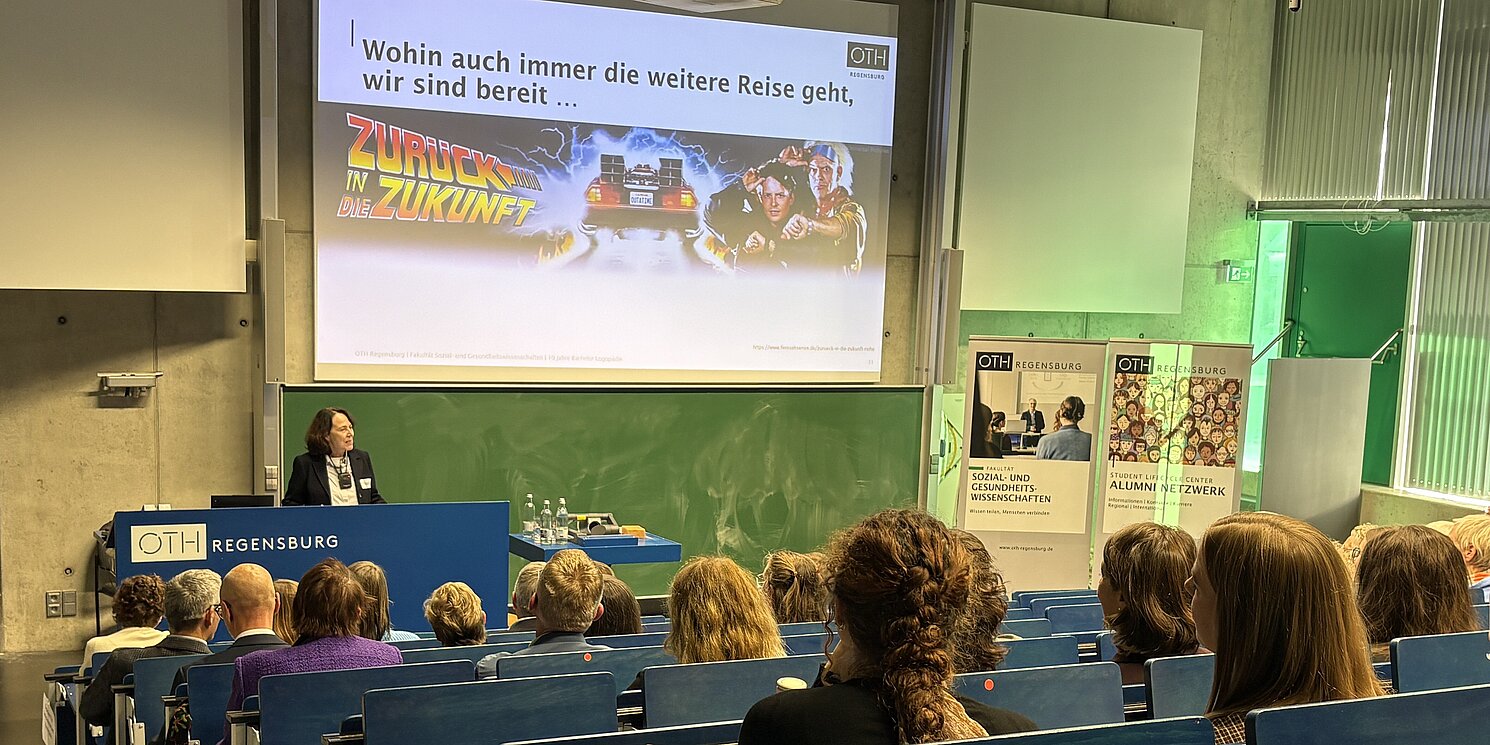
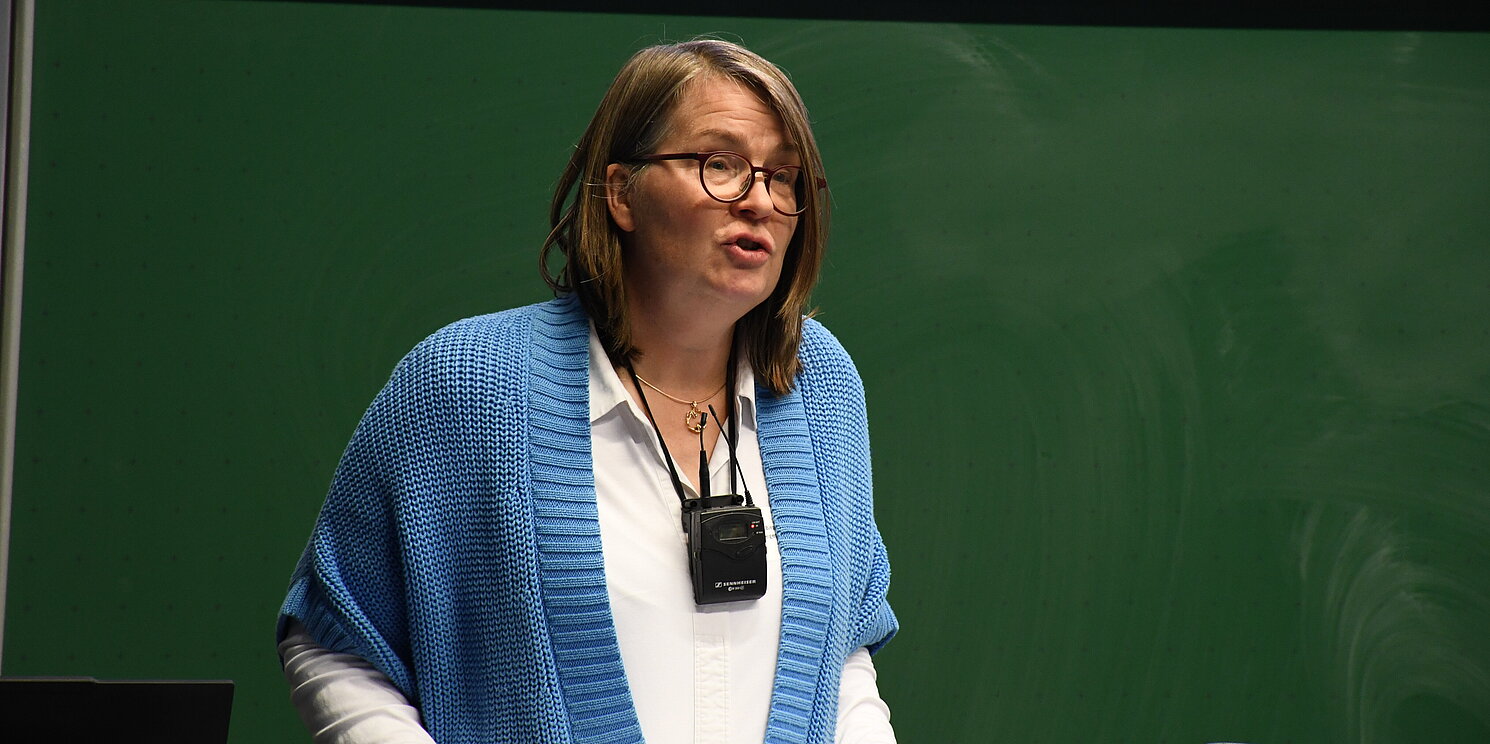
How will people with language, speech or swallowing disorders be treated in 2056? With this question, the event marking the tenth anniversary of the Bachelor’s degree programme in Speech and Language Therapy, held on 22 October 2026 at OTH Regensburg, looked to the future. The focus was on a lecture by Prof. Dr Norina Lauer, who highlighted the potential that artificial intelligence, teletherapy and digital assistance systems could offer for speech and language therapy in the future.
According to her, digital applications could in future enable real-time speech analysis, support therapy regardless of location, or assist people with communication disorders in their everyday lives through AI-supported systems. However, the speech and language therapist would remain indispensable. “The role of the speech and language therapist will change. They will plan, manage and take responsibility for the therapy, whilst digital systems can take on supporting tasks,” explained Prof. Dr Lauer in her presentation.
The future of speech and language therapy: AI as an assistant, with people remaining central
Research into the integration of speech and language therapy and digitalisation is already underway at OTH Regensburg. Among other things, projects were presented on AI-supported assistance for people with aphasia – an acquired speech disorder following brain damage – digital networking services for those affected, and telepresence solutions for the healthcare sector. The shared aim is to improve patients’ quality of life and to integrate evidence-based digital services into healthcare provision.
As well as looking to the future, the anniversary celebrations also focused on the past ten years. The Bachelor’s degree programme in Speech and Language Therapy was established in 2016, followed by the first professorship in Speech and Language Therapy in 2018. OTH Regensburg began the targeted expansion of its health sciences programme as early as 2010 and is now one of Bavaria’s leading universities for health. Health remains one of the university’s key development priorities in its current university development plan. Through its interprofessional study programmes and activities in research and knowledge transfer, OTH Regensburg aims to play an active role in shaping the healthcare of the future.
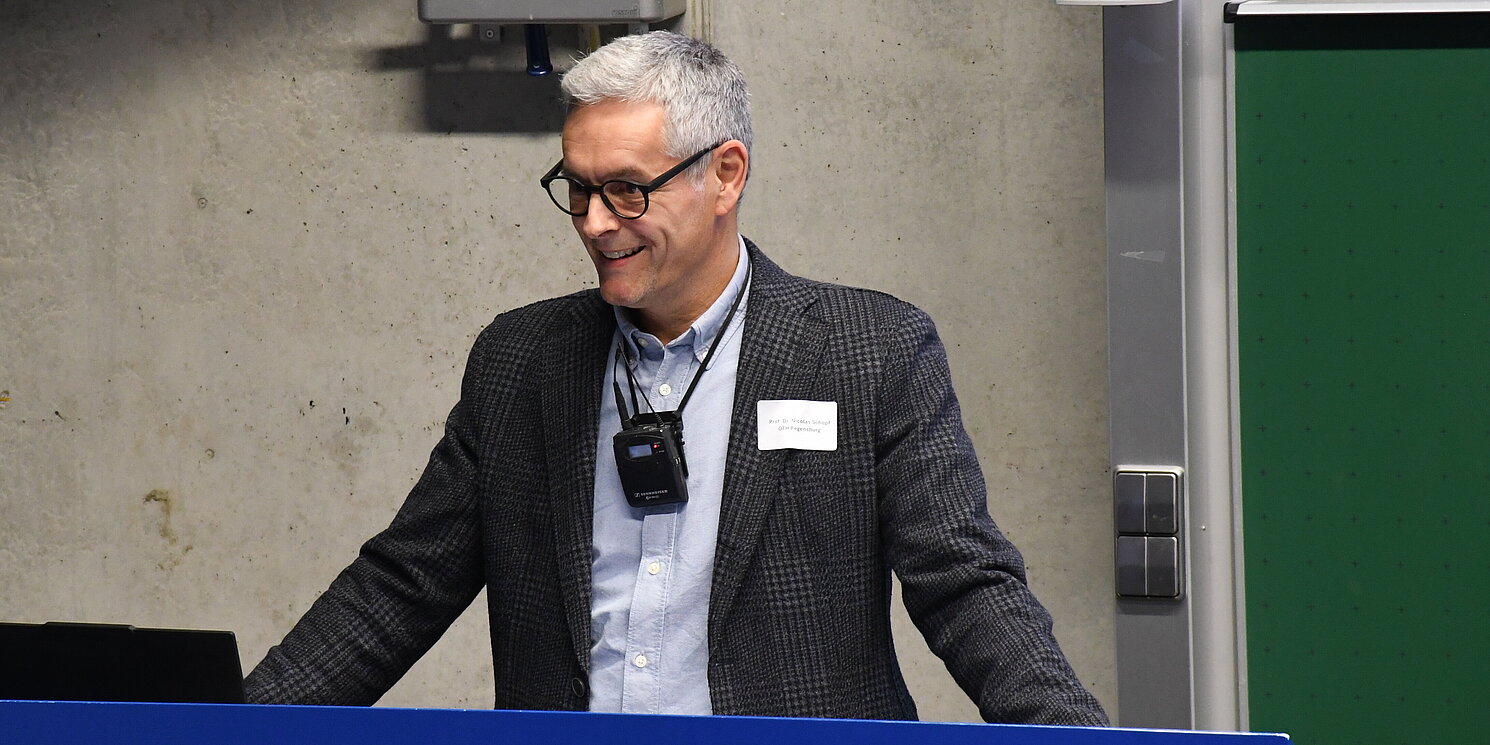
“The degree programme demonstrates the added value that academic qualifications bring to the provision of therapeutic care for society and to the further development of the discipline,” said Prof. Dr Nicolas Schöpf, Dean of the Faculty of Social and Health Sciences. “Our graduates combine scientific thinking with a strong practical focus.” Prof. Dr Birgit Rösel, Vice-President of OTH Regensburg, also emphasised the importance of the degree programme: “The academisation of speech and language therapy strengthens evidence-based care and opens up new perspectives for research, teaching and clinical practice. The Bachelor’s degree programme in Speech and Language Therapy is therefore a real success story for OTH Regensburg and for the healthcare sector.”
Ten years of the degree programme: a look back at a success story
The former Vice-President and Head of the Health Development Priority Area, Prof. Dr Klaudia Winkler, recalled the programme’s early days. OTH Regensburg had committed to the academisation of the healthcare professions at an early stage and gained valuable experience through degree programmes in nursing, nursing management and physiotherapy. The Bachelor’s degree programme in Speech and Language Therapy was a further important step towards expanding the health sciences at the university.
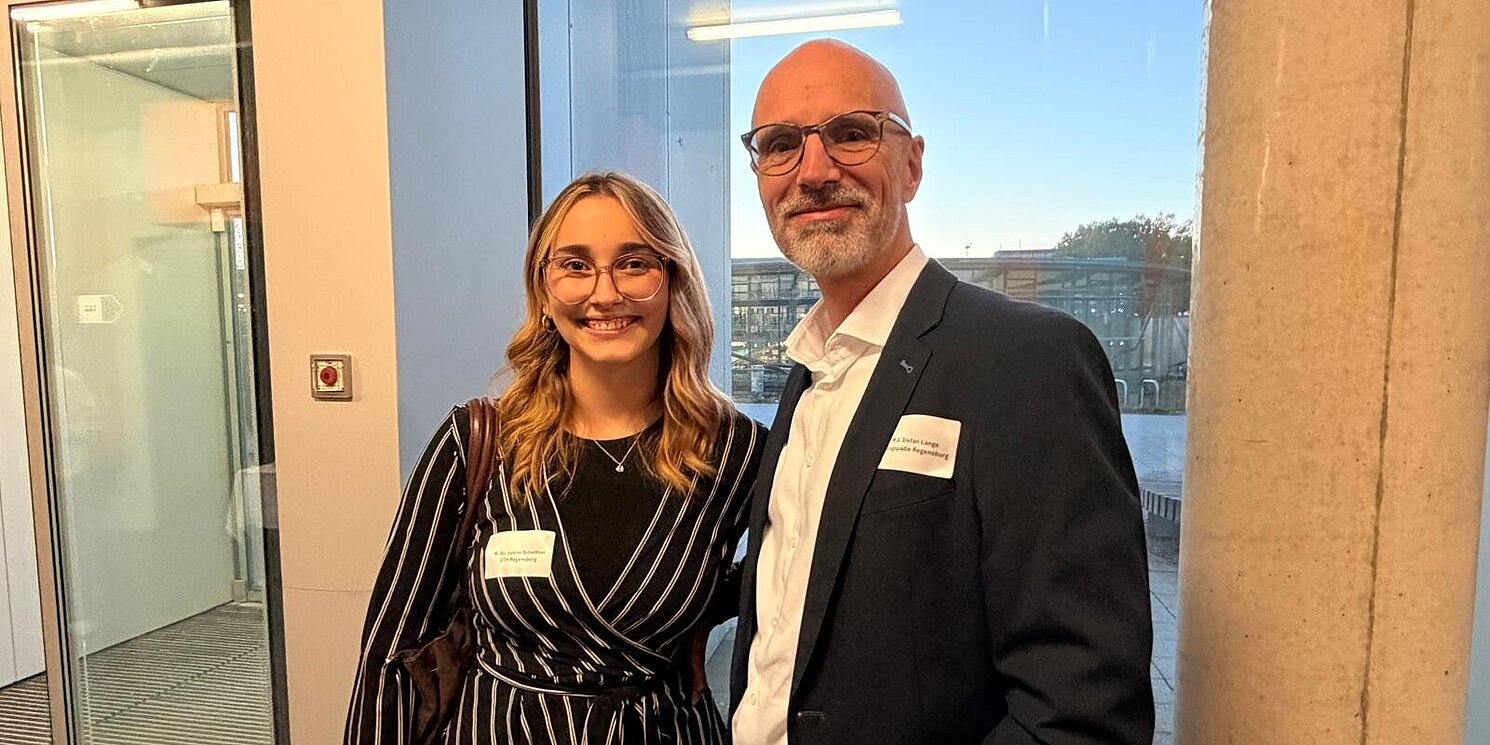
Stefan Lange, Head of the State Vocational College for Speech and Language Therapy in Regensburg, also looked back on the programme’s history. The establishment of the degree programme had been the result of many years of persuasion and close collaboration. It became apparent at an early stage just how important scientific research and exchange with disciplines such as medicine and linguistics were for the further development of speech and language therapy. The foundations for today’s degree programme were laid during numerous discussions with partners from higher education, politics and professional associations.
Prof. Dr Norina Lauer has shaped the degree programme since its inception
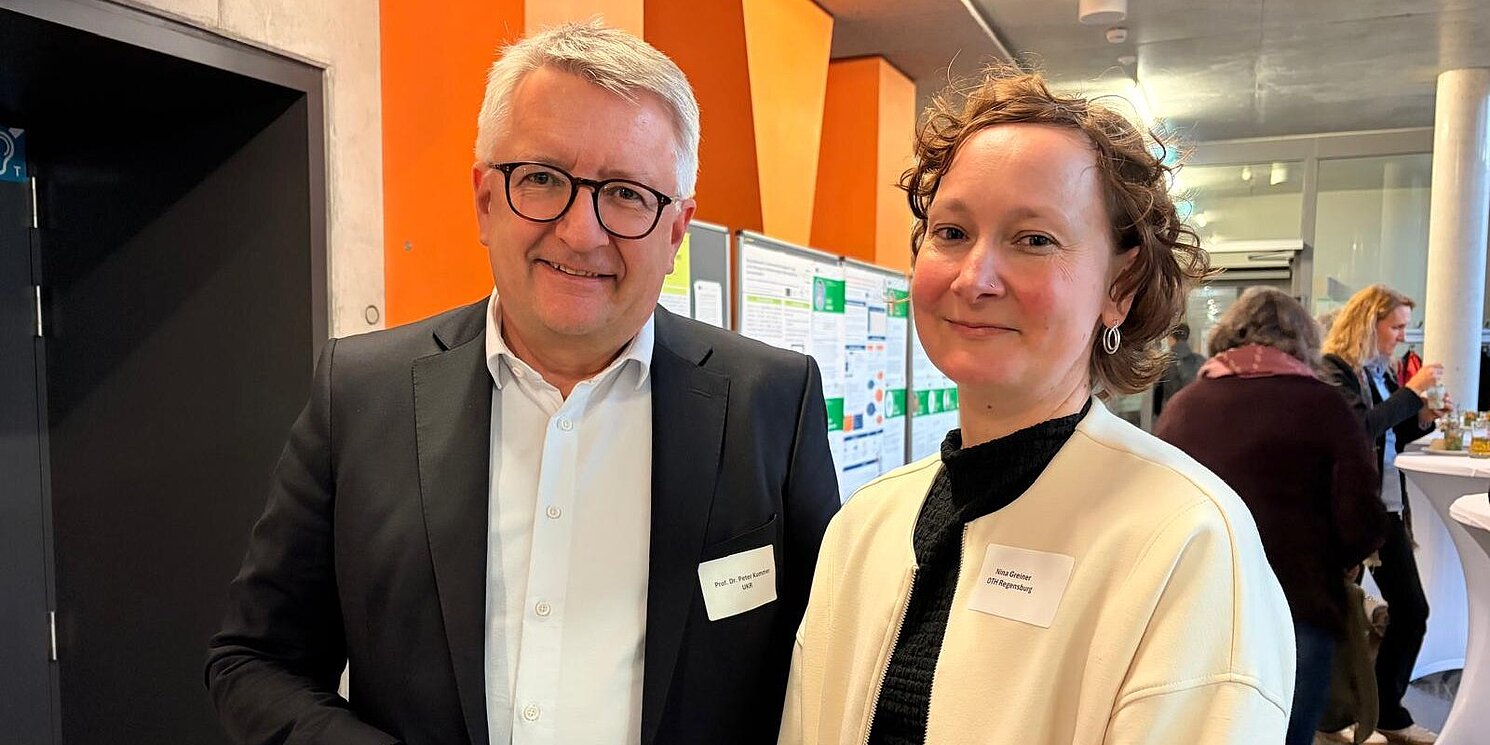
Lecturer Nina Greiner provided a review of the programme’s key milestones. The speakers expressed particular thanks to Prof. Dr Norina Lauer. Her name is inextricably linked with the development of the degree programme. As Klaudia Winkler emphasised, the programme’s success “clearly bears her hallmark”. Over the years, she has become the face of the programme and has played a decisive role in shaping its development in teaching, research and networking.
Graduates of the programme demonstrated just how varied career paths can be after graduation. They spoke of roles in clinical practice, teaching and research, as well as of setting up businesses in the field of therapeutic services and therapy materials. At the same time, current students pointed out that many prospective students are still unaware that speech and language therapy can also be studied at university level.
The event concluded with a specialist lecture by Prof. Dr Juliane Leinweber (HAWK and Göttingen University Medical Centre) on participatory technology development involving those affected and the use of technology by speech and language therapy professionals. The anniversary event highlighted just how much the discipline has changed in recent years and the opportunities that new technological developments offer for the future of speech and language therapy provision.