Why does violence against women also affect men? What needs to change in our society to prevent violence against women? What role can men play in prevention, and how can they take a stand in everyday life? These questions were explored during a workshop held as part of the 2nd Regensburg Weeks Against Violence Against Women and Girls.
Taking responsibility and taking a stand
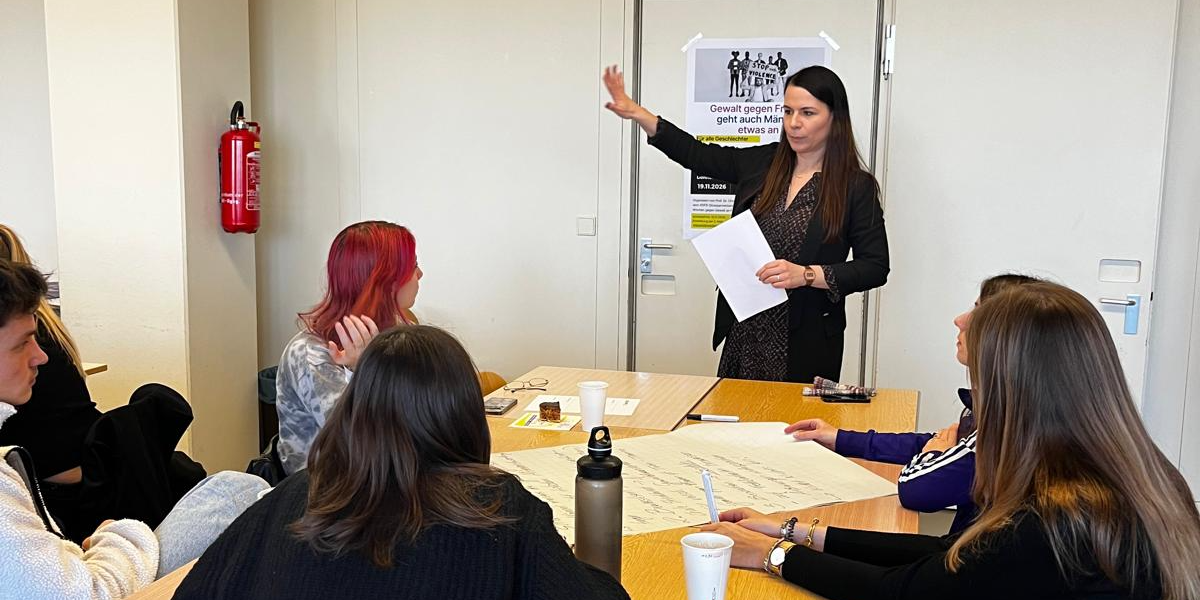
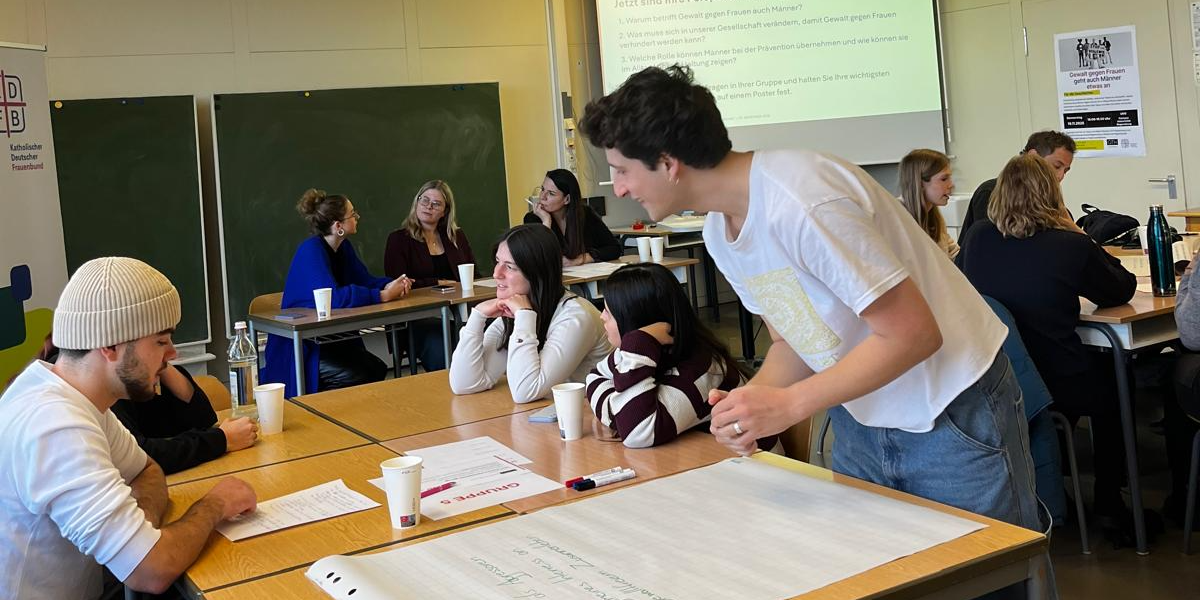
Following a thematic presentation by Prof. Dr Chiara von Hollen-Pierobon on the phenomenon of violence against women and girls, its various forms and its prevalence in Germany, the participants began working in small groups. The initial focus was on the question of men’s responsibility in preventing violence against women. A key point of the discussion was that violence against women must not be viewed solely as an individual problem, but must be understood as a challenge for society as a whole. Preventing it therefore requires the involvement of all members of society – including, and in particular, men.
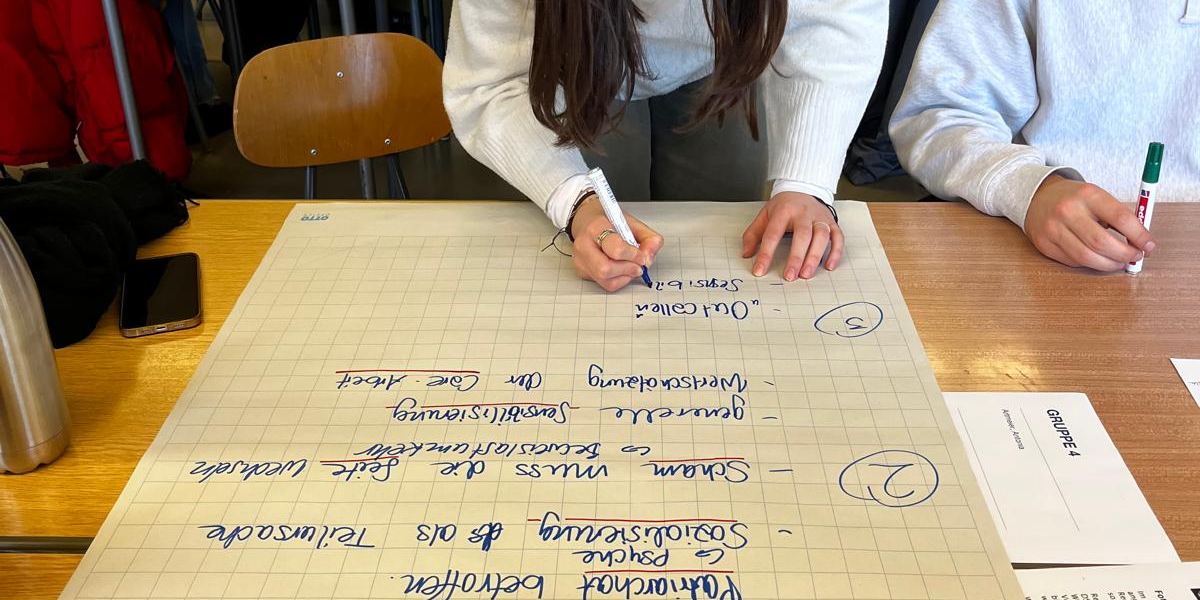
The results of the group work were recorded on posters and subsequently presented to the plenary. This was followed by a joint discussion in which the key findings were explored in greater depth and possible approaches to preventing violence against women were debated. The participants highlighted, in particular, the need for early awareness-raising and educational work in schools, public authorities and families, the dismantling of gender stereotypes, and structural and legal measures. Particular emphasis was placed on the importance of reflecting on one’s own behaviour and sexist thought patterns. It was stressed that even supposedly ‘minor’ issues, such as sexist jokes or derogatory remarks, should not go unchallenged. Men can take concrete responsibility in everyday life by addressing sexist behaviour, challenging discriminatory remarks, drawing other men’s attention to problematic behaviour, and listening to and believing those affected.
Violence prevention as a university responsibility
A particular concern of Prof. von Hollen-Pierobon was to ensure the sustainability of the workshop and to provide impetus for a longer-term engagement with the topic. Consequently, the second part of the plenary discussion focused on the question of what role OTH Regensburg can play in preventing violence against women. The participants engaged enthusiastically in the discussion and highlighted, in particular, the university’s potential to make an important contribution to the prevention of gender-based violence through education, awareness-raising and open dialogue.
Among other things, it was suggested that a compulsory series of lectures on gender-based violence be introduced, with a particular aim of raising awareness of the issue amongst students on male-dominated technical degree programmes. At the same time, the participants reflected on their personal responsibility. They emphasised how important it is to address gender-based violence amongst fellow students, to create space for open discussions on topics that may be perceived as uncomfortable, and to contribute to the prevention of violence by treating one another with respect and in a constructive manner.
The workshop made it clear that preventing violence is a shared responsibility that begins both in our personal daily lives and within the university context, and requires an ongoing engagement with the issue.