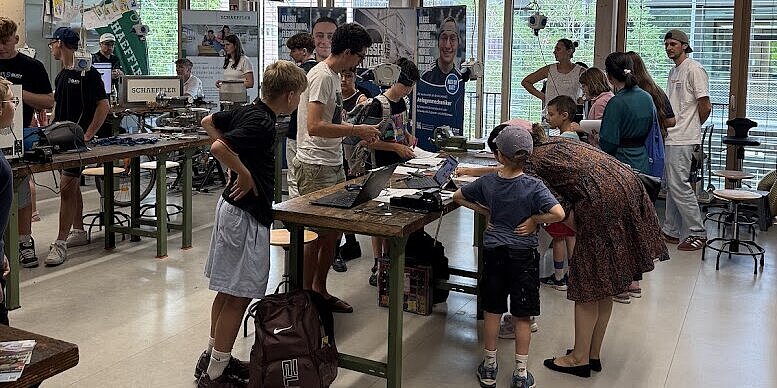
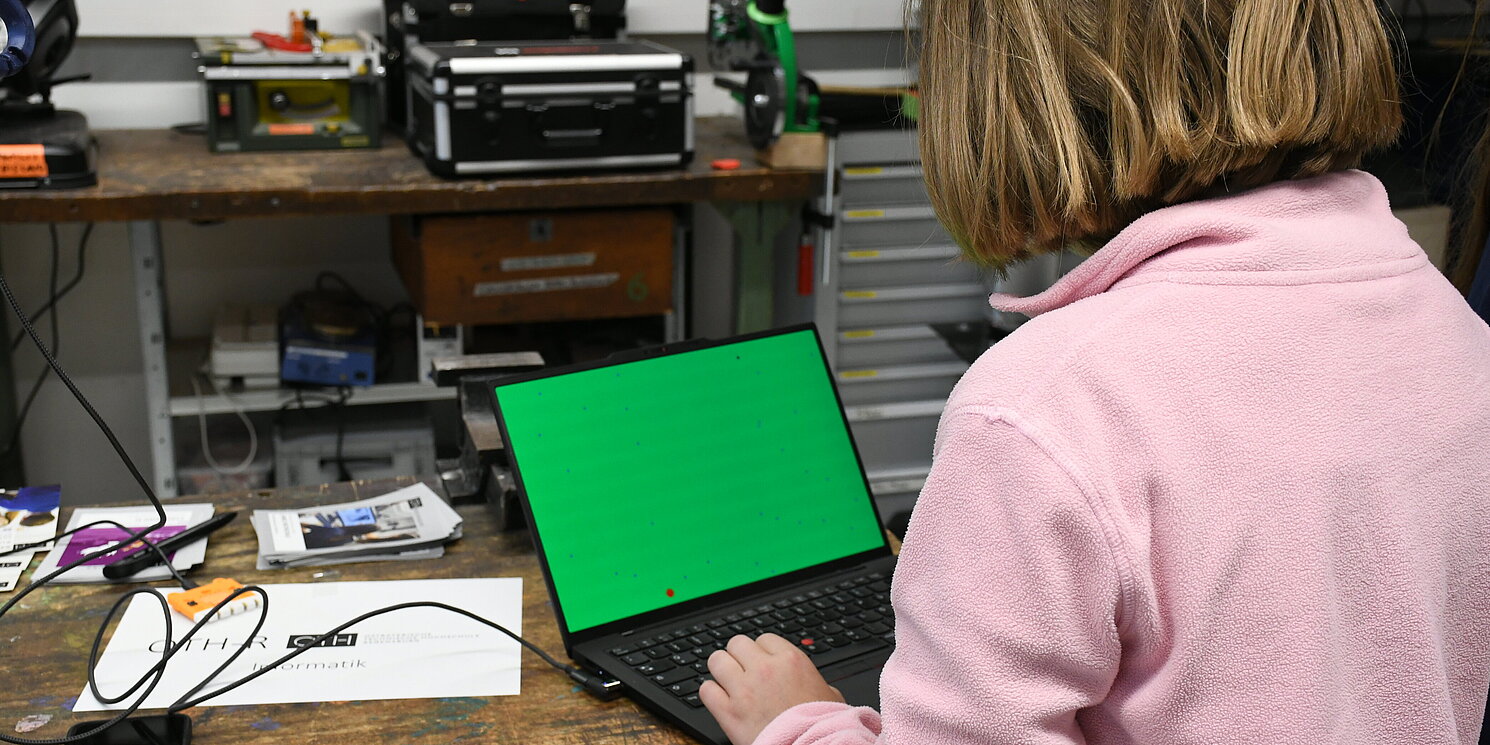
At his stand, children were able to modify computer games according to their own ideas. One girl quickly found that dodging raindrops using the arrow keys was too easy. The desired adjustment was implemented straight away using what is known as ‘Agentic AI’. These are AI systems that not only provide written answers but can also carry out tasks independently. In this case, a simple instruction in natural language – such as ‘I want really big beams to fall from the sky as well’ – was enough, and the AI incorporated the change directly into the programme code. Another pupil added extra fireballs to the game.
“AI can help to quickly programme simple applications, such as
software prototypes, and show children the full range of possibilities offered by computer science,” explains Prof. Schildgen.
The game also demonstrated why computer scientists will remain indispensable in the future. Whilst the AI was able to automatically incorporate the desired changes into the code, the development of the application, as well as the testing and integration of these changes, still require in-depth specialist knowledge.
Prof. Schildgen emphasises: “The increasing use of artificial intelligence does not mean that computer scientists will be less needed in the future – quite the contrary. The requirements are changing: away from simply writing basic code, towards the development of complex systems, the integration of various applications and the competent use of AI.” The more companies use AI, the more important it becomes to have specialists who can understand, review and adapt AI-generated code and integrate it into larger systems.
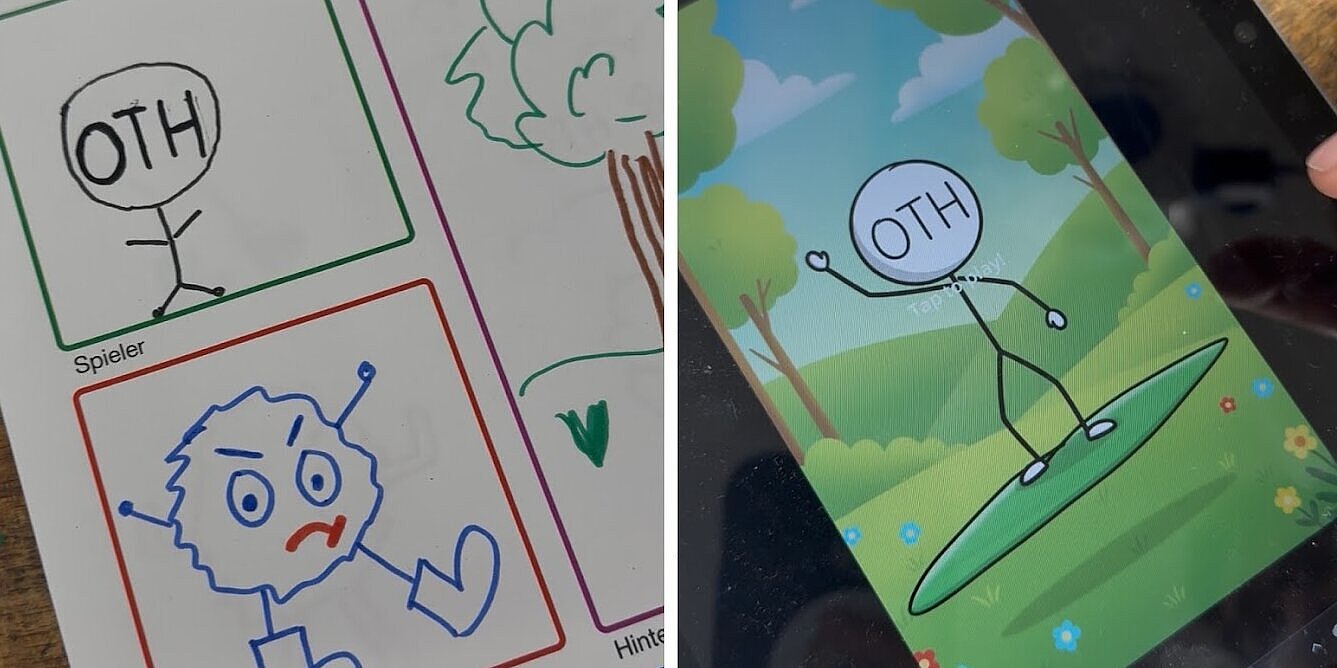
Things got particularly creative with another game developed by Oliver Löbs, a Bachelor’s student at OTH Regensburg. Here, the children were first able to draw their own characters, villains and landscapes. The elements they designed themselves then became part of the game.
The Open Labs Day offered school pupils the opportunity to try out STEM subjects in a hands-on way and gain an initial insight into digital technologies. Alongside OTH Regensburg, numerous companies from the region presented exciting hands-on activities and career paths in the fields of maths, computer science, natural sciences and technology. The event impressively demonstrated how practical activities can inspire young people to take an interest in STEM subjects and show them future career prospects.