How do far-right extremists attack equality, democratic participation and social diversity? What strategies does an open, inclusive urban society need?
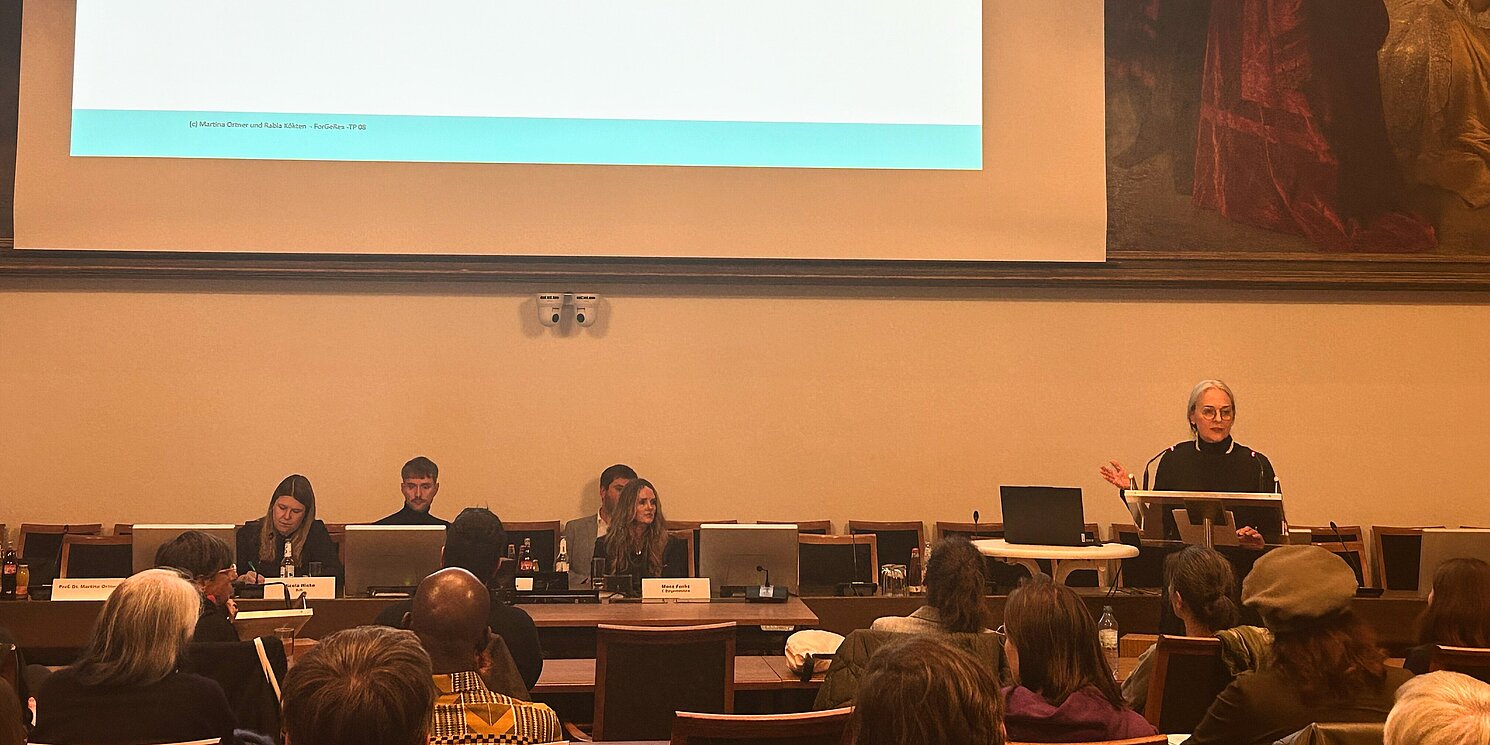
These questions were the focus of an in-depth evening event held on 11 November 2026 in the Grand Council Chamber of Munich City Hall. Under the title ‘Critical of power & committed – Countering far-right attacks on a diverse urban society’, researchers from the Research Network for Contemporary Analyses, Practices of Remembrance and Counterstrategies against Far-Right Extremism in Bavaria (ForGeRex) presented their latest findings and discussed potential courses of action for Munich and Bavaria with representatives from government and civil society.
The event, which was fully booked well in advance, was opened by Munich’s Mayor Mona Fuchs and Leonie Thal from the Centre for Democracy.
OTH Regensburg professors present research findings
Four research presentations examined different manifestations of right-wing extremism and the intersectional interplay of anti-feminism, racism and anti-Semitism.
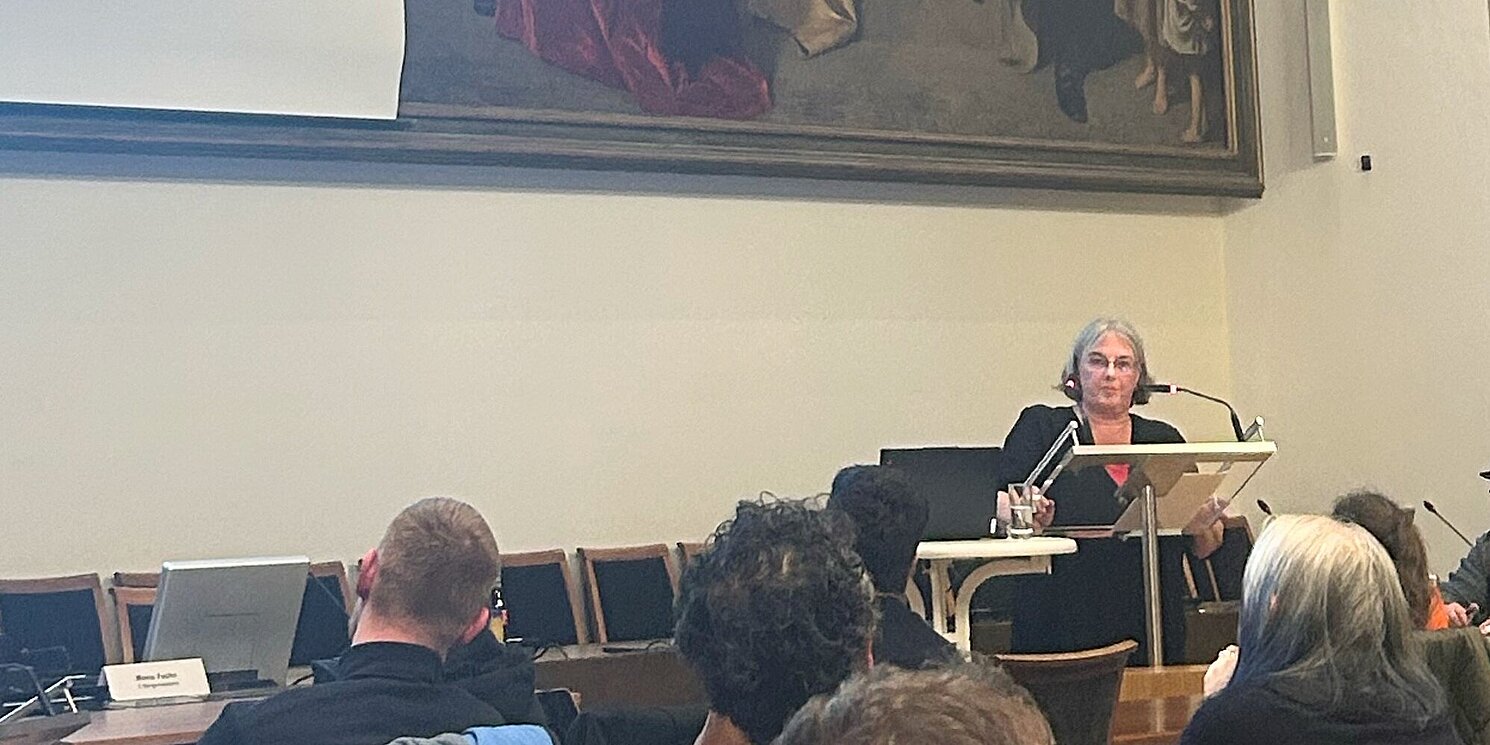
Prof. Dr Martina Ortner, Professor of Migration-Sensitive Social Work and one of the spokespersons for ForGeRex, examined the ideology and structures of the ‘Grey Wolves’ in Turkey and Bavaria. She traced how the movement links racism, anti-Semitism and anti-feminism and seeks social recognition. Ortner presented initial findings on activities in Bavaria, incorporating the perspectives of those affected as well as opportunities for civil society engagement.
Prof. Dr Clarissa Rudolph, Professor of Political Science and Sociology and another spokesperson for the consortium, also presented findings from her sub-project. She explained various facets of far-right anti-feminism and specific attacks on gender studies and gender equality policy. 38 per cent of the gender researchers and gender equality activists surveyed as part of the project are aware of far-right influence on gender studies and gender equality work. 59 per cent suspect or fear such influence.
Areas for action in Munich and Bavaria
In the subsequent panel discussion, further experts discussed potential courses of action for Munich and Bavaria. The discussion was moderated by Prof. Dr Martina Ortner.
The importance of existing documentation and advisory structures was emphasised. In view of increasing attacks and hostility, it was deemed necessary to strengthen these structures and to provide long-term support for civil society action against right-wing extremism, racism and anti-Semitism. Among other things, it was recommended that easily accessible legal advice be made available to affected academics and civil society actors.
The event was organised in collaboration with the Centre for Democracy of the City of Munich. The ForGeRex research network is funded by the Bavarian State Ministry of Science and the Arts.