The workshop focused on questions that concern many expectant parents: How long can I cycle during pregnancy? Is it dangerous for my baby? The research project ‘Cycling during pregnancy and with a baby’, funded by the Federal Ministry of Transport and Digital Infrastructure (BMVI) and carried out by the Heidelberg-based transport planning consultancy Verkehr mit Köpfchen, examined the questions and challenges faced by young families in relation to cycling.
Around 800 pregnant women and parents of children up to one year old were surveyed. The results show that many families want reliable information and turn to midwives with their questions. At the same time, there has so far often been a lack of scientifically sound information and training opportunities on this topic.
Exercise rather than rest
There is still a widespread belief that pregnant women should take it easy as much as possible. This is no longer true, as Verena Stengel, Head of the Master’s programme in Midwifery at OTH Regensburg, explains: “During a healthy pregnancy, exercise promotes the long-term health of both mother and child and can even help prevent pregnancy complications. Cycling is a good way to stay active both during pregnancy and after the birth. At the same time, it helps you to stay active.”
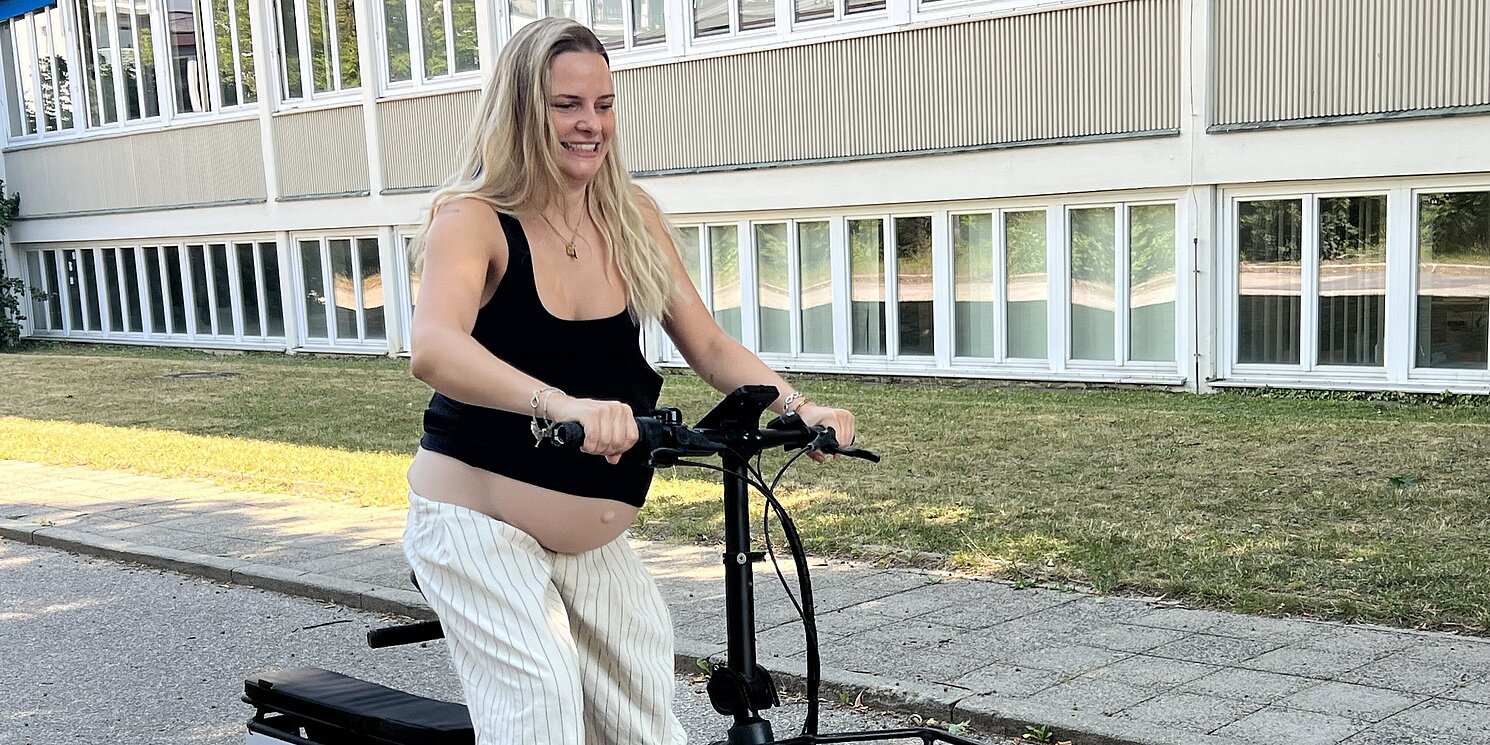
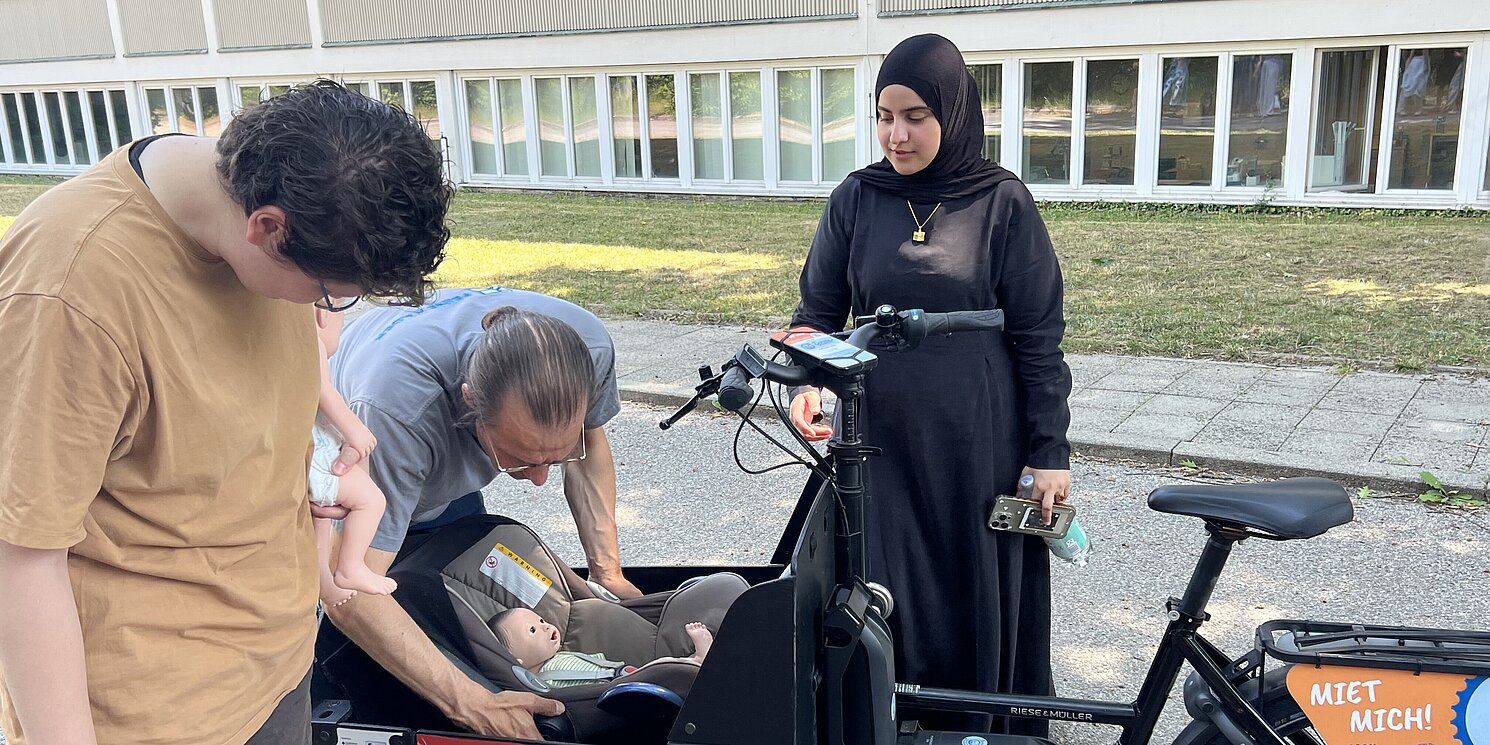
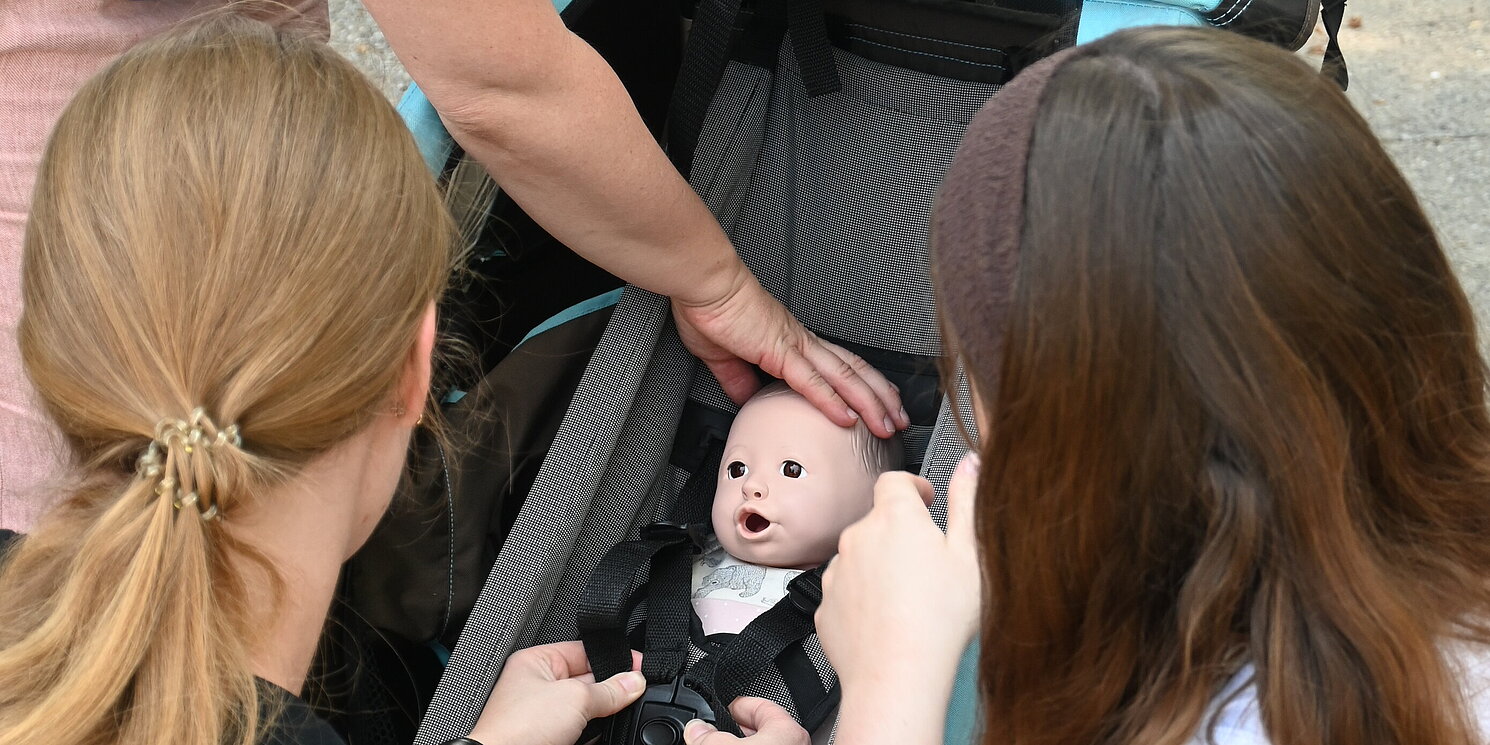
During the workshop, the students were given scientifically sound information on cycling during pregnancy and early parenthood. In the practical session, they tried out various bicycles and transport systems. Wearing a simulated pregnancy bump, they also tested how the riding experience changes and what adjustments to the bicycle can improve riding comfort.
In the case of an uncomplicated pregnancy, cycling is generally possible right up until the end of the pregnancy, provided the exertion remains moderate. As a rule of thumb, if you can still hold a conversation without difficulty whilst cycling, you are generally not overexerting yourself. As your bump grows, raising the handlebars, lowering the saddle slightly and tilting it forwards a little, and choosing a bike with a lower step-through can make cycling easier.
No evidence of exposure to pollutants
There is also no clear scientific evidence to date regarding the exposure of children in bicycle trailers to pollutants. Whilst their airways are closer to the ground, exhaust fumes can build up inside a car – for example, in traffic jams or at traffic lights. It is therefore not possible to make a general statement as to which mode of transport is safer in terms of exposure to pollutants.
When it comes to road safety, statistics to date show that serious injuries to children travelling in cars are extremely rare. As with other modes of transport, it is important to use a suitable child restraint system and to drive carefully and responsibly.
“Many parents avoid cycling because they feel uncertain – not because there is any scientific evidence to support this,” says Hannah Eberhardt, a consultant and member of the charity Fahrrad & Familie e.V. “If midwives can provide well-informed answers to these questions, it gives families peace of mind in their everyday lives.”
The workshop was held for the first time at OTH Regensburg as part of its practice-oriented teaching programme. Participants included the final-year cohort of the Bachelor’s degree programme in Midwifery and the Master’s students on the Midwifery Science programme. The feedback from the students shows the impact the workshop had on the trainee midwives: “What I’ve learnt is that it’s definitely important for parents to try out different carrying systems before making a decision,” says one student. Another adds: “It’s also good to know that babies shouldn’t wear a cycle helmet in baby carriers.”
The workshop received financial support from the SBK. The company Feine Räder provided the bicycles and transport systems and supported the event on site with expert advice. Tips and scientifically sound information on cycling during pregnancy and with babies and toddlers can be found on the website of the association Fahrrad & Familie e.V..