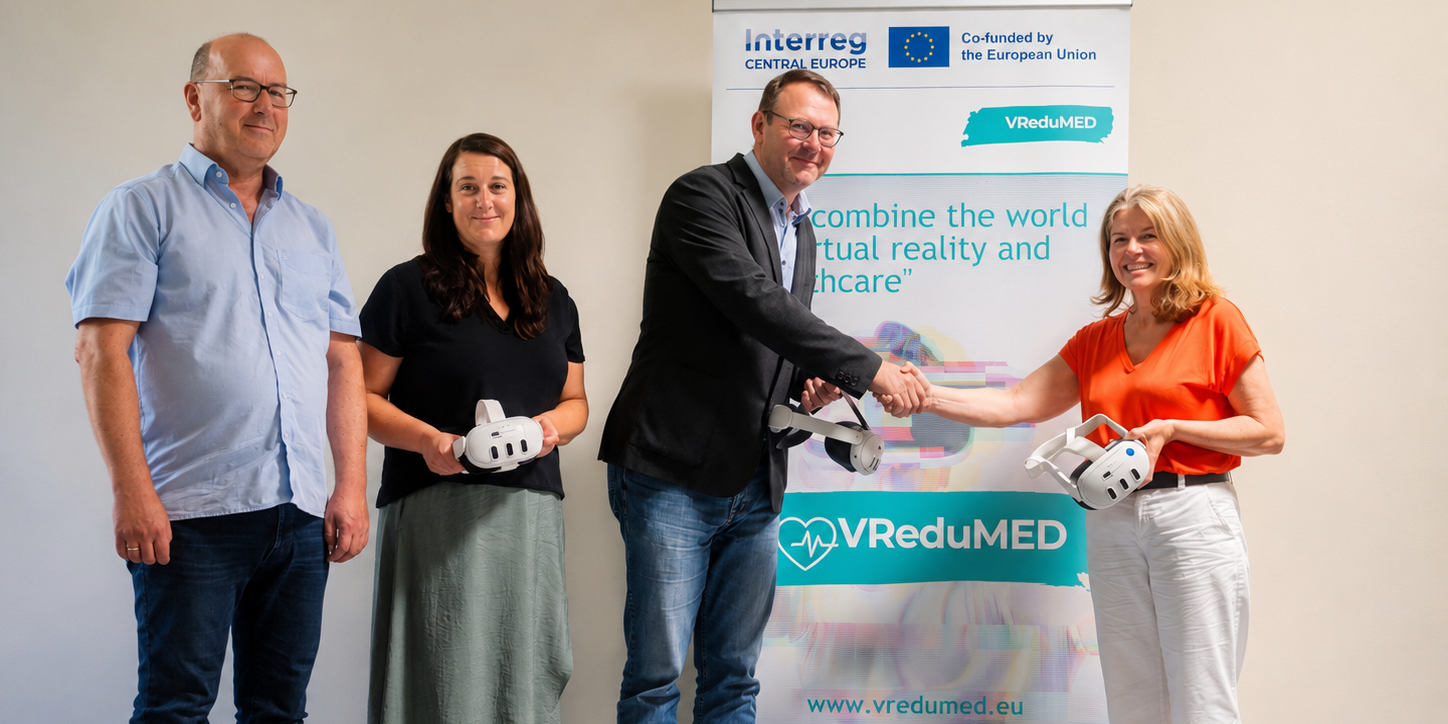
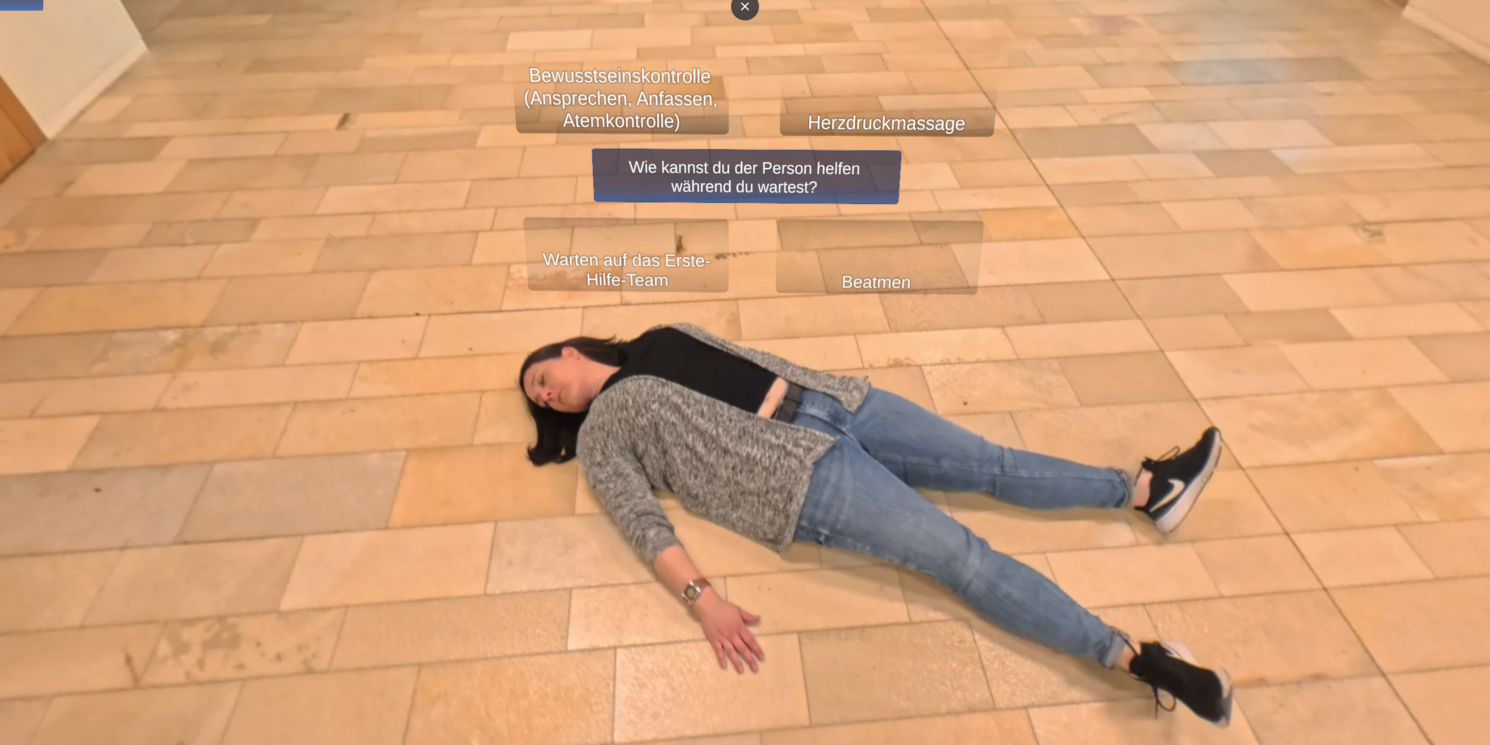
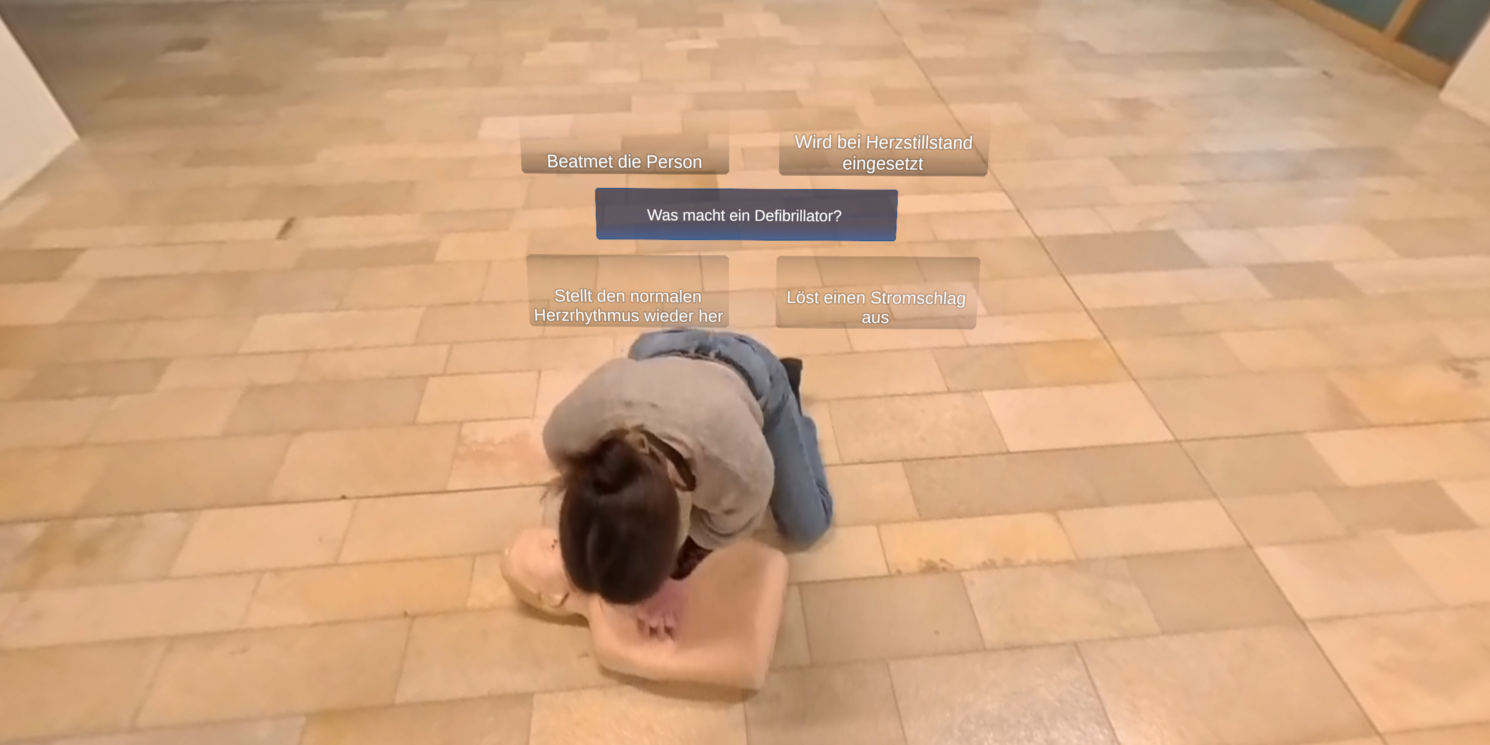
From 30 March to 2 April 2026, Claudia Reischbeck, a teacher on the Health Studies programme at FOSBOS Regensburg, undertook a work placement at the Nursing Research Laboratory at OTH Regensburg. Together with Prof. Dr Christa Mohr and Anselm Stadler, she developed an initial 360° VR learning scenario on first aid and resuscitation using software from the Bielefeld-based company PaneoVR.
Following the installation of extensive VR equipment at FOSBOS Regensburg, the focus was particularly on how the technology could be integrated into lessons in a pedagogically meaningful way. During her placement, Claudia Reischbeck gained insights into existing VR applications, immersive learning concepts and the development of her own 360° scenarios.
A collaboration with far-reaching implications
The jointly developed learning module is designed to help pupils gain greater confidence in taking action in emergency situations and to familiarise themselves with the location of the defibrillator within the school building. Filming took place on site at FOSBOS Regensburg, meaning that the scenario can be used directly in lessons in future.
Following further discussions with other stakeholders, such as the headteacher, OStD Dr Michael Völkl, a range of initiatives emerged, including educational projects, training courses and final-year projects.
AI and XR as key drivers
“Artificial intelligence and extended reality are bringing about lasting change to the worlds of education and work. This makes it all the more important to introduce young people to these technologies at an early stage
and to equip them to use them responsibly and in a scientifically sound manner,” emphasises Prof. Dr Christa Mohr. The partnership builds on the experience gained from the European research project VReduMED.
“Media literacy and the critical thinking that goes with it are becoming key skills for the future. Collaboration between schools and universities creates the ideal conditions for this. At the same time, it enables pupils to get to know OTH Regensburg – and the health sciences in particular – whilst they are still at school,” adds Anselm Stadler from the Nursing Research Laboratory.
The collaboration demonstrates how innovative teaching can succeed across institutional boundaries: OTH Regensburg contributes scientific, pedagogical and technological expertise, whilst FOSBOS Regensburg brings specific school-based needs and classroom experience to the partnership.