Since 2022, the job centres for the City of Regensburg and the District of Regensburg, together with Bezirk Oberpfalz, the regional authority for the Upper Palatinate, have been supporting people who had been largely unable to work for long periods because of health impairments and who had not previously received systematic support from any agency. The PUNKTGENAU pilot project ends in late October 2026. However, the approaches developed during the project will continue: both job centres are carrying the approach forward and will fund it from their regular budgets in future.
OTH Regensburg provided the academic evaluation for the project. A research team from the Faculty of Social and Health Sciences, led by Prof. Dr. Nicolas Schöpf, Professor of Education and Social Work at the faculty, examined how participants’ circumstances developed and fed interim results back to the job centres on an ongoing basis.
A total of 112 people took part in the project. They received personal support over an extended period and help with health-related, social and organisational challenges. ‘What matters is seeing people not just in terms of individual diagnoses, but in the context of their whole life situation,’ says Dr. Marje Mülder, Head of Social Administration at Bezirk Oberpfalz. The OTH Regensburg team surveyed 62 participants several times. Of those who answered this question at the end, 83 per cent said they had achieved goals or improved something in their lives. For one person, this means the sleep laboratory appointment they now want to ‘finally’ make; for another, a court-appointed legal guardian to help with money problems. Statistically, three out of four people learned about support services they had previously known nothing about.
Progress often shows itself in small but important steps. ‘Taking the bus. I have to say it, even if it sounds funny,’ is how one person in OTH Regensburg’s final survey describes what has changed in their everyday life. Because of a mental health condition, everyday mobility of this kind had previously not been possible for this person. Another person describes their experience of an employment scheme: ‘The Werkhof – that was an experience where they told me I’m capable, I’m creative, I don’t overthink things, I just get on and do it.’
There have also been positive developments in terms of fitness for work. According to medical assessments evaluated by the job centres, around a third of participants have been certified as able to work again, albeit to a limited extent. ‘For this third, the job centre can now once again use its support measures to help them into employment,’ says Christian Meier, Managing Director of the Regensburg City Job Centre, who led the PUNKTGENAU project. ‘That is the success, and it shows that there is a gap in provision for this target group.’
Participants’ health, psychological strain and life satisfaction have not yet changed significantly. This is partly due to factors such as the shortage of therapy places. Other things have nonetheless been achieved: respondents are measurably more physically active than at the start, for example, and the group sessions trialled in the project were very well received. ‘What is also crucial is that people now know where to turn, and they accept help,’ says Prof. Dr. Schöpf. ‘Not every path leads directly to work. Anyone in this group who can stabilise their condition and avoid losing further ground in terms of participation has already achieved a great deal.’
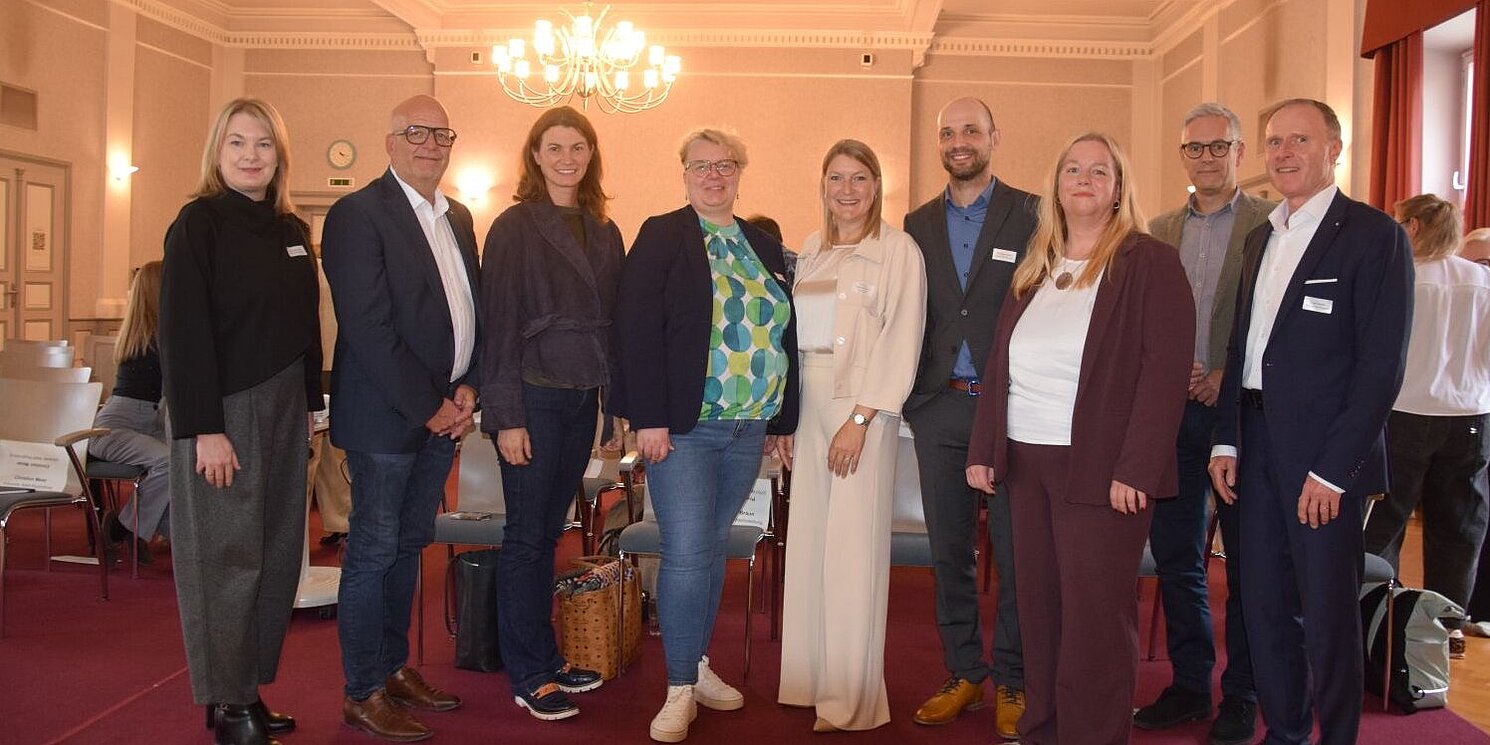
The results were presented in early October at the project’s closing event in the old ceremonial hall of Bezirk Oberpfalz. ‘Academic findings make the greatest difference when they are developed jointly with practitioners and lead to concrete improvements in people’s lives,’ said Prof. Dr. Carina Braun, Vice President of OTH Regensburg, at the event.
The insights from the academic evaluation will now feed into the job centres’ ongoing work. The networks built up during the project are to be consolidated by a cooperation agreement, which most of the partners have now signed.