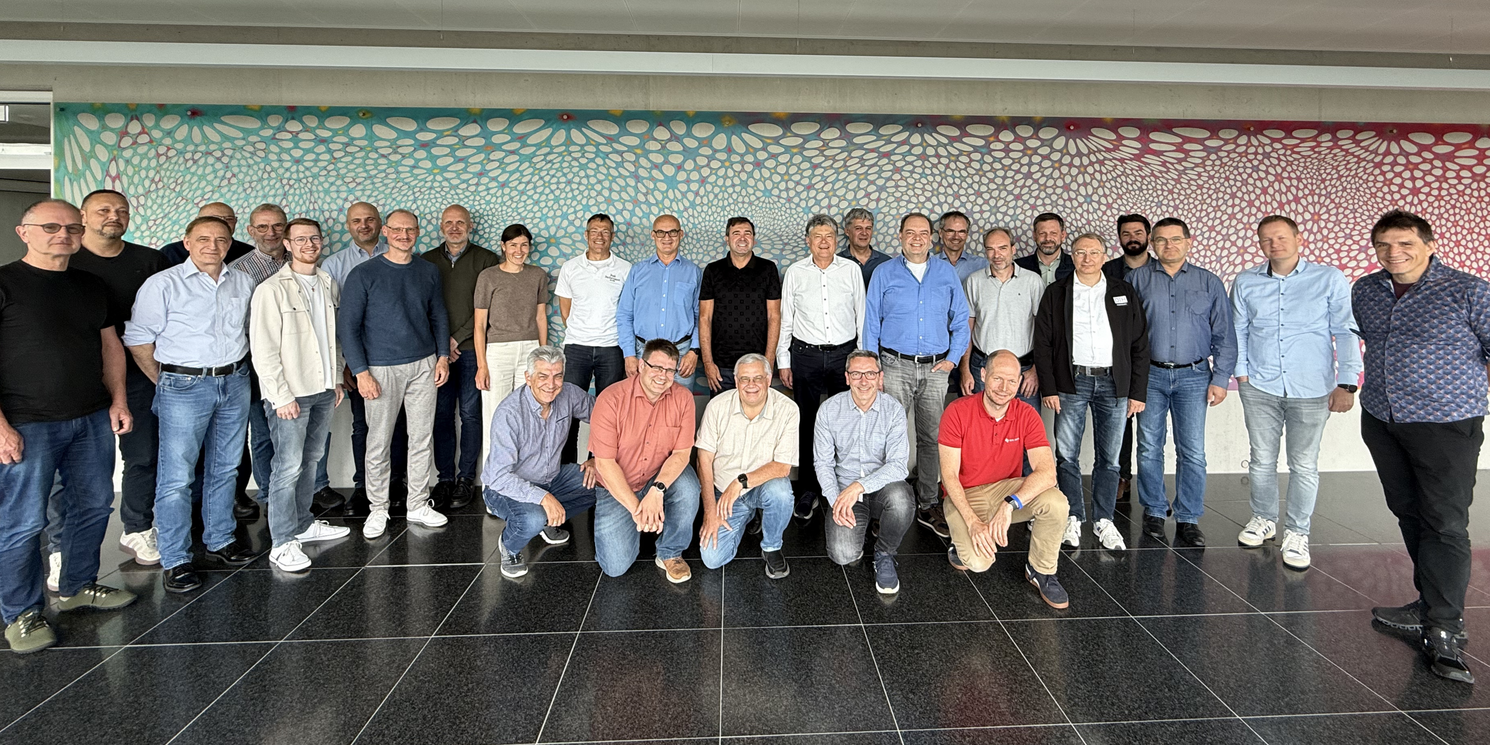
The event was organised by Technical Group 1.1.4 “Test Equipment and Methods” of the VDE (Association for Electrical, Electronic and Information Technologies) and its specialist society, the GMM (Society for Microelectronics, Microsystems and Precision Engineering). The focus was on current developments and challenges in the field of microelectronics and semiconductor testing.
The spokesperson for the technical group is Prof. Dr Rainer Holmer, Dean of the Faculty of Electrical Engineering and Information Technology at OTH Regensburg. He was also elected to the GMM Executive Board for the period 2026 to 2028 and thus represents the university at the highest technical level within Germany’s largest electrical engineering association.
Industry, research and academia come together
The conference brought representatives from three countries to Regensburg. Alongside OTH Regensburg itself and the Fraunhofer Institute for Integrated Circuits in Erlangen, experts from leading semiconductor companies such as Bosch, Infineon, Globalfoundries, NXP, ams Osram and other firms from Germany, Austria and the Netherlands took part. The specialist group sees itself as a forum in which current challenges are jointly identified and potential solutions discussed.
Focus on the industry’s future challenges
The discussions at the conference reflected the breadth of current developments in the industry. Topics such as test automation and the use of artificial intelligence in semiconductor testing demonstrate the extent to which digitalisation is transforming this sector as well. At the same time, issues relating to data availability and analysis, as well as the resilience of global supply chains, were discussed – aspects that have become increasingly urgent in light of geopolitical tensions and the strategic importance of microelectronics for Europe. Another key focus was on current funding programmes at European, national and Bavarian levels, including the EU Chips Act 2.0, the German government’s High-Tech Agenda and the Bavarian Chips Alliance.
The focus of this conference is a further sign that OTH Regensburg is far more than just a regional education provider. As an active contributor to the semiconductor industry network, it helps to bring science and practice closer together in a field of technology that is central to Europe’s economic and technological future.