Easy-to-read language was developed to facilitate accessible communication. By using shorter, clearly structured sentences, easily understandable words and phrasing, and supplementary explanations of terms, it enables as many people as possible to participate in linguistic communication – and thus in society. However, translations into plain language have so far focused on the field of information provision. Little attention has yet been paid to other forms of text, such as literary works. This stands in contrast to the right to cultural participation – or to ‘cultural material in accessible formats’ – as emphasised in the UN Convention on the Rights of Persons with Disabilities.
Making poetry accessible to all
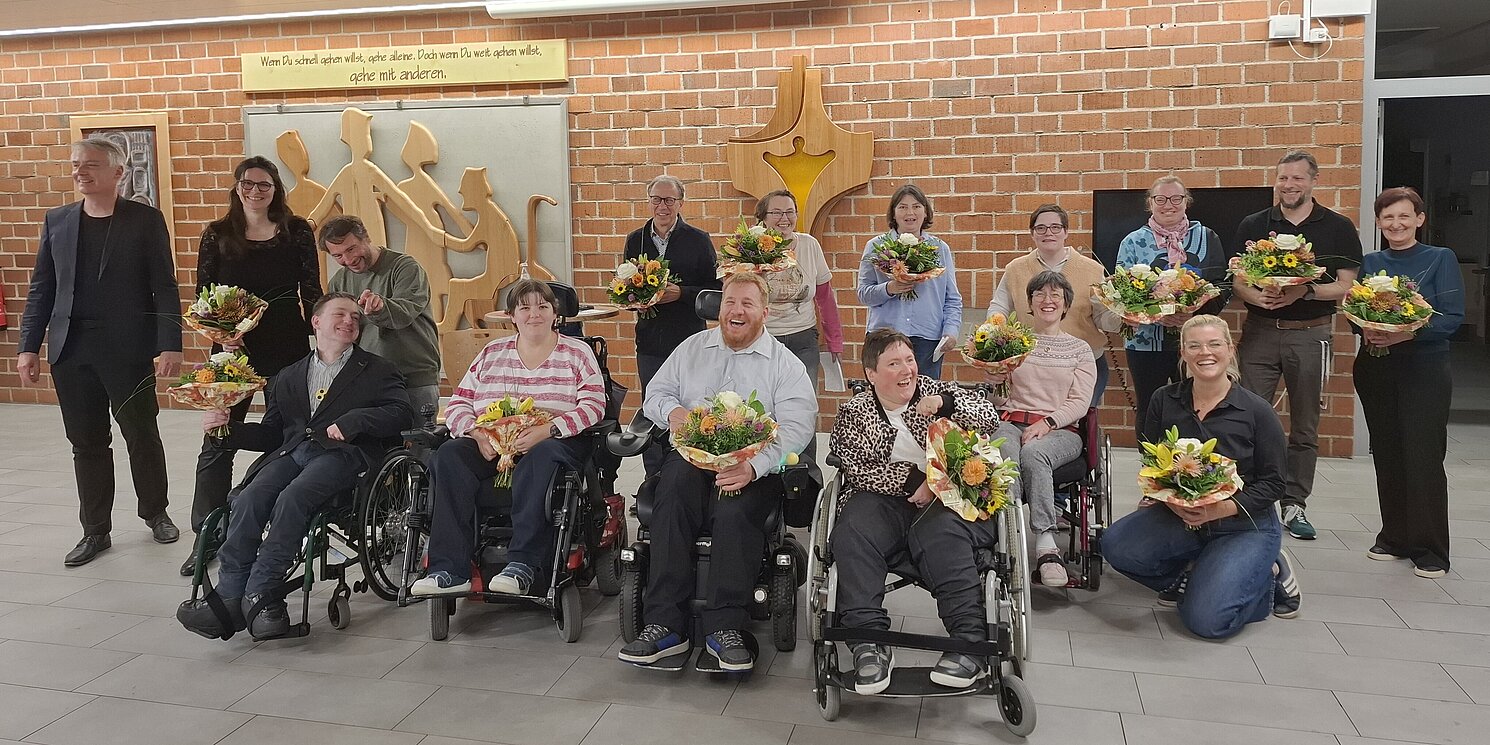
For this reason, Prof. Dr Christian Zürner, Professor of Social Cultural Work at OTH Regensburg, in collaboration with Mario Franz of the KJF Workshops’ Plain Language Service, worked with the ‘einfach g’macht’ test groups from the St Josef Workshops in Straubing and ‘Die Sprach-Entwirrer’ from the Bruder-Konrad Workshops in Mitterfels, worked on poems ranging from the Classical period to the present day as part of a research project lasting almost a year. It was precisely the particularly artistic and idiosyncratic language of poetry that inspired the project. Can poetic language be translated into Easy Language?
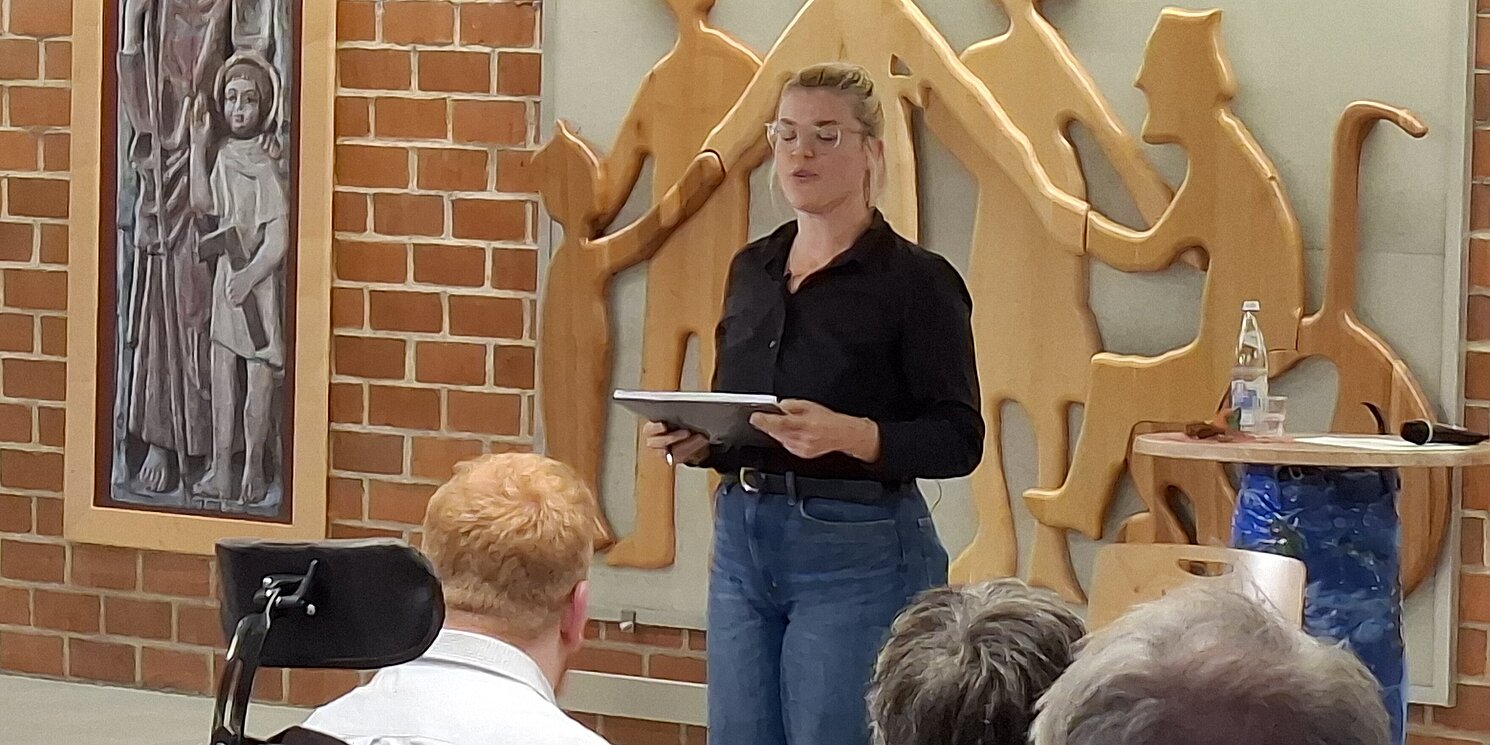
The results of this collaborative work were presented to the public on 19 October 2026 at a reading held at the St. Josef Workshops in Straubing, attended by Holger Kiesel, the Bavarian Commissioner for the Interests of People with Disabilities. Maike Berndt-Zürner accompanied the poems – organised by theme – with pieces on the violin and flute, each of which related to the thematic grouping (such as nature, love or politics). The actress Henriette Heine read and performed the poems, interacting sensitively with the music.
Well-known poems in a new light
It became strikingly clear that, whilst poetry in simple language broke with the verse form and rhythm of the originals, it preserved their mood, poetic quality and aesthetic depth, at times even lending them a more modern, poignant quality. The poems by Johann Wolfgang von Goethe, Sarah Kirsch, Eduard Mörike, Joseph von Eichendorff, Renate Schmidgall, Rainer Maria Rilke, Ingeborg Bachmann, Bertolt Brecht and Charles Bukowski thus presented themselves to the attentive audience in a completely new way: plain language as a medium for poetic experiences.
The overwhelmingly positive response from the audience and the support for the project from the federal programme ‘Demokratie leben!’ as part of the Straubing Partnerships for Democracy ‘Wir sind Straubing’ confirmed the success of the project, which is to be continued and, amongst other things, firmly established within the literary scene through a publication.