How is artificial intelligence changing our society, and how can we deal with the associated opportunities, risks and unresolved issues? These were the topics addressed at the 12th conference of the Network for Technology Assessment (NTA), held at OTH Regensburg from 21 to 23 September.
Under the title ‘Social Change through AI? Overcoming a Sense of Disorientation’, 125 participants from academia and industry came together. The conference was organised by Prof. Dr Karsten Weber and the Institute for Social Research and Technology Assessment (IST).
“The NTA conferences take place every two years at different venues; this year’s conference at OTH Regensburg was the first to be organised at a university. We received consistently positive feedback, both regarding the content of the conference and our university. This shows that OTH Regensburg is a centre for high-quality research where current topics of social significance are addressed,” said Prof. Dr Karsten Weber, an expert in technology assessment.
Numerous lectures, workshops and panel discussions examined the social changes brought about by artificial intelligence from various perspectives. The focus included, amongst other things, issues relating to regulation, responsibility, trust, the world of work and the use of AI in various areas of society. The future of autonomous mobility was also part of the programme.
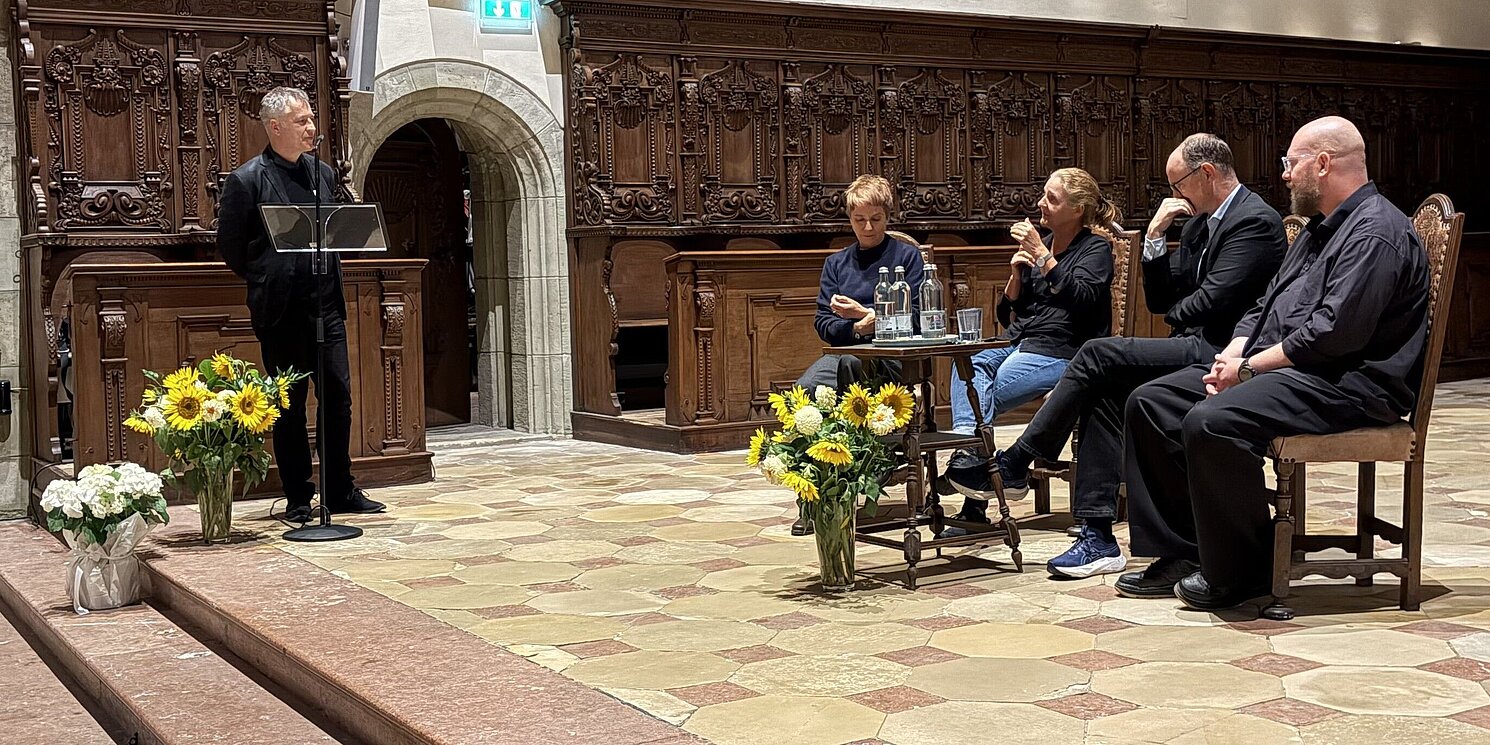
A particular highlight was the public panel discussion ‘Social Change through AI?’ held at the Dreieinigkeitskirche in Regensburg. Around 70 attendees joined experts in discussing the opportunities and challenges posed by artificial intelligence. The panellists were Prof. Dr Frank Pallas (computer scientist, University of Salzburg), Prof. Dr Jessica Heesen (media ethicist, University of Tübingen), Prof. Dr Ute Schmid (computer scientist, University of Bamberg) and Max-R. Ulbricht (Technical Data Protection Unit at the Berlin Commissioner for Data Protection and Freedom of Information). The discussion was moderated by Prof. Dr Karsten Weber.
NTA 2026 demonstrated that the rapid development of artificial intelligence raises not only technical but also social and ethical questions. Technology assessment can help to examine these developments from an interdisciplinary perspective, provide guidance and highlight opportunities for responsible shaping of the future.