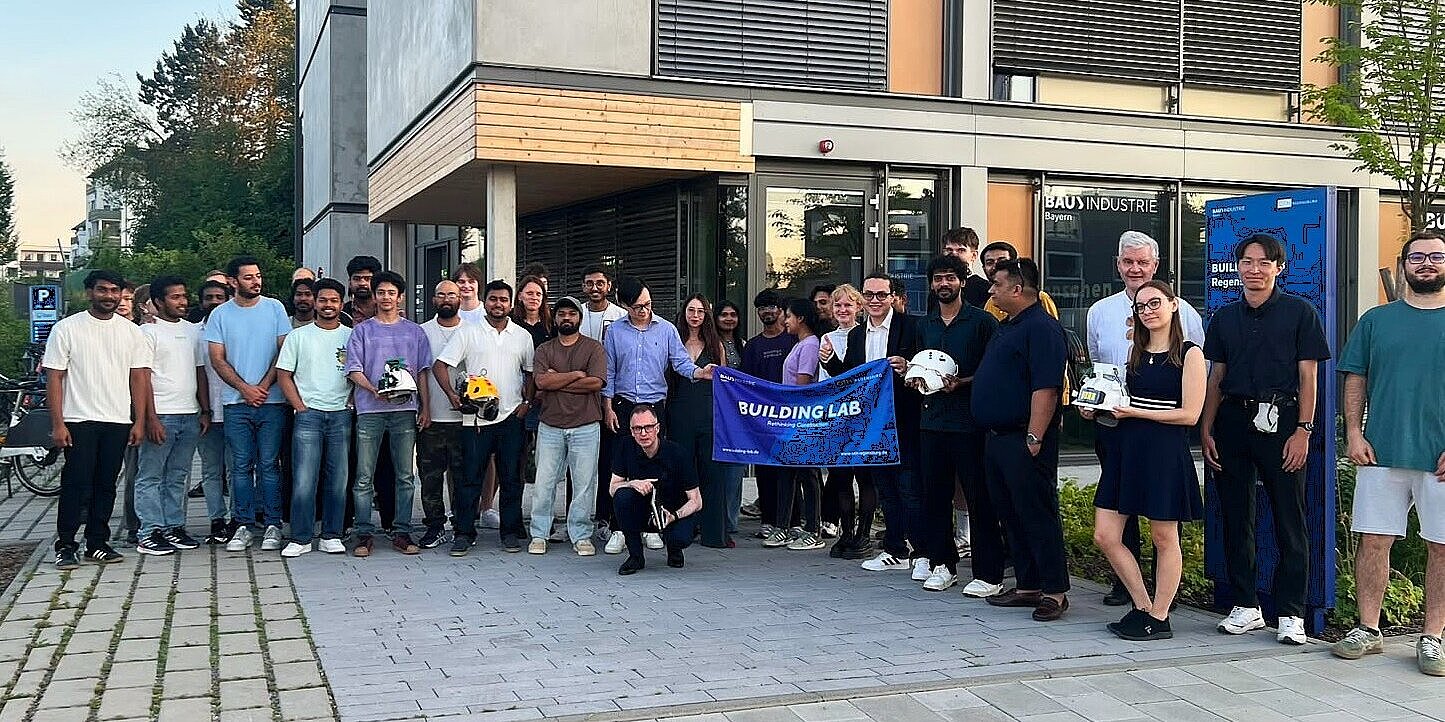
What might a construction site look like where construction workers, digital twins, AI systems, mobile robots, drones and autonomous construction machinery are intelligently interconnected? Students explored this question as part of the interdisciplinary cobots course at OTH Regensburg.
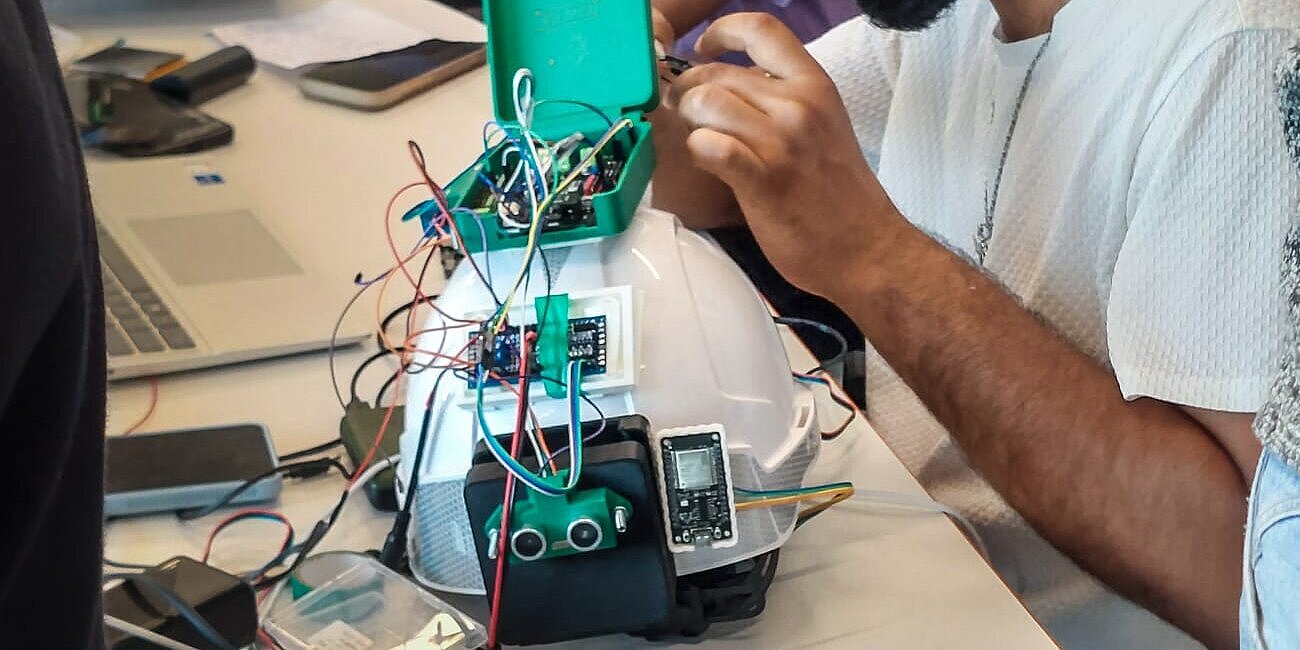
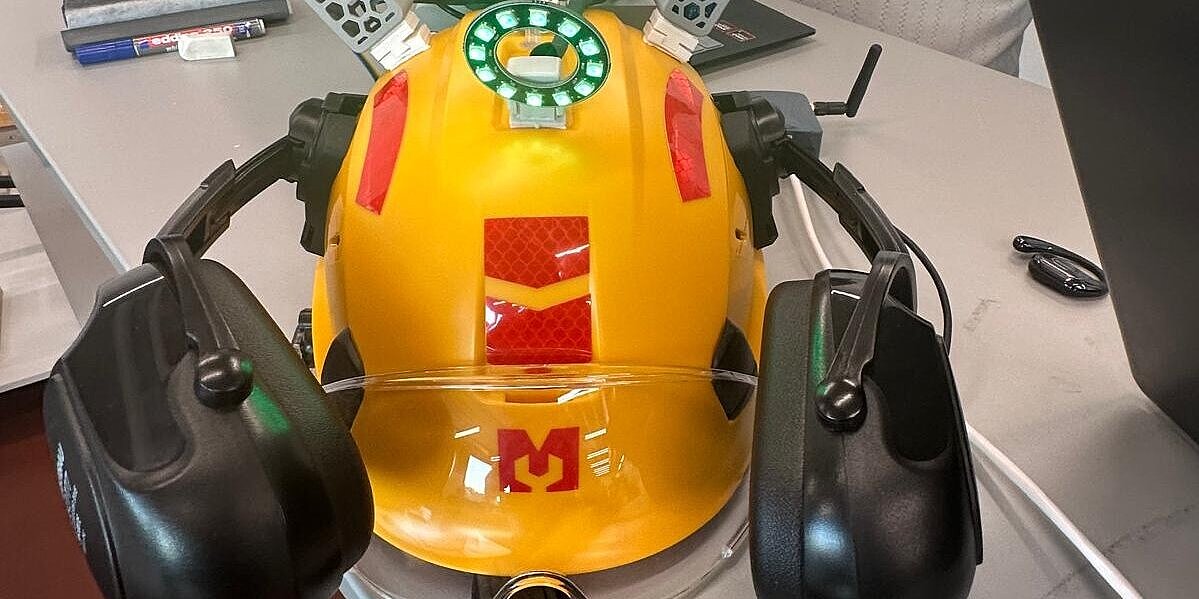
In the Building Lab of the Faculty of Civil Engineering, students from civil engineering, mechatronics, computer science, industrial design and economics developed innovative concepts for an AI-supported smart helmet. The aim was to view people on the building site as active cyber-physical nodes: the helmet serves not only as personal protective equipment, but also as an intelligent interface between construction workers, digital planning and control systems, and robotic assistance systems.
Among other things, the student teams investigated the following areas of application:
- Coordination of human-robot teams and robot swarms
- Task allocation between humans, robots and autonomous machines
- Natural interaction with robots, for example via speech, gestures or visual cues
- AI-powered decision support based on semantic construction site data
- Real-time monitoring of productivity, safety and ergonomics
- Smart logistics, material tracking and construction site organisation
- Interaction with humanoid robots, quadrupeds, drones and autonomous construction machinery
The course was supported by industry and research partners such as PORR, Waseda University, City University of Hong Kong, Bouygues Construction and D&Z Bauunternehmung GmbH. Thanks to the Building Lab’s rapid prototyping infrastructure, students were able to develop their concepts from initial ideas into functional demonstrators within a single semester.
The results demonstrate the potential that lies in combining civil engineering, robotics, artificial intelligence and human-centred design. The Smart Helmet is set to become a key component of future construction sites, where people and autonomous systems work together safely, efficiently and intuitively.
Selected concepts are now to be further developed in collaboration with industry partners through extended field trials and tested under realistic conditions.