Whether it’s smartphones, cars or medical technology: without microchips, modern industry would grind to a halt. At the same time, there is an urgent global shortage of highly qualified specialists in the semiconductor industry. This is precisely where OTH Regensburg comes in: with new funding from the German Academic Exchange Service (DAAD), it is specifically attracting international talent to study, conduct research and enter the labour market in Eastern Bavaria.
A typical career path – which the university aims to facilitate even more effectively in future – illustrates how this might work in practice: a bachelor’s graduate from Malaysia or Singapore comes to Regensburg to study for a master’s degree in microsystems engineering, gains initial experience through work placements at regional high-tech companies, and, after completing a PhD, remains in the region as a highly sought-after specialist.
OTH Regensburg is one of 20 selected universities
OTH Regensburg is one of 20 universities across Germany selected to receive funding under the DAAD’s prestigious ‘Academic Horizons – Attracting Global Minds’ programme. The funding will run from 2026 to 2029 and forms part of the ‘1,000 Köpfe-Plus’ programme run by the Federal Ministry of Research, Technology and Space (BMFTR).
This places OTH Regensburg in an exclusive circle: the funded institutions include 17 universities, several of which are ‘Universities of Excellence’, as well as just three universities of applied sciences. In Bavaria, only Ludwig Maximilian University of Munich and Ingolstadt University of Technology were selected alongside OTH Regensburg.
Bavaria’s Minister for Science, Markus Blume, emphasises: “Microchips are the key technology of our time – and the brightest minds are their most important raw material. The fact that OTH Regensburg is one of only 20 universities selected nationwide sends a strong signal: Bavaria is a magnet for talent and a home for innovation. With the Bavarian High-Tech Agenda, we are investing consistently in future technologies and creating the best conditions for young international talent to study, conduct research and bring their ideas to life here. In this way, we are strengthening our competitiveness and securing prosperity for the next generation.”
“This funding demonstrates that, with our international profile and our research areas, we are focusing on exactly the right priorities,” says Prof. Dr Oliver Steffens, Vice-President for International Affairs and Research at OTH Regensburg.
The funded project centres on the targeted development of young international talent in the strategically vital future fields of microsystems engineering and semiconductor technology. OTH Regensburg is building on its established reputation in the Master’s programme in Electrical and Microsystems Engineering (MEM) as well as on interdisciplinary collaboration, particularly with the Faculty of Electrical Engineering and Information Technology.
The ‘Global Semiconductor Excellence – International Graduate Talent Programme (G-Step)’ project is specifically designed to attract international Bachelor’s graduates to undertake a Master’s degree and subsequently a PhD. Particular emphasis is placed on partner universities in Malaysia and Singapore.
Building on established international partnerships
The Faculty of Applied Natural and Cultural Sciences (ANK) can draw on a strong foundation in this regard: long-standing partnerships with universities in Malaysia and Singapore were established as part of earlier DAAD projects and are now being further developed in a targeted manner. Plans include, amongst other things, dual-degree programmes, joint research projects and intensive support for students across all levels of study.
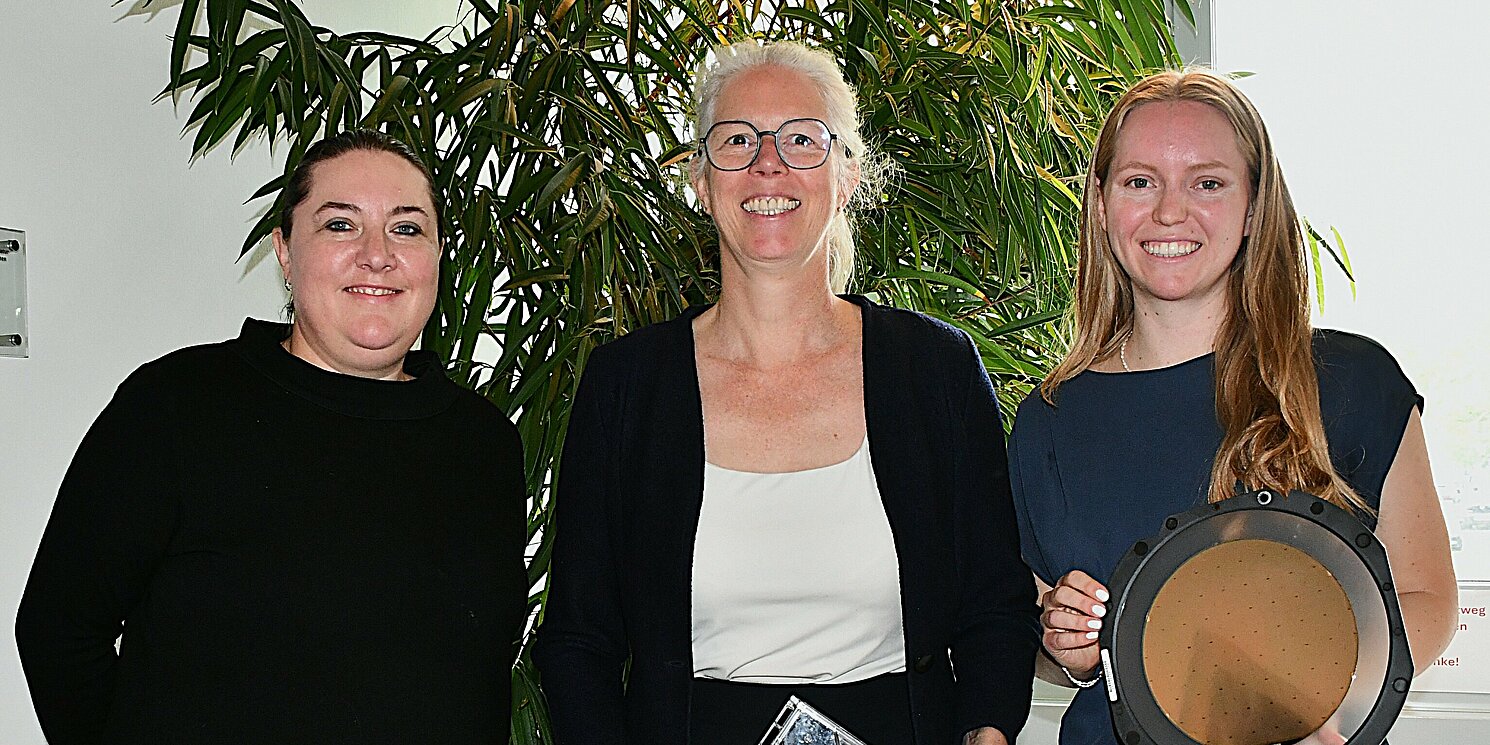
The project is being developed and led by a dedicated team at OTH Regensburg: Prof. Dr Corinna Kaulen contributes her specialist expertise, particularly in microsystems engineering and semiconductor technology, and oversees the academic direction. Gudrun Seebauer, International Affairs Officer at the ANK Faculty, is building on long-standing international collaborations – particularly with partner universities in Malaysia, which she has already established through previous DAAD projects. Lina Krug, Faculty Assistant and project lead for MEM-Gate, played a key role in the project’s conception and application process and is driving its operational implementation. Together, they are pursuing the goal of specifically supporting international talent and opening up long-term prospects for them in Regensburg.
Intensive language support and personalised guidance
A key component of the project is the intensive academic induction, which is supervised by professors acting as mentors. The aim is to provide international MEM students with a structured start to their studies and to offer them close academic support. Particular emphasis is placed on close links with industry partners in Germany and Malaysia. Practical industry projects and excursions to research institutions provide early insights into real-world working environments and encourage direct interaction with the professional world. This programme is complemented by the OTH Bridge project, which offers intercultural training, extracurricular language support and company visits.
“Our approach is a genuine all-round package,” says Gudrun Seebauer. “We combine academic training with intensive language support, intercultural training and personal guidance. Learning German, in particular, plays a key role and is most successfully achieved through everyday life and direct interaction.”
Contribution to the High-Tech Agenda and the regional economy
Through this project, OTH Regensburg is simultaneously expanding its activities within the framework of Bavaria’s High-Tech Agenda (HTA) and specifically strengthening future-oriented fields such as semiconductor and microsystems technology – key sectors for the region’s innovation and competitiveness.
Many of the international graduates have the potential to remain in the region in the long term and contribute to securing a skilled workforce in Eastern Bavaria. For technology-driven companies in particular, the close integration of training, integration and practical experience is a decisive location factor.
The funding programme began on 1 May 2026 and will run until the end of 2029. The first participants are set to commence their studies at OTH Regensburg as early as the 2026/27 winter semester.