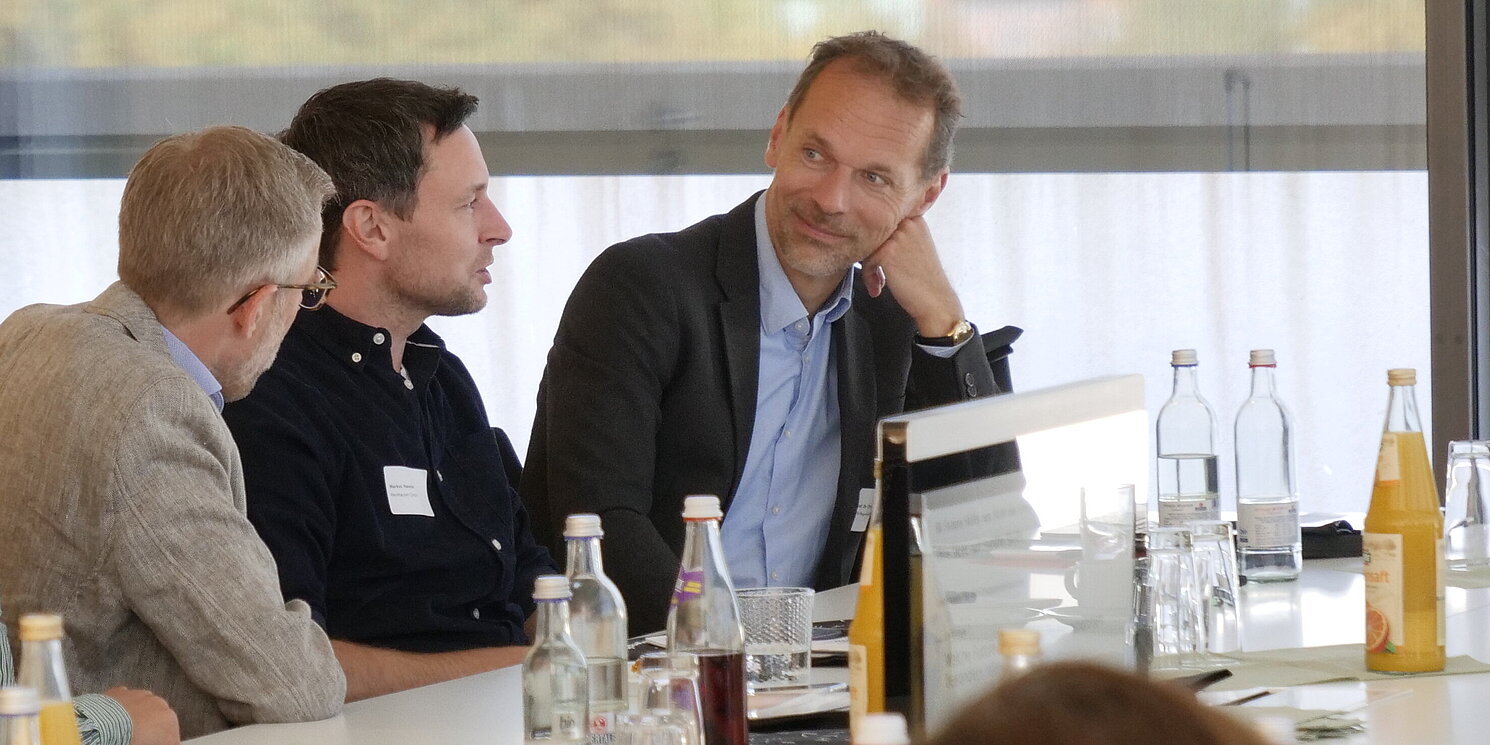
“The fact that you are here today is by no means a matter of course,” emphasised Prof. Dr Birgit Rösel, Vice-President for Studies and Teaching, in her welcome address in the Senate Hall. Anyone who holds a position of responsibility within a company and helps to drive change must make a conscious effort to set aside time for this sort of exchange. Rösel expressly thanked the guests for doing so. Her invitation to spend the morning together was equally clear: “We welcome your questions, your experiences and even your objections.”
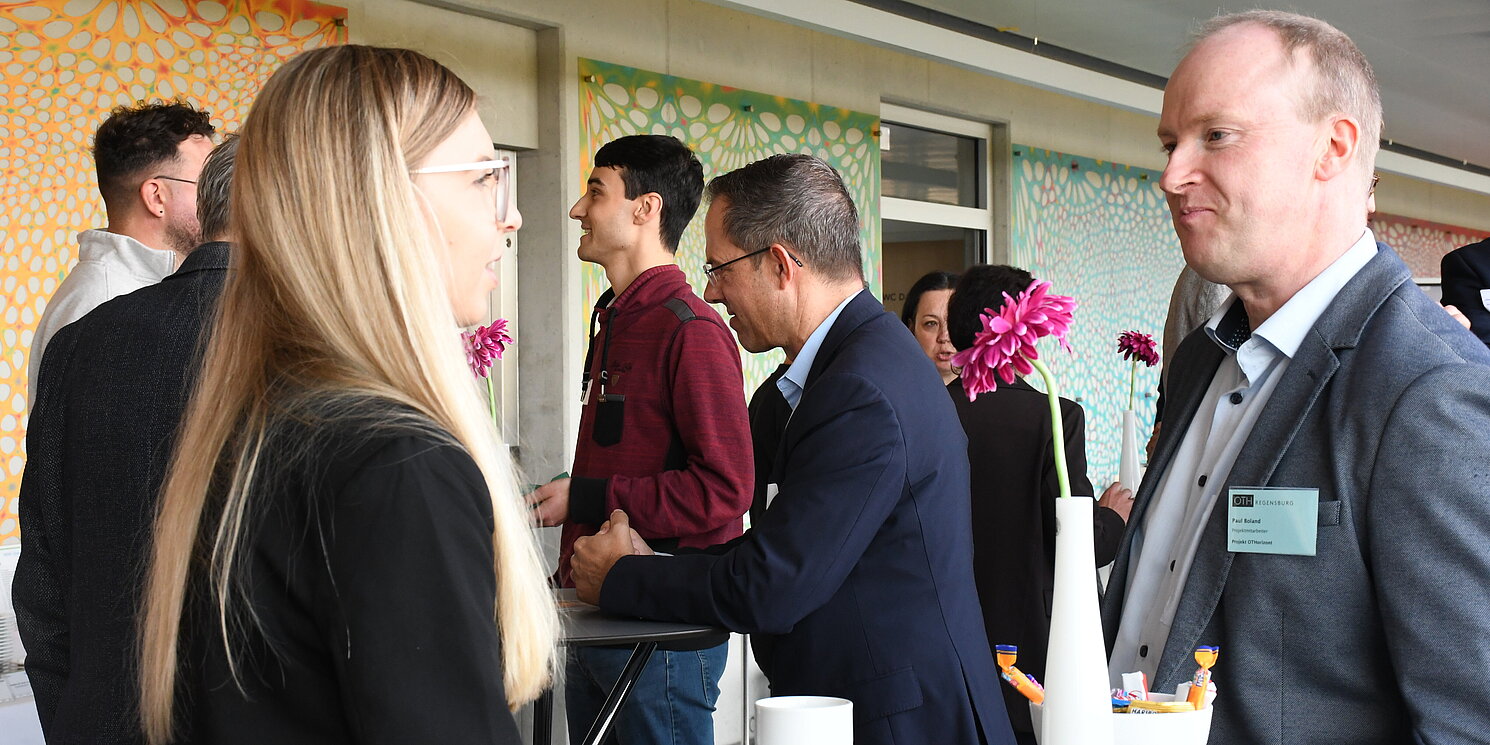
This willingness to contribute characterised the event. The guests shared experiences from their organisations and engaged in lively discussions about which skills empower people in their professional lives – and how the university can support their development. The carefully prepared opening session provided the space for this and offered a variety of topics for discussion. Manuel Glondys, project coordinator and operational manager at OTHorizont, led the morning’s proceedings.
With the ‘Sounding Board’, OTHorizont has created a consultative forum that brings together perspectives from businesses, the university and the student body. The aim is for these practical experiences to help identify future skills requirements at an early stage and to further develop teaching, supplementary and continuing professional development programmes. Just how valuable this dialogue can be became clear right from the first major meeting.
What empowers people in their day-to-day work
As diverse as the participants’ sectors and fields of work were, their shared concerns were equally evident. Resilience, a willingness to learn and adaptability were repeatedly mentioned. When it came to dealing with artificial intelligence, the focus was on the ability to critically assess results, scrutinise information and handle data responsibly.
The discussion became particularly tangible when the topic of ‘ownership’ was raised: taking responsibility, driving tasks forward independently and developing solutions even beyond the boundaries of existing processes. How can young people experience at an early stage that their actions make a difference? What scope for initiative do they need to do so? And how can experienced staff and junior staff learn from one another? Questions such as these linked the discussion on skills to concrete experiences from everyday working life.
The discussion also centred on self-efficacy and social responsibility, as well as on combining specialist knowledge with practical experience. The contributions highlighted the expectations companies have of young people and the opportunities they see for supporting their development.
In conversation: universities and businesses learn from one another
Insights from research and teaching provided a common basis for the discussions. Prof. Dr Thomas Kriza, scientific director of OTHorizont, presented the project’s objectives. Prof. Dr Julia Hartmann, Professor of Work and Organisational Psychology, explained the scientific foundations of Future Skills and the framework developed by OTH Regensburg. Its three areas – personal development, social responsibility, and digitalisation and transformation – helped to contextualise the various concerns.
Prof. Dr Christian Dach, Professor of Sales Management and Logistics, demonstrated how students can put such skills into practice using the ‘Negotiation Buddy’. With this AI-powered negotiation trainer, they practise negotiation scenarios using voice commands and receive immediate feedback. This requires not only communication and negotiation skills but also a reflective approach to AI.
Dr Xenia Justus and Sophia Barth from the Human Resources Development Unit provided insights into the perspective of teaching staff. They presented survey results on which future skills teaching staff consider relevant and how confident they feel in applying them. In the group discussions moderated by Hartmann and Kriza, these assessments were contrasted with experiences from corporate practice: the guests reported on AI training courses, personal development programmes and cross-departmental learning communities.
Regular feedback and support during change processes were also discussed. Different perspectives on change management and leadership in the context of AI provided an opportunity to probe further. This is precisely where the value of the sounding board lies: universities and businesses can test their assumptions against one another and learn from each other.
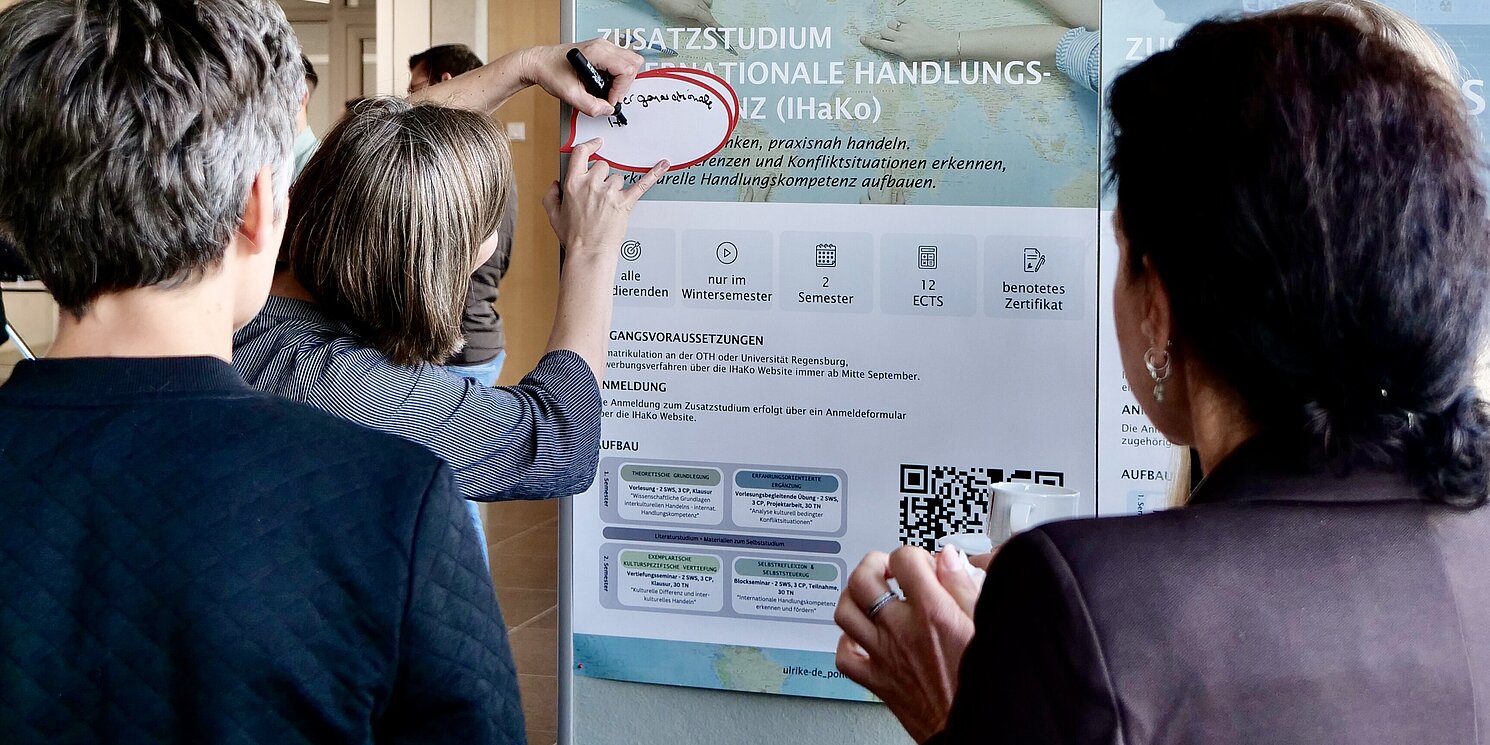
Gallery Walk on supplementary study programmes and microcredentials
During the Gallery Walk on supplementary study programmes and microcredentials – compact supplementary qualifications offered by OTH Regensburg – the focus was on existing, specific programmes. The consolidation, strategic development and expansion of these programmes form an integral part of OTHorizont. Prof. Dr Ulrike Plach and Kerstin Mayerhofer – both involved in OTHorizont – are addressing this in close collaboration with the Centre for Continuing Education and Knowledge Management (ZWW). Using the posters as a basis, the participants discussed how the programmes can address the needs of businesses and which topics should be given greater consideration in future. For OTHorizont, this provides starting points for further developing the programmes in collaboration with the business community.
A fitting conclusion with a look ahead to further collaboration
Over lunch together, there was an opportunity to continue discussions and strengthen professional ties. This was followed by the chance to take a tour of the campus. The dialogue that has begun is set to continue: the Sounding Board is designed as an annual event and is due to reconvene in autumn 2027. Company representatives will now be invited to take part in a digital survey, the results of which are to be presented at the next Sounding Board meeting.