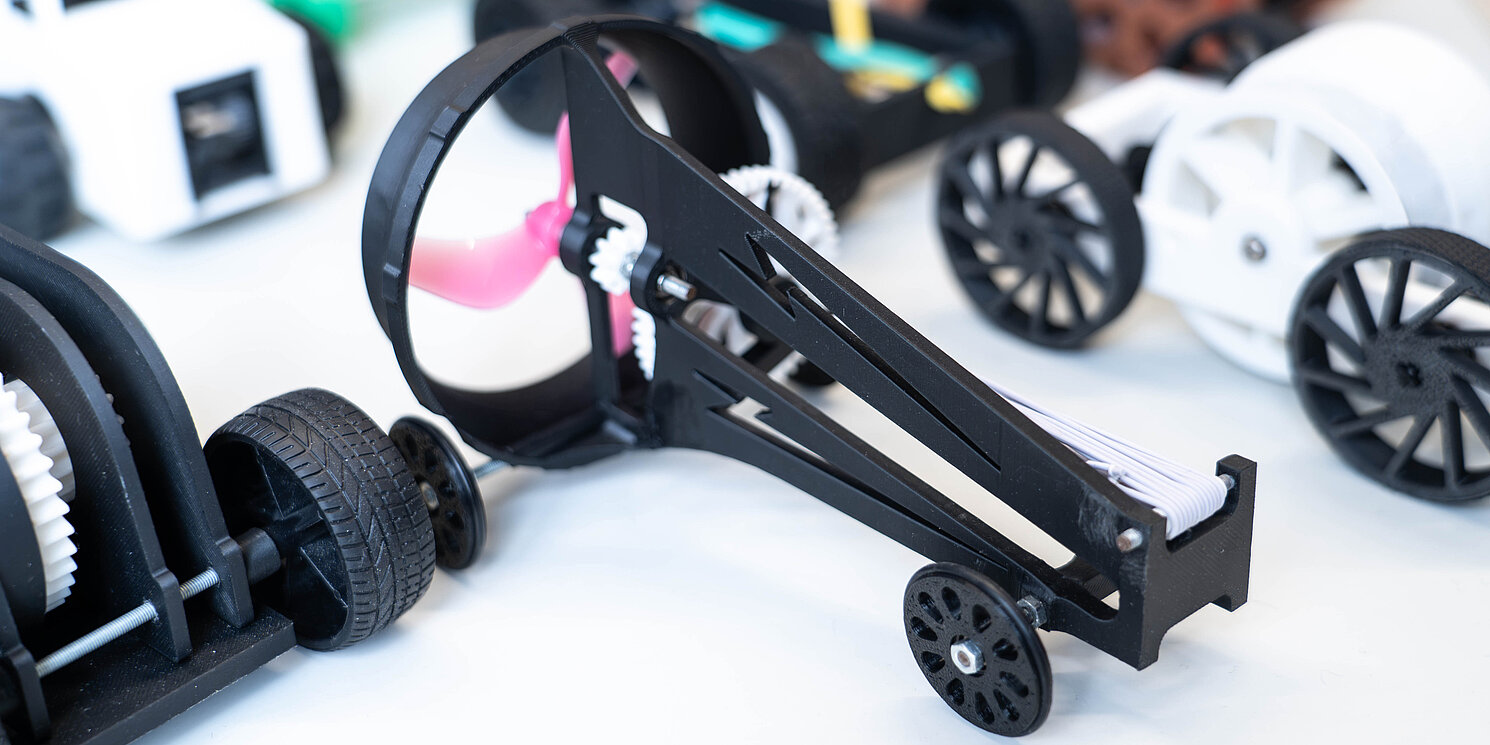
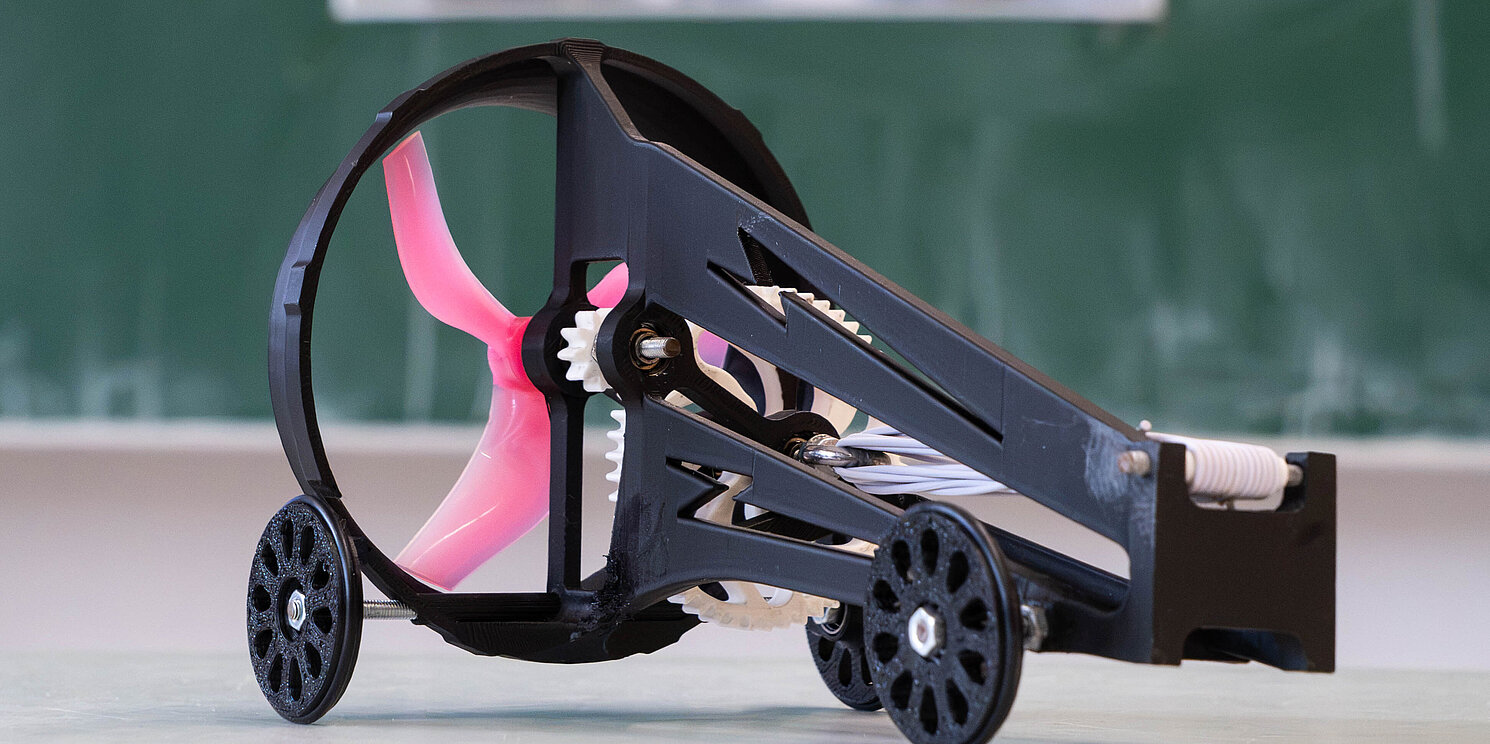
What exactly is digital engineering and where is it used? On 29 October 2026, around 120 pupils in Year Q13 at the Werner-von-Siemens-Gymnasium in Regensburg received answers to these questions. As part of the school’s local study day, the Faculty of Mechanical Engineering at OTH Regensburg was invited to present the Digital Engineering in Mechanical Engineering (DEM) degree programme – and had brought along some illustrative examples to support the presentation.
Hands-on lecture with practical experiments
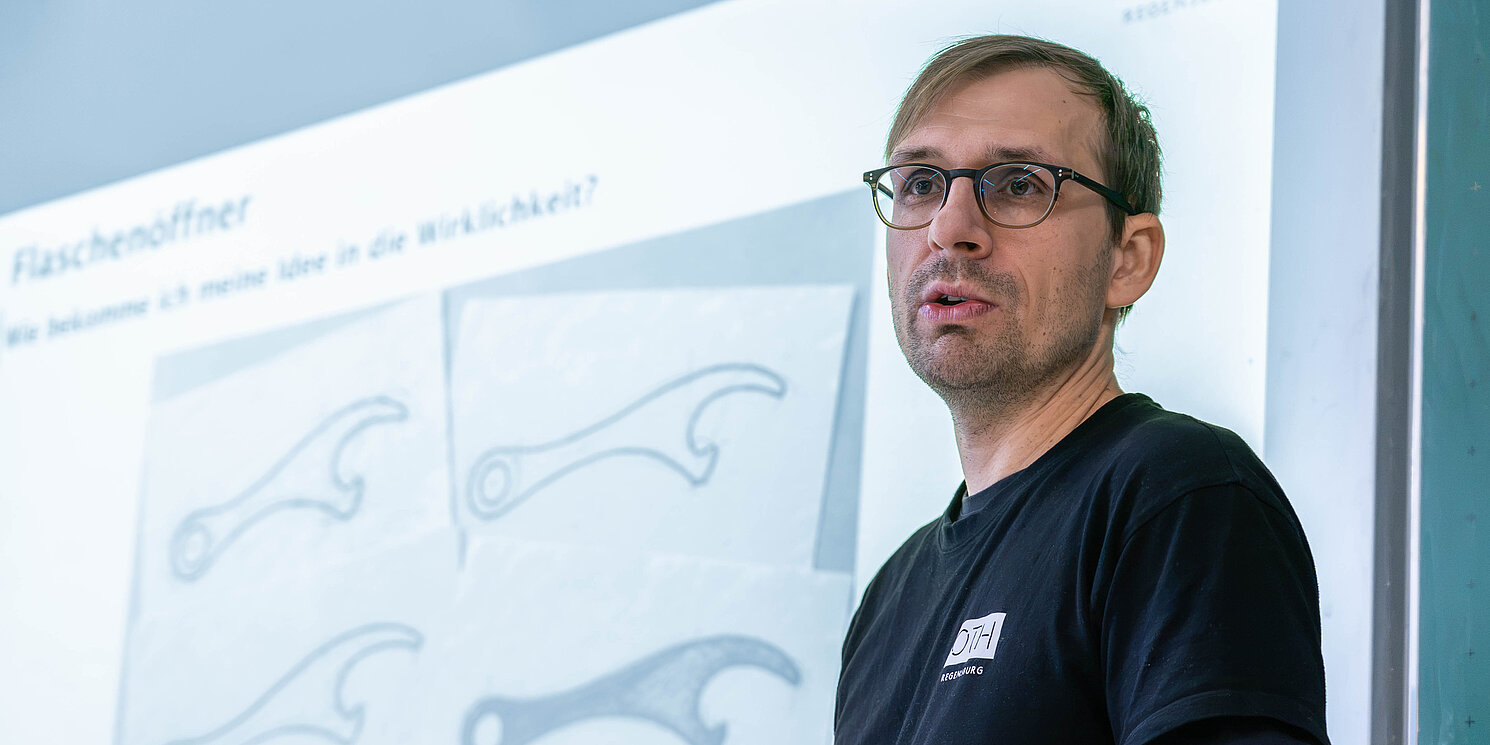
The presentation took place in three staggered groups in the style of a hands-on lecture. Course advisor Prof. Dr Carsten Schulz repeatedly engaged the pupils in the presentation of the subject area by asking them questions. Questions from the audience were also expressly encouraged.
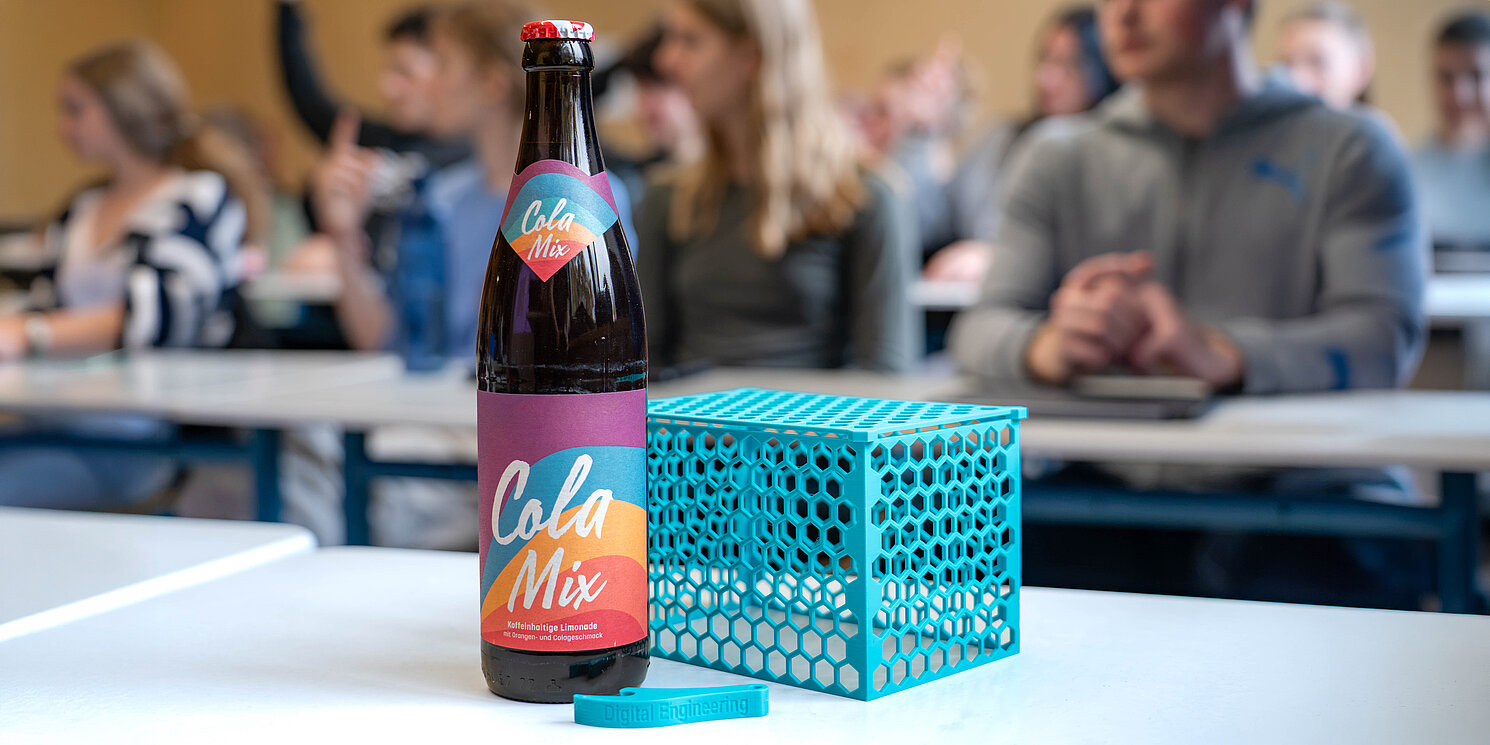
The presentation centred on a practical case study: how do you design a reliable bottle opener without lengthy test series or complex prototyping? Initially, a model designed to use as little material as possible was produced on a 3D printer: it soon became apparent that the forces generated whilst opening a bottle caused it to deform significantly.
Optimisation in a virtual environment
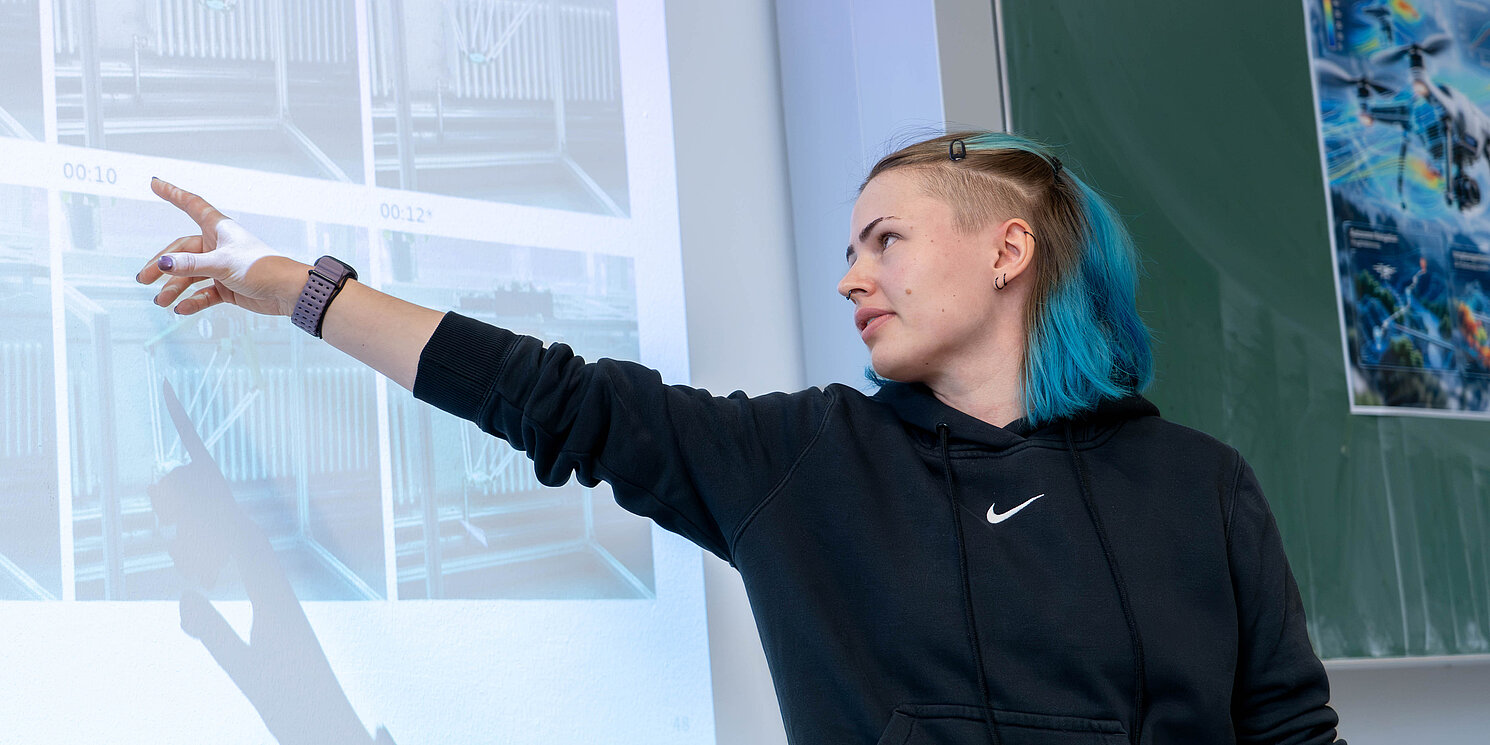
PhD student Yannick Vogl demonstrated that this deformation can be predicted in detail using a computer simulation: “By using specialised software and a comprehensive materials database, it is not only possible to analyse sources of error in components retrospectively, but also to adjust the design directly and carry out virtual tests in advance.” In this way, a new version of the bottle opener with improved stability was created on the computer. “What has been clearly demonstrated here is also of great significance for companies. Virtual testing allows development processes to be organised more efficiently and saves considerable costs associated with time-consuming real-world test series,” emphasised Prof. Dr Carsten Schulz.
Practical test confirms the result
The pupils were then able to test for themselves that the digitally revised version also works better in reality than the original tool: 3D-printed, optimised bottle openers reliably withstood the stresses of opening bottles and were taken home by the pupils as a small memento of their insight into the field of digital engineering.
Students share personal insights
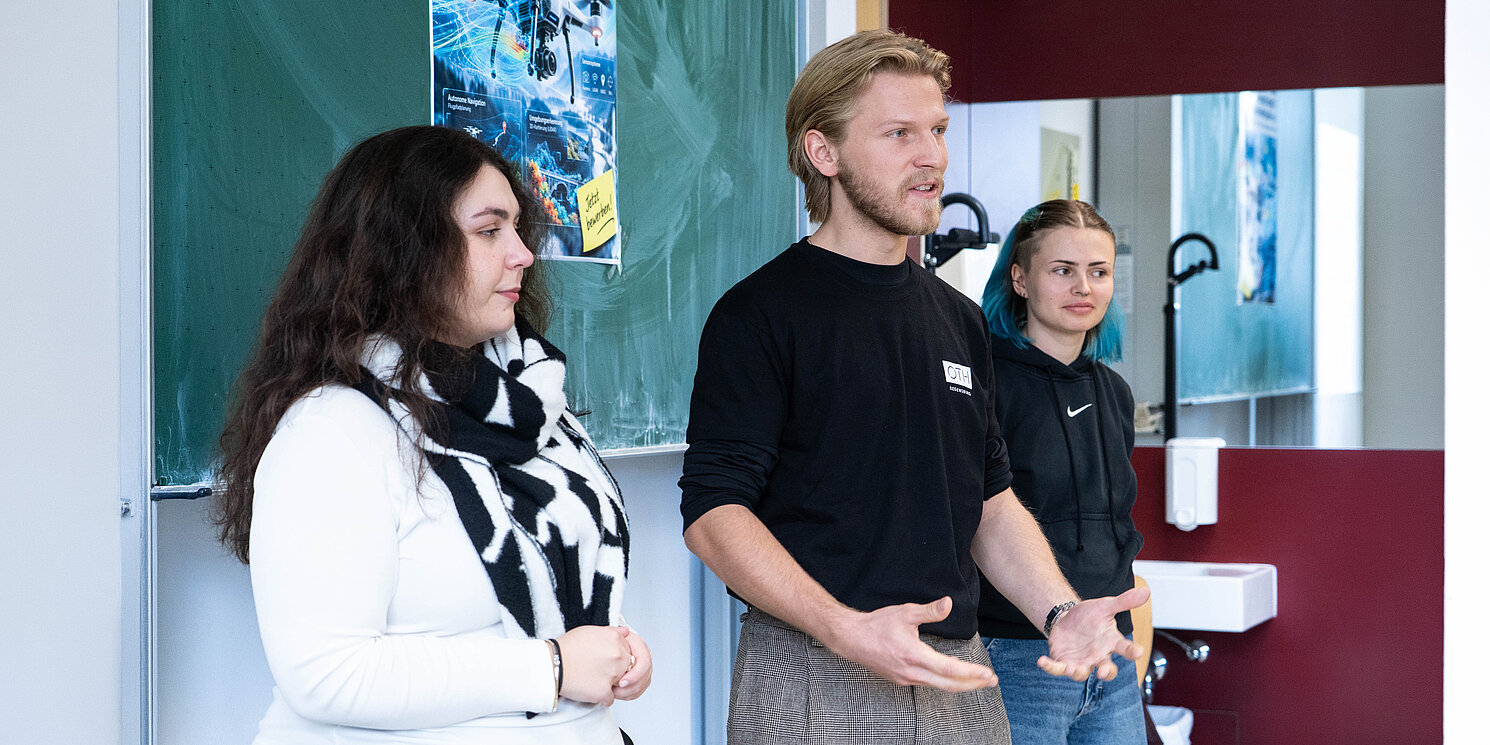
There was also plenty of scope for sharing personal experiences. Three students from the DEM degree programme were also present and spoke about their own career paths and their experiences during their studies. This direct exchange gave the pupils the opportunity to ask questions first-hand and gain a personal insight into the course content and everyday student life.
One question that came up was one that concerns many prospective students: do you need to have particularly good marks in maths and physics at school to successfully complete such a degree programme? The students made it clear that what counts above all is the determination to engage more deeply with these subjects. For example, key fundamentals of school mathematics are revisited and explored in greater depth during the degree programme. Anyone wishing to refresh their basic knowledge in advance can also enrol on a preparatory course.
Valuable insight into the world of digital engineering
To conclude, Prof. Dr Carsten Schulz highlighted just how diverse the potential applications of digital engineering are: for example, such methods are also used in the design of wind turbines or for optimising medical products, such as stents. “If you choose the Digital Engineering in Mechanical Engineering degree programme at OTH Regensburg, you’ll be opting for a cutting-edge field of study that is taught in a practical manner and in small seminar groups. This will ensure you are ideally prepared for a successful career,” he told the audience as he concluded his remarks.
The visit to the Werner-von-Siemens-Gymnasium thus vividly demonstrated just how versatile digital engineering can be. At the same time, the pupils gained an authentic insight into the degree programme and the opportunity to engage in informal, face-to-face discussions with lecturers and students.