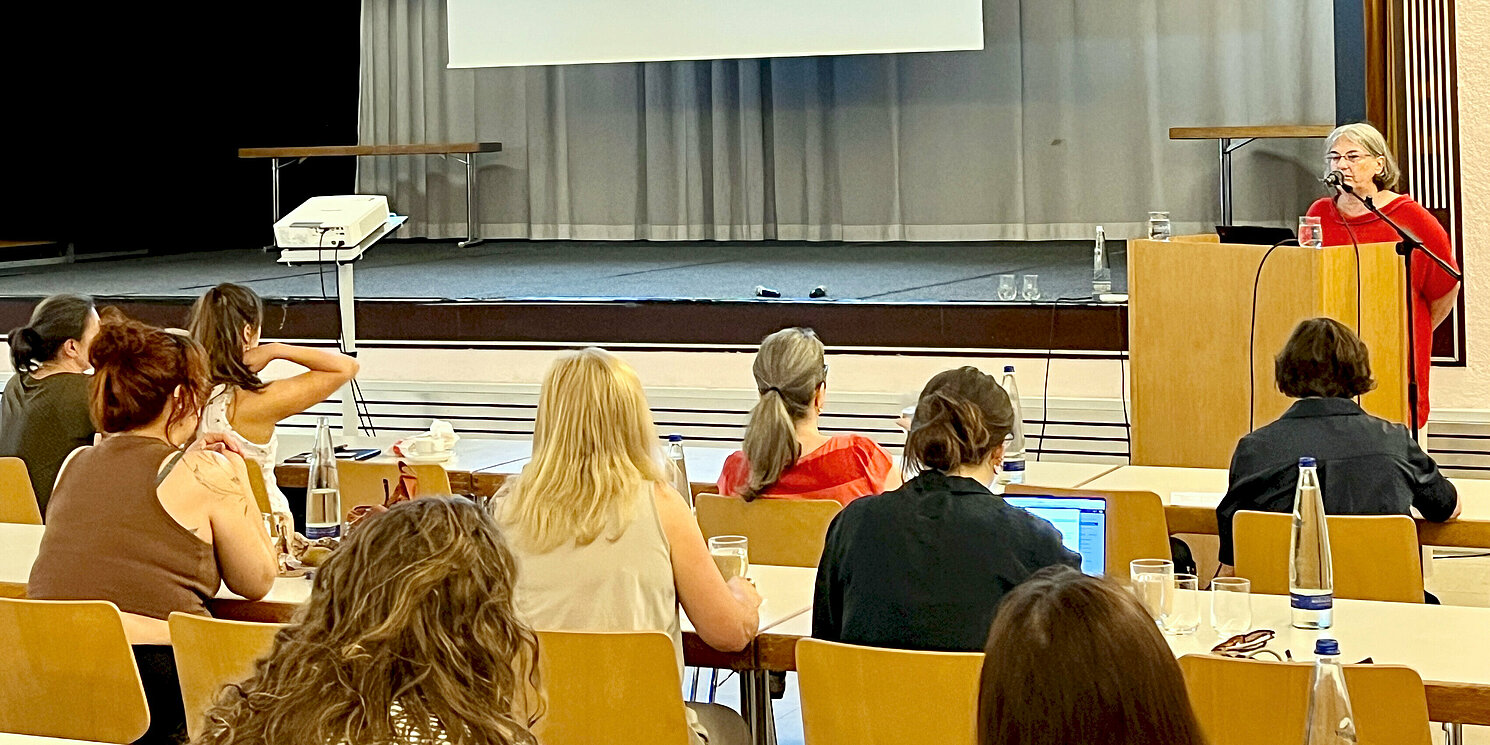
Democracy and gender equality are increasingly facing challenges posed by right-wing extremism, anti-feminism and social polarisation. For this reason, the RESAG research project (Right-wing Extremist Influence and Counterstrategies – The Fields of Social Work and Gender Equality), part of the Bavarian research network ForGeRex (Research Network for Contemporary Analyses, Practices of Remembrance and Counterstrategies to Right-wing Extremism in Bavaria) organised a conference in Munich on 18 and 19 June entitled ‘Democracy and Equality under Pressure: Emancipatory Perspectives and Strategies’.
The conference thus addressed key issues of the RESAG project, which is being conducted by Jessica Hoyer (research assistant at OTH Regensburg), under the direction of Prof. Dr Clarissa Rudolph (Professor at the Faculty of Social and Health Sciences at OTH Regensburg), which examines the influence of the far right on gender equality. Other organisers included the Munich Women’s Academy, the Network for Gender Research and Gender Equality Practice in Bavaria, and the Bavarian State Coordination Office against Right-wing Extremism. Around 120 guests attended: some brought the latest research findings, whilst others shared their practical experiences in the fields of gender equality, social work and counselling. These diverse perspectives highlighted just how much academia and practice benefit from one another, and how similar the challenges and struggles can be across different professional fields.
Threats to democracy from the far right
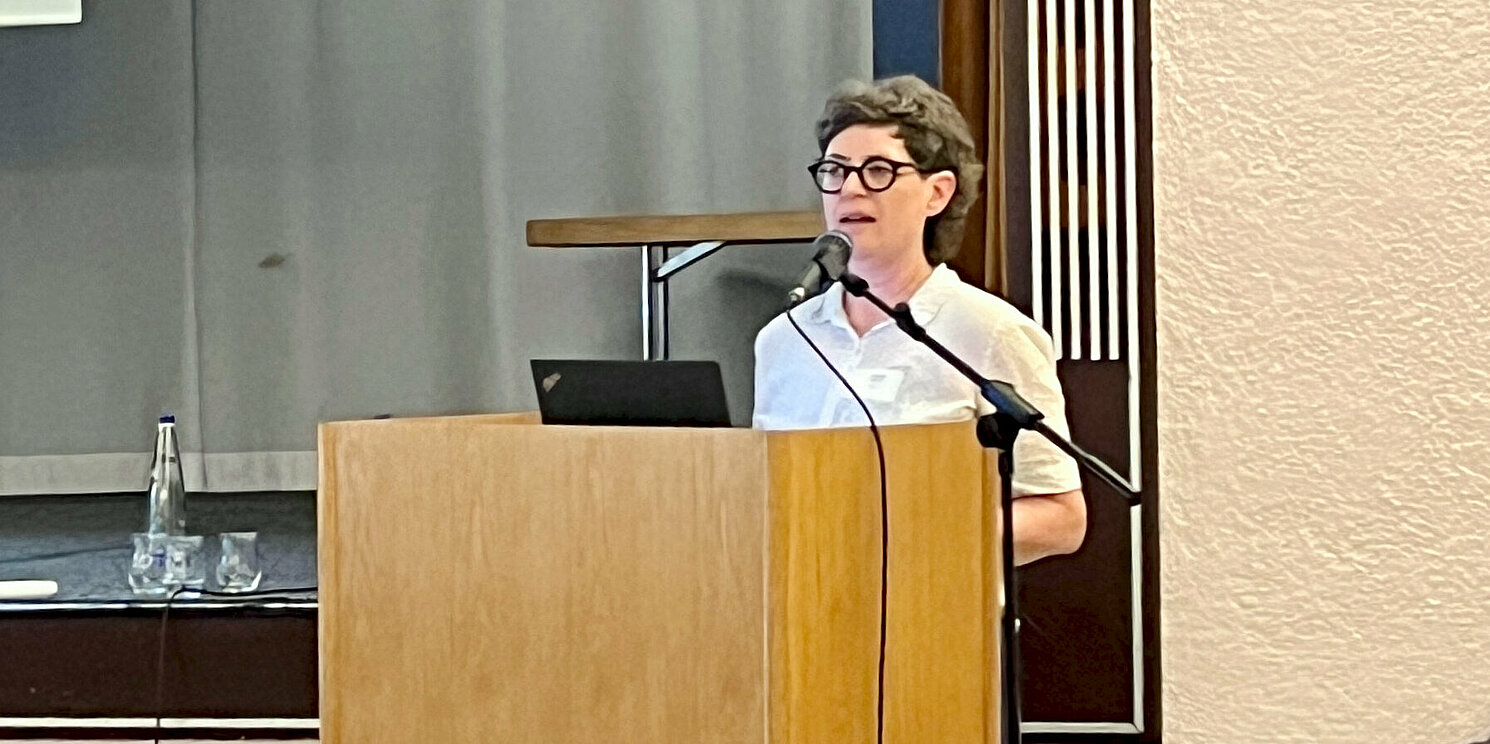
To kick off the debate, Professor Dr Clarissa Rudolph, spokesperson for the ForGeRex research network and RESAG project leader, outlined the current challenges and threats to democracy, particularly from the far right. However, according to Prof. Rudolph, it remains essential to maintain a critical stance even in the context of defending democracy, as she vividly illustrated using feminist theory. Clarissa Rudolph sees the current threats primarily in the expected election results for the AfD in the forthcoming state elections, in the normalisation of misanthropic attitudes and behaviours, in rising anti-feminism, and in the consequences of disillusionment arising from (inadequate) democratic processes or their outcomes. Nevertheless, she noted that there are numerous civil society groups and initiatives working to promote human rights and improve democracy.
Further presentations and workshops also highlighted and discussed specific aspects of the threats to democracy and gender equality. Overall, according to the conference participants, a sense of democratic responsibility and a clear rejection of attacks on democracy must take hold in order to counter ‘violent normalisation processes’. However, the aspiration for democracy in practice is often thwarted by the fact that it is not practised sufficiently ‘from the bottom up’ (in upbringing and education) and is not supported sufficiently ‘from the top down’.
Increased pressure on equality officers
Jessica Hoyer, Clarissa Rudolph (OTH Regensburg) and Matthias Lorenz and Renate Bitzan (TH Nuremberg) went on to present the latest findings from the RESAG research project. The quantitative findings on far-right influence on gender equality clearly show that equality officers and gender researchers are increasingly exposed to direct anti-feminist influence or are coming under growing pressure due to societal shifts and an ever more palpable sense of threat.
This is leading, in some cases, to serious psychological and professional strain. Furthermore, colleagues are falling silent – as noted in the survey. Nevertheless, anti-feminist influence also leads to public solidarity and can strengthen internal cohesion: “[We] try to be there for one another, especially when things get very emotional, given the impact the backlash has on you.” The findings of the sub-project conducted by Nuremberg Tech also show that the far right plays a significant role in and for social work, both through its own social work initiatives, through targeted violence and attempts at intimidation from outside, and through an increasing number of social workers who espouse far-right views. “Social work is not democratic per se, but is a politically contested field,” said Matthias Lorenz.
Despite these findings, and however uncomfortable and full of ambivalence democracy may be, giving up is not an option, as one student put it. Alongside all these struggles, this also involves setting our own agenda to advance a vision of a non-violent and (gender-)equitable society in which self-determination and participation are guaranteed for all.