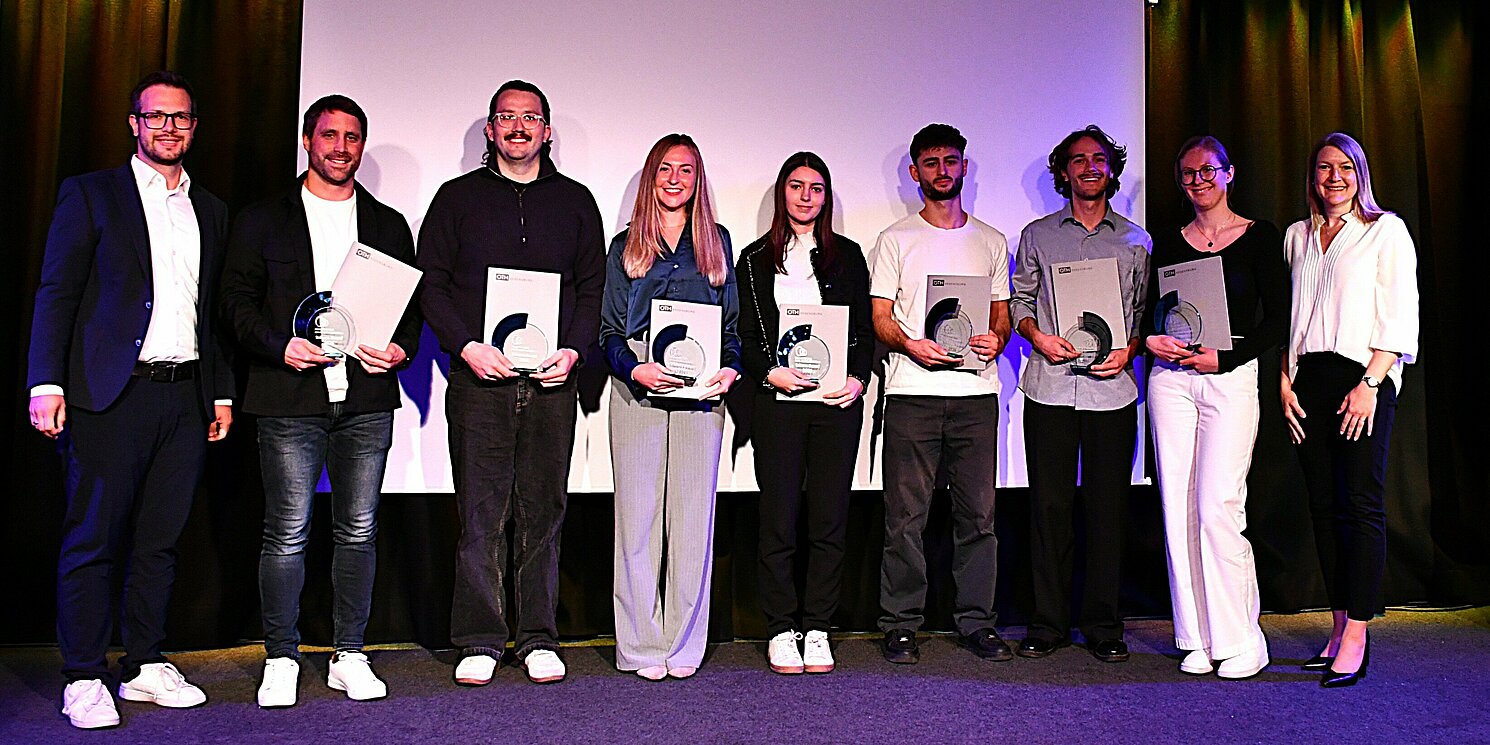
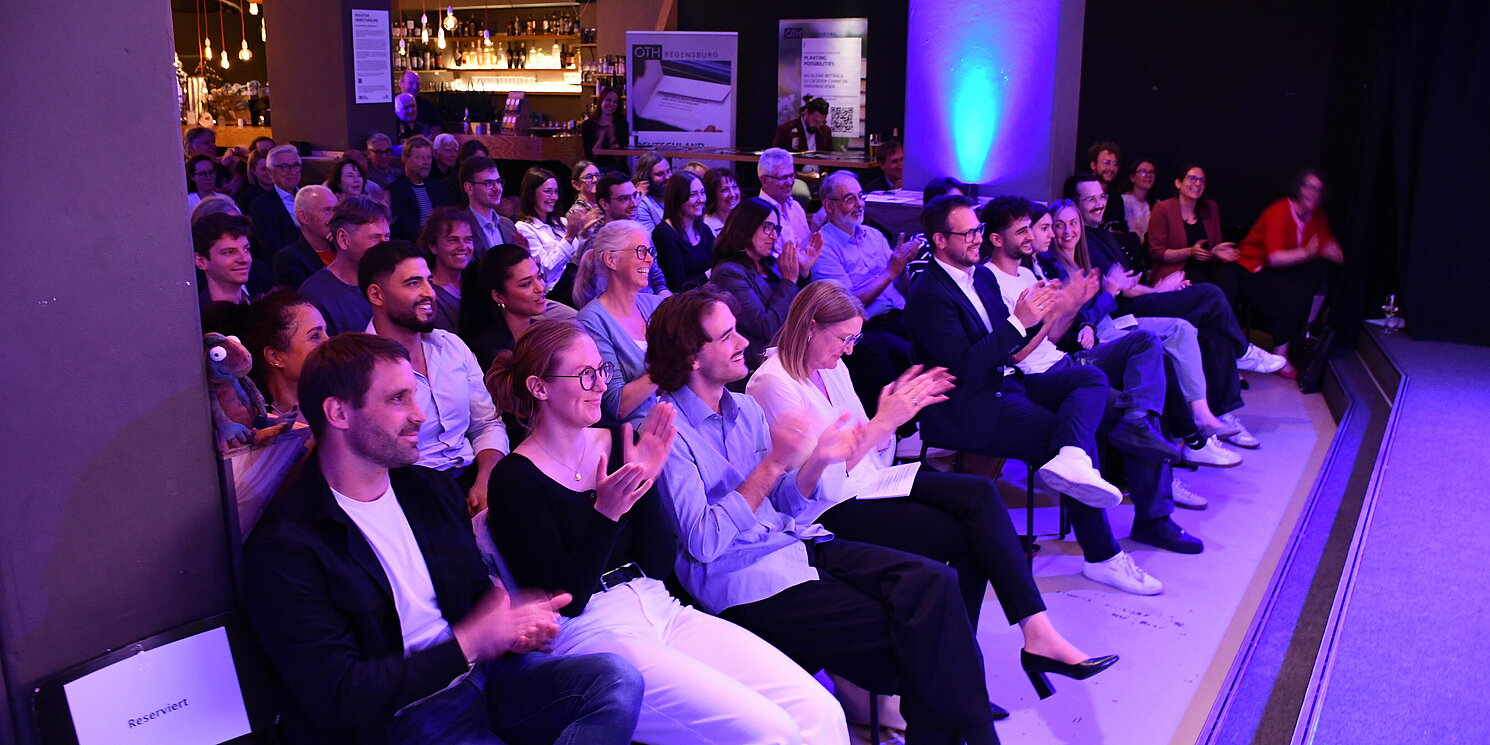
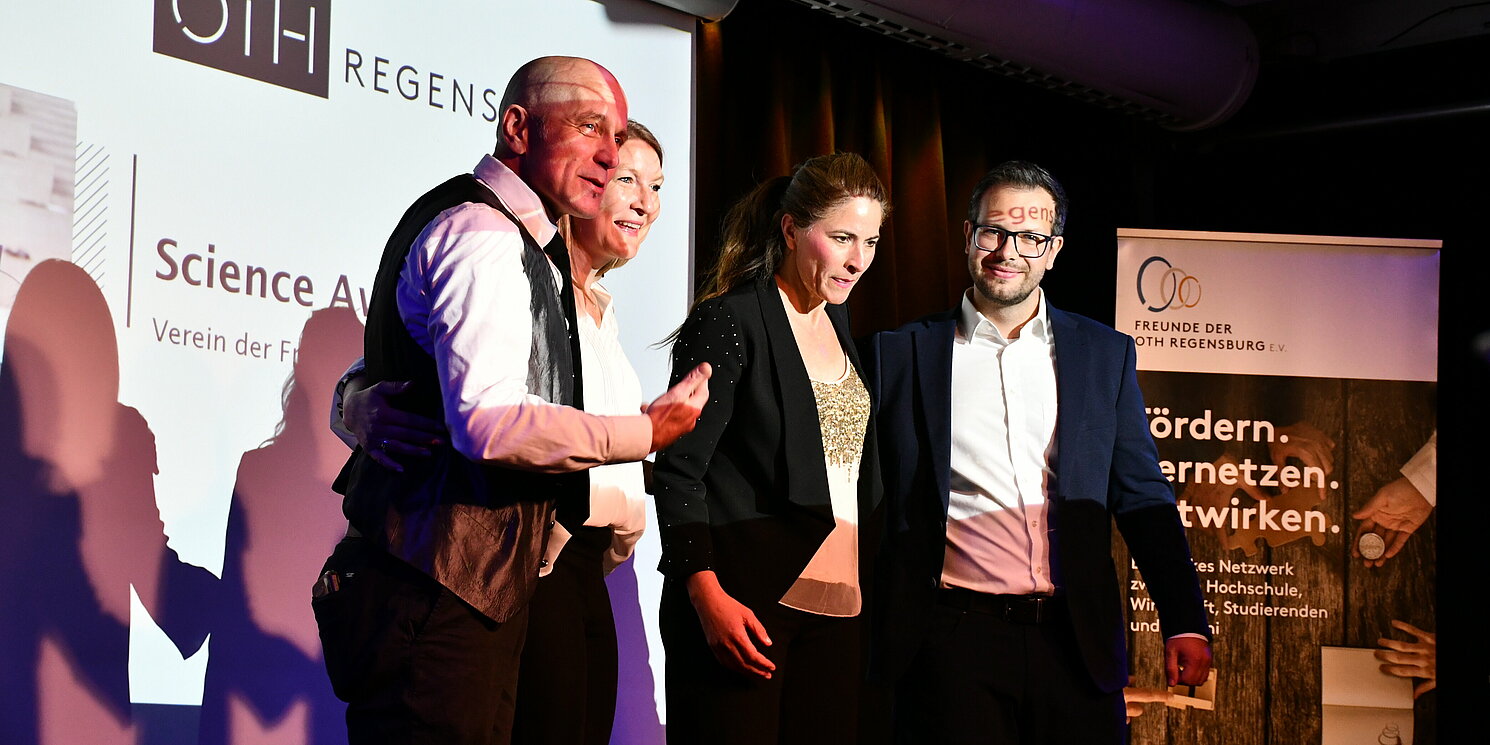
Atmospheric lighting, improvised theatre scenes and outstanding research in the heart of Regensburg’s old town: to mark the tenth anniversary of the Science Award organised by the Friends of OTH Regensburg Association, the awards ceremony was held at the Degginger for the first time. A venue that, like few others, embodies creativity, innovation and social interaction. Amidst an atmospherically lit stage, improv theatre and conversations in a relaxed atmosphere, seven outstanding final-year projects took centre stage on Wednesday evening.
Around 100 guests from the university, business and the wider community experienced just how accessible and vibrant science can be. The new venue was chosen deliberately: science should not merely be presented, but experienced within the urban community.
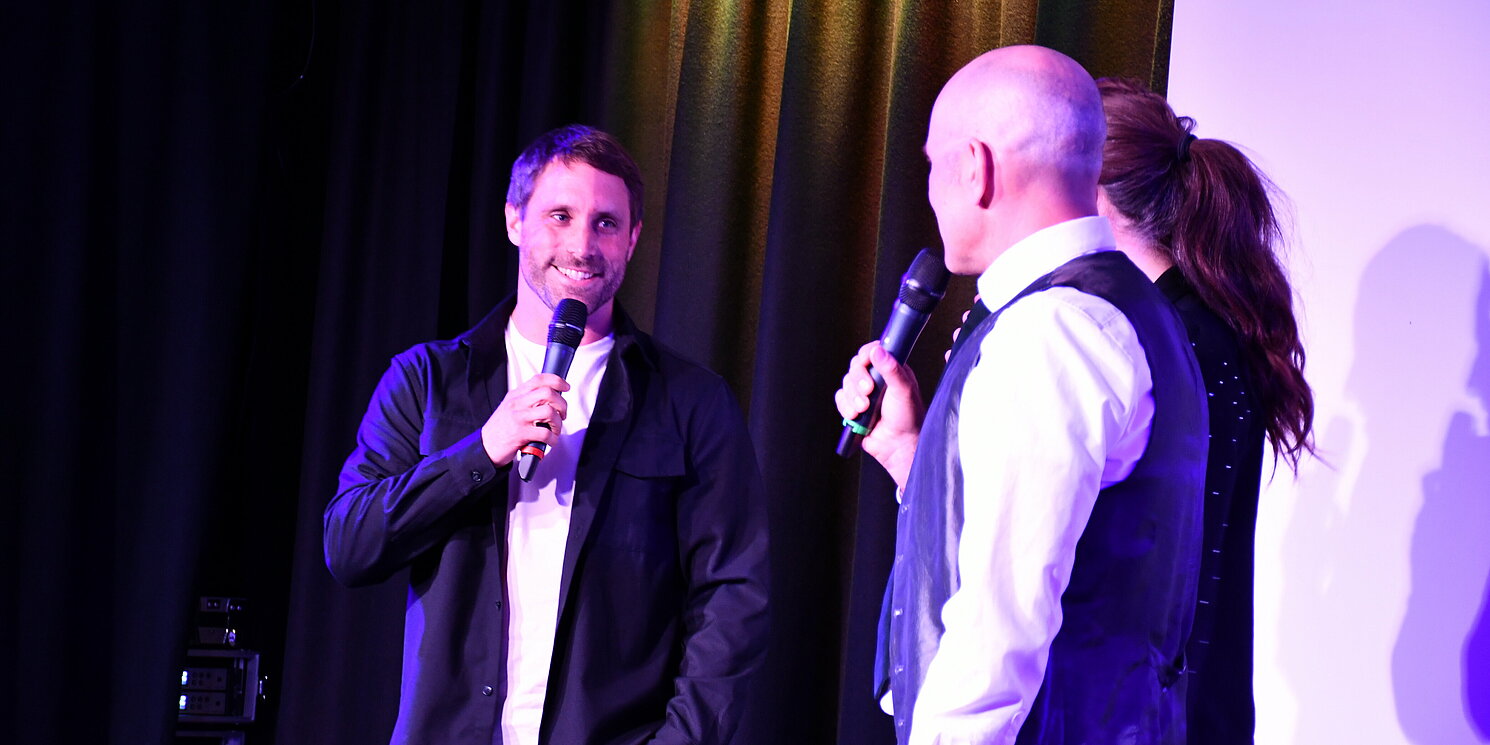
The ImproTheater Chamäleon provided a humorous start to the evening. With spontaneous scenes and witty interludes, the actors creatively addressed the themes and repeatedly lightened the mood of the event. The blend of science, stage atmosphere and personal interaction defined the special character of the anniversary event.
Research has an impact on practice and society
“With the Science Award, we recognise work that is not only scientifically excellent, but also demonstrates how research has a tangible impact on practice. It is about ideas that have an impact beyond the university,” emphasised Prof. Dr Carina Braun, Vice-President for Appointments and Student Lifecycle Management at OTH Regensburg, in her opening address.
The fact that the award ceremony took place at the Degginger for the first time was a deliberate choice to reflect the concept of knowledge transfer. Research should be visible, not only within the university, but right in the heart of the city and in dialogue with society, business and culture.
Due to the high quality of the submitted work, the jury also decided, as an exception this year, to award seven prizes.
Michael Thurner, Chairman of the Friends of OTH Regensburg Association, highlighted the social significance of the award-winning projects: “It is not only the scientific quality that matters, but also the impact an idea can have. The award-winning projects impressively demonstrate how research can address concrete challenges in business, society and the region.”
The prize winners each presented their work to a wide audience in short talks. The topics ranged from sustainable urban development, through CO₂ reduction and AI-supported customer communication, to inclusive leisure activities for people with disabilities.
Seven outstanding theses
Aaron Burkhardt from the Faculty of Architecture focused his thesis on sustainable housing concepts in the Königswiesen Süd district of Regensburg. Under the title “Housing sufficiency as a contribution to the housing issue”, he examined how existing living space can be used more efficiently and what potential sustainable urban development offers.
Abdulkadir Gözüm from the Faculty of Applied Natural and Cultural Sciences developed materials for the electrochemical reduction of carbon dioxide. His work demonstrates new approaches to not only avoiding CO₂ in the future, but also utilising it as a raw material.
Sophie Jacobs from the Faculty of Business and Management investigated the acceptance of AI-based customer contact channels using the example of a voicebot from E.ON Grid Solutions. Her findings revealed that whilst users often rate AI systems as helpful, they also recognise limitations in practical use.
Tanja Böhm from the Faculty of Civil Engineering analysed the moisture behaviour of wood-concrete composite slabs, thereby contributing to sustainable construction with wood.
Marco Schamel from the Faculty of Electrical Engineering and Information Technology focused on Algeria’s strategic options in the context of the global energy transition. The research centred on issues relating to gas, electricity grids and hydrogen infrastructure.
Verena Spickenreither from the Faculty of Computer Science and Mathematics developed mathematical models for human resource planning. Her work combines theoretical optimisation methods with practical applications in business.
Lukas Kistenpfennig from the Faculty of Social and Health Sciences examined the leisure activities offered by the Open Disability Services in the district of Kelheim, focusing in particular on the perspective of people with disabilities.
Following the presentations, the guests were also able to vote themselves: the most convincing presentation of the evening was chosen in a public vote. Lukas Kistenpfennig emerged victorious with his work on leisure activities in open disability services in the Kelheim district.
To round off the evening, award winners, supervisors and guests engaged in conversation. This was precisely what gave the evening its special character: science was not merely honoured, but experienced together and explored further.
The Science Award
The Science Award has been presented by the Association of Friends of OTH Regensburg e.V. since 2017. It recognises outstanding final-year projects from various disciplines that demonstrate scientific quality, innovative strength and practical relevance. The prize is worth 500 euros each.