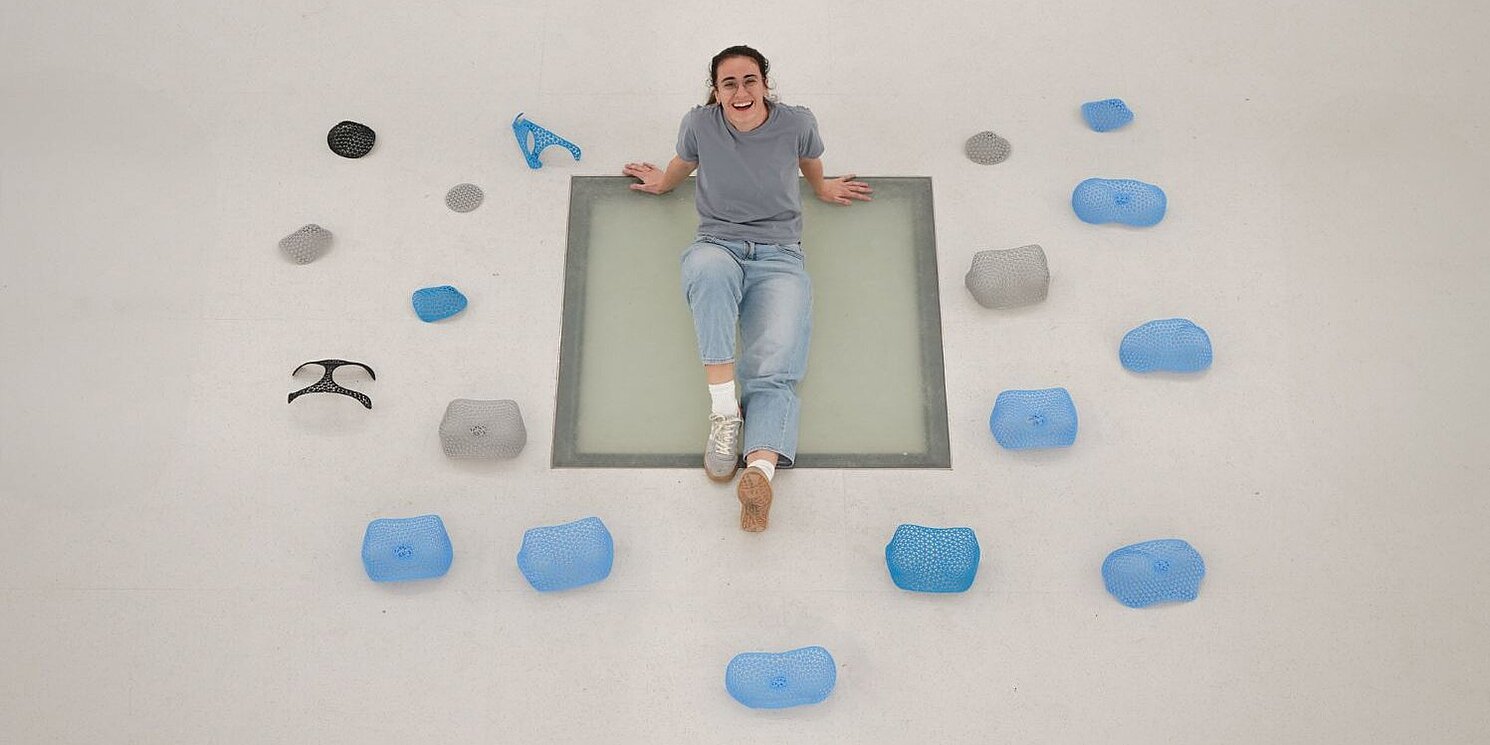
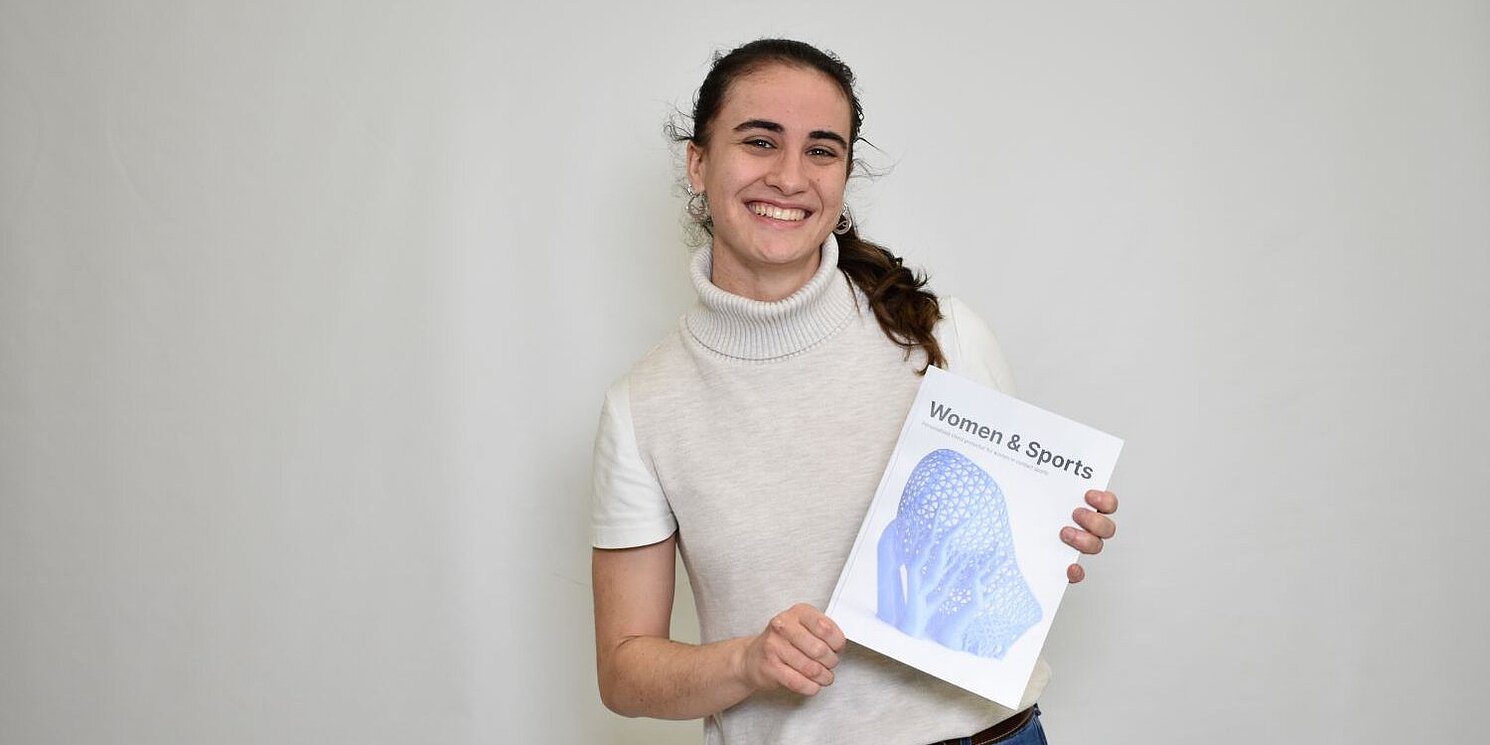
Female boxers have to wear a chest guard at many competitions, but the standard models fit poorly. In her bachelor's thesis on the Industrial Design degree programme at OTH Regensburg, Beatriz Jerez Arnau has developed a 3D-printed guard that adapts to the body of each individual woman. At the James Dyson Award 2026, the design was named one of two national runners-up.
Jerez Arnau tried on the cheapest chest guard set she could find herself. At the bottom, the shell stood well away from her body. ‘I bought it, tried it on and thought: no way.’ The reason is that the bra and shell are only sold together. If you need a bra in size M, you also get the shell in size M. Bra size, however, depends on the circumference of the ribcage, which, as Jerez Arnau explains, says little about the size of the breasts. Athletes from combat and contact sports whom she interviewed reported that the guard constantly slips, and some tape it in place. In professional boxing, the rules even provide for this. The guard rubs and causes blisters, and models made of two separate shells can shift and injure the wearer herself.
How often women injure their breasts during sport has barely been researched. In a 2018 US study of 194 female college athletes, almost half had suffered a breast injury, and fewer than ten per cent had reported it to medical staff at all.
‘It's a cycle that never ends,’ says Jerez Arnau, who comes from Tenerife and plays basketball herself. ‘It isn't reported, so it isn't researched, and so nobody talks about it.’
A phone scan, printed at the university
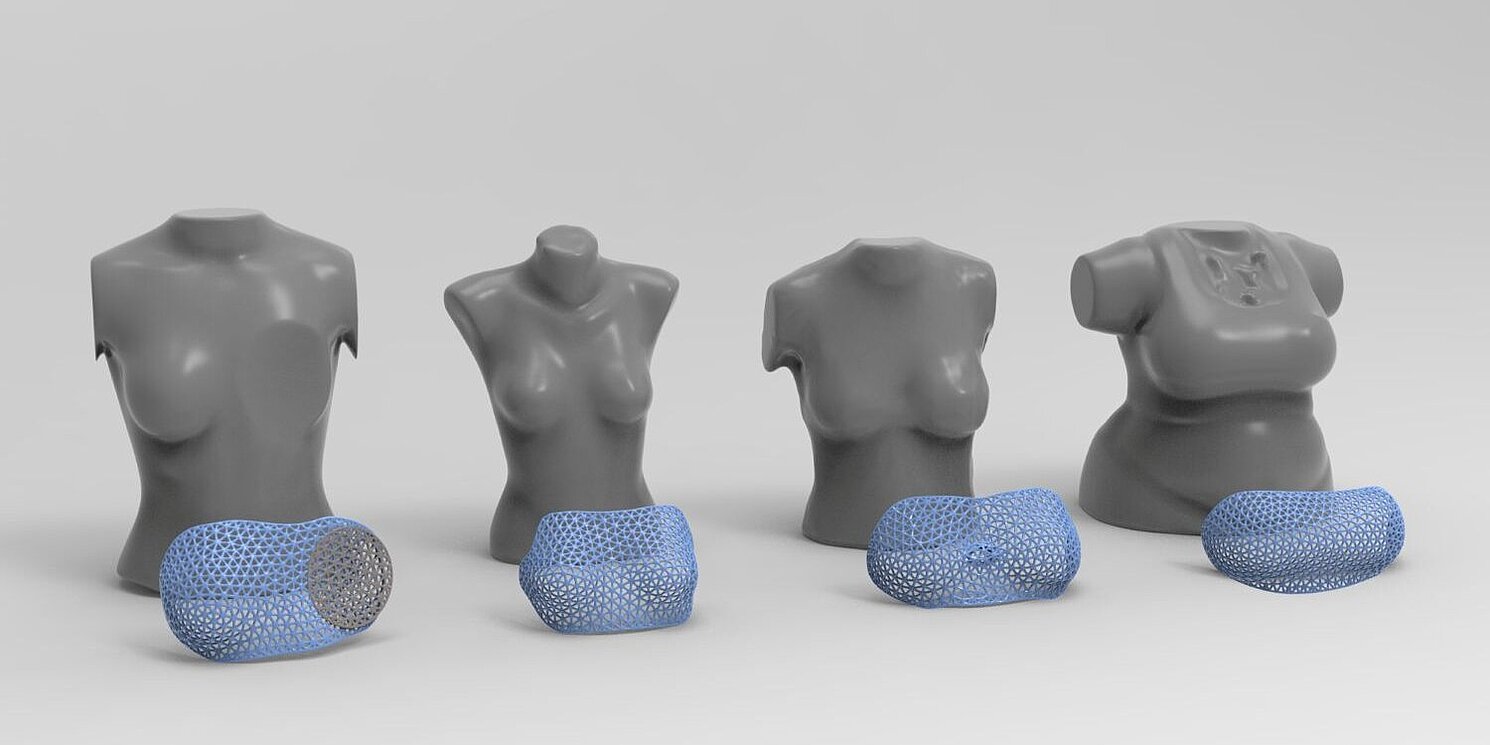
The process begins with a mobile phone scan of the upper body. In 3D software, a program that Jerez Arnau wrote herself places the shell directly onto the scanned body surface. How far it extends upwards and to the sides is set using numerical values, differently for boxing than for taekwondo, for example. This means the guard follows the wearer's body shape, breast size and any asymmetries. The shell is separate from the bra and slides into an inner pocket of a sports bra of the athlete's own choosing. Jerez Arnau printed the shells from the flexible plastic TPU for AMS on her faculty's 3D printers at OTH Regensburg, taking just over 14 hours per shell. The material costs around €8.50, compared with €60 for the cheapest set on the market.
‘With her work, Beatriz Jerez Arnau not only proposes a solution but also takes a feminist, inclusive perspective to reveal blind spots in design,’ says Prof. Anja Lapatsch, who heads the Industrial Design degree programme and supervised Jerez Arnau.
Next round on 14 October
The James Dyson Award is presented every year by the British inventor's foundation to students and graduates in design and engineering. On 14 October, it will be decided whether the chest guard makes it into the top 20 entries worldwide. At the same time, Jerez Arnau is starting the master's programme Design for Digital Futures at Nuremberg Institute of Technology. Whether the design will become a product remains to be seen.
Industrial Design at OTH Regensburg
At OTH Regensburg, Industrial Design is part of the Faculty of Architecture and combines artistic design with materials science and engineering design. Even at the application stage, the faculty asks applicants which social issues they want to address with their designs. Since the 2025/26 winter semester, a master's programme in Design has also been offered.