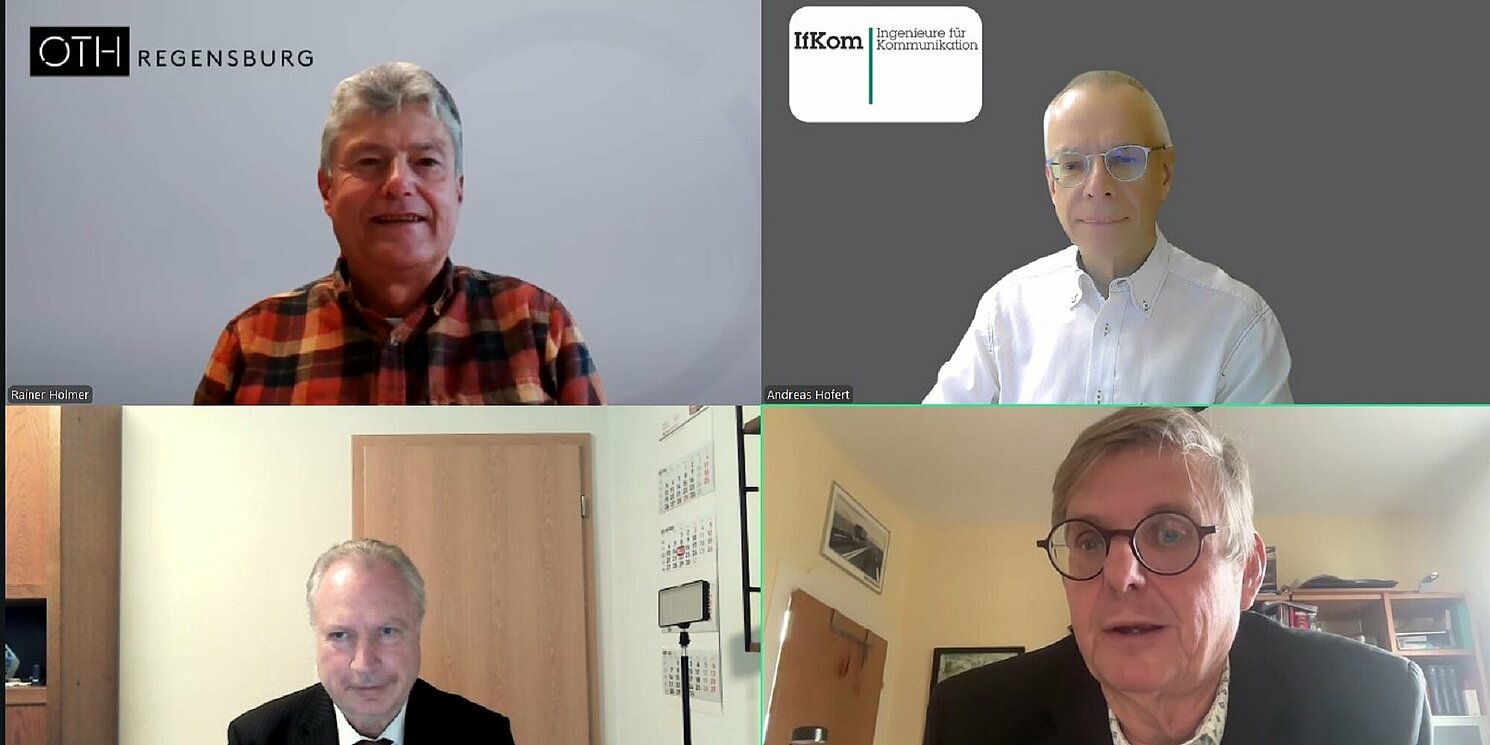
OTH Regensburg wants to make its engineering courses more attractive by incorporating sustainability aspects and at the same time counteract the declining interest in technical subjects. Prof. Dr. Ralph Dreher (TVD – Technical Vocational Didactics) and Prof. Dr. Rainer Holmer (OTH Regensburg) discussed this in an expert discussion with the Professional Association of Engineers for Communication (IfKom e. V.).
The aim is to develop digitally networked, energy- and resource-efficient degree programmes without neglecting the necessary basic knowledge. Technical education is moving in the context of social, ecological, economic and ethical-technological developments.
‘Contributing to greater sustainability’
Dr Heinz Leymann, Federal Chairman of IfKom, emphasises: ‘With their attitude that something must be done about climate change and for sustainability, young people who are looking for a field of study should consider studying engineering. Studying electrical engineering also enables them to contribute to greater sustainability.’ Enthusiasm for technology should be awakened early on and students should be prepared for the changing world of work.
Prof. Dr. Dreher points to the so-called ‘purpose problem’: many students question the meaning and purpose of their actions. Engineering degree programmes offer guidance by enabling students to combine questions of meaning with concrete solutions to global challenges such as clean drinking water, food supply and digital education.
At OTH Regensburg, sustainability is taught in a practical way
Prof. Dr. Holmer emphasises that sustainability must be taught in a practical way. Technical solutions should be evaluated according to ecological, economic and social criteria so that students learn to weigh up economic conditions and sustainable solutions.
In doing so, OTH Regensburg is building on its sustainability strategy. It integrates sustainability into teaching and research, promotes innovative projects, focuses on resource-saving operating processes and supports students in implementing their own initiatives. The aim is to design technical degree programmes in such a way that sustainability does not slow students down, but inspires them to develop innovative solutions and contribute them to society in a responsible manner.