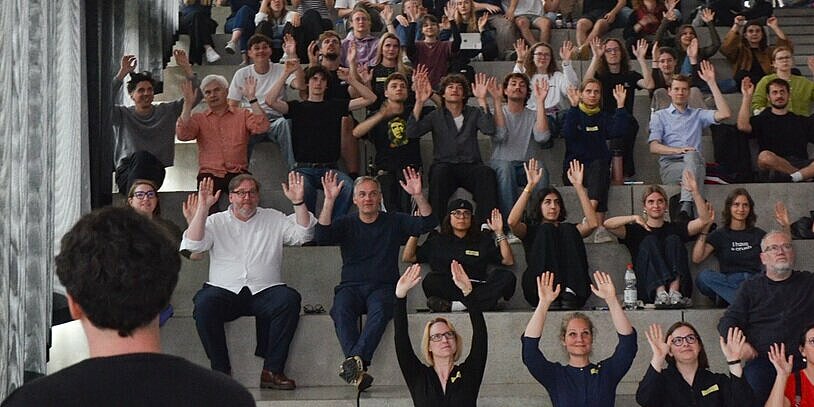
The jointly designed module creates time and space for an in-depth exploration of various aspects of mechanisms of discrimination and the role of architecture and design. Two topics are each addressed by a different group of students. The highlight is a themed evening as part of the Faculty of Architecture’s weekly lecture series – not as a traditional lecture, but as a ‘Halle A Immersive’ event with active audience participation.
Interactive programme highlights gaps in participation
For the first evening, which focused on spatial equality of opportunity for people with physical and mental disabilities, the students expanded the format of the Halle A Lecture into Halle A Immersive and divided the evening into three parts. A brief introduction made it clear that equality of opportunity and accessibility mean participation for all, without requiring any special effort.
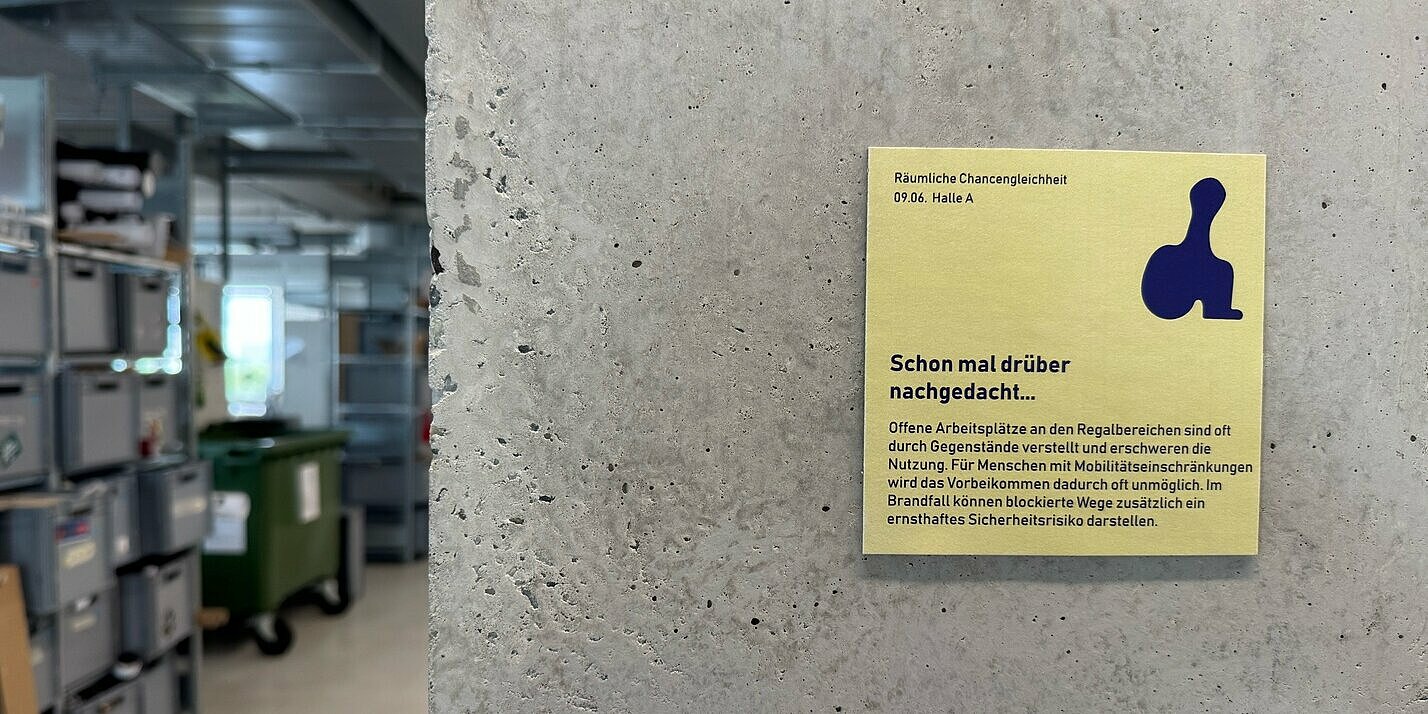
The audience were then invited to take part in a sight and hearing test, as well as various informative and interactive hands-on stations in the Faculty of Architecture building. These highlighted everyday situations: for example, using the drinks machines in the cafeteria whilst seated – such as in a wheelchair – is not possible due to the height of the touch and payment panels; or the height of the suspended sockets in the work areas prevents them from being used whilst seated or with one hand. It was important for the students to identify layouts and designs that make participation in everyday faculty life difficult or even impossible.
Accessibility in reality
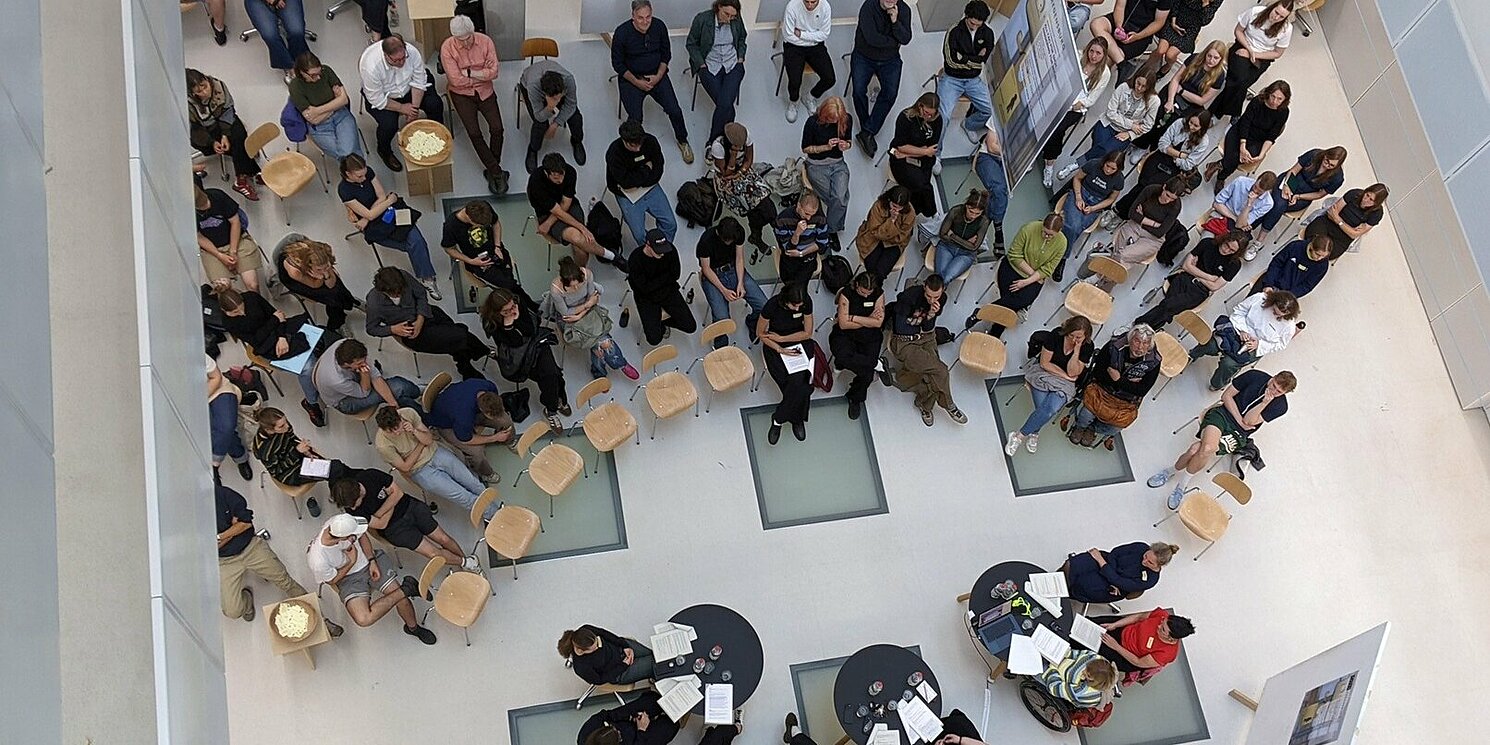
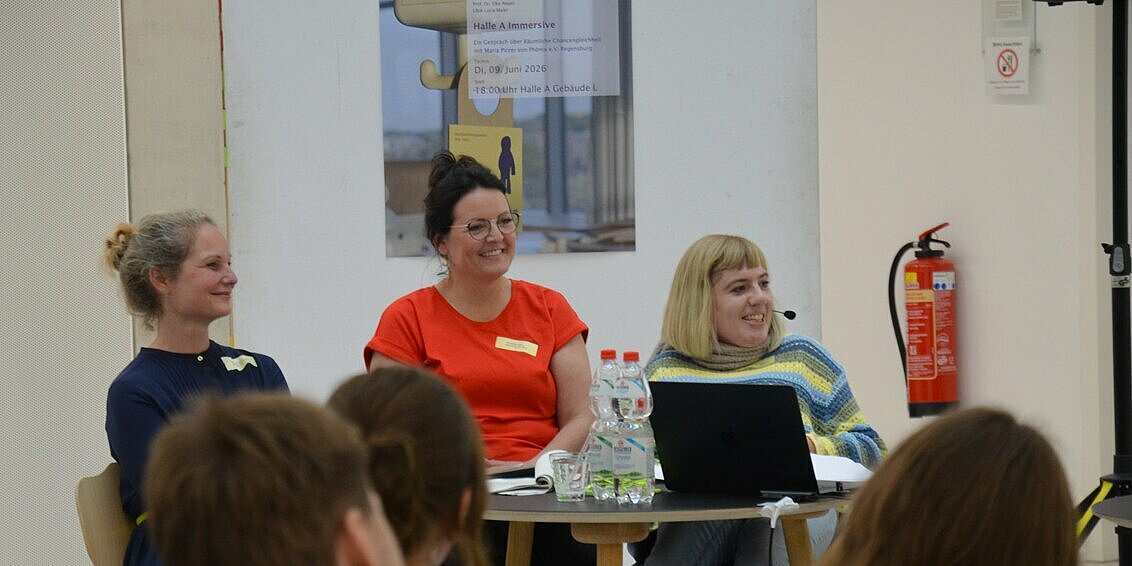
After exploring the stations together, the audience gathered in the faculty’s atrium, Hall B, for a round-table discussion with guests Maria Pirzer from the Regensburg-based advisory association Phoenix e.V. and her companion Daniela Rhein, as well as several students and lecturers. Using specific examples, such as the accessible seating in lecture theatre L003, the toilets in the faculty building and the accessibility of the National Theatre in Munich, the discussion centred on legal requirements, compliance with and implementation of these requirements, and the resulting implications for usability.
Insights from the perspective of someone with a disability
Maria Pirzer contributed to the case studies by enabling the audience to see things from a different perspective through vivid examples from her own life and her former student days at the University of Regensburg, much as she did in her ‘Perspektivwechsel’ project in collaboration with Rudi Pichlmeier from the Association for the Blind and Visually Impaired. The invisible or inconspicuous barriers, and the desire for low-threshold and spontaneous participation without being singled out by special arrangements or designated seating, were particularly striking.
Accessibility played a major role in the organisation of the evening itself. The students devised various small-scale solutions, such as an invitation written in plain language, tables with space underneath for wheelchairs during the discussion round, flexible seating at eye level in Hall B to allow wheelchairs to be arranged easily, and high-contrast text and graphics for posters and presentations.
It was particularly pleasing to see such a large audience and lively participation in the discussion that followed, during which new ideas for future projects were already being developed.
The second themed evening of the elective module ‘Spatial Equality of Opportunity’ will take place on 7 July 2026, once again as part of the Halle A Lecture series, from 6 pm in Halle A. Further information will follow.