Who is involved in the Walz 4.0 project?
Prof. Dipl.-Ing. Florian Weininger
Prof. Dr Thomas Linner
Prof. Dr.-Ing Charlotte Thiel
Prof. Dr Mathias Obergrießer
PhD-Kand. M.Sc. Anne-Sophie Saffert
PhD-Kand. M.Eng. Simon Konrad Höng
PhD-Kand. M.Sc. Lukas Esper
What is your research project about?
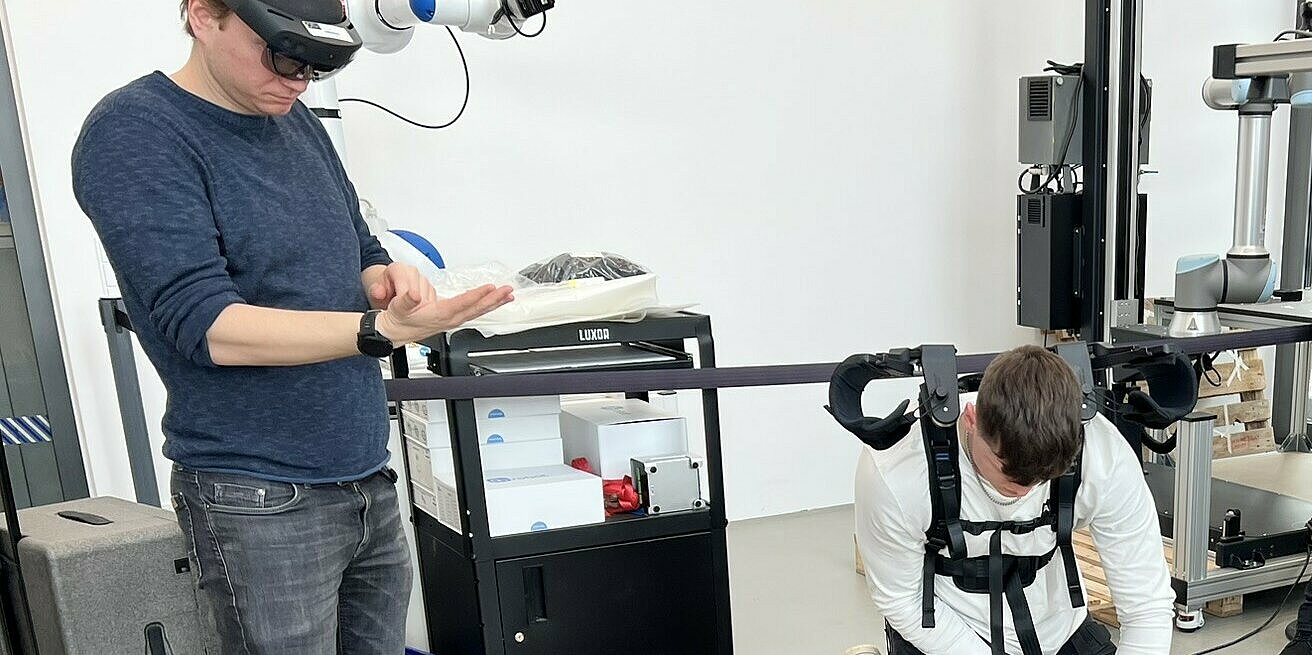
Walz 4.0 is a research project to combine traditional craftsmanship and modern university teaching in the construction industry. The aim is to develop innovative and sustainable construction processes through joint, practical learning formats. Students, tradespeople and academics work together on real projects. There is a particular focus on digitalisation, the circular economy and the integration of new technologies such as AI and robotics. In the long term, the aim is to make the construction industry more sustainable, efficient and attractive for skilled workers.
What excites you about the project?
I am particularly enthusiastic about the fact that Walz 4.0 really brings theory and practice together at eye level. The result is not abstract knowledge, but directly applicable solutions through collaboration between the skilled trades, universities and planning. The close cooperation between different players, who otherwise often work separately, is exciting. This creates new ways of thinking and innovative approaches directly from practice. The co-creative approach, in which people learn and develop together, is what makes the project particularly interesting for me.
How can findings from the project be applied in practice?
The findings from Walz 4.0 can be transferred directly into practice via practical formats such as workshops, pilot projects and joint construction projects. New methods and technologies are not only developed in theory, but also tested and further developed directly in the real working environment. Thanks to the close cooperation between trade businesses, universities and planners, the results are quickly incorporated into existing processes. In addition, the teaching and learning concepts developed can be integrated into training and further education programmes. This ensures that the knowledge is anchored in practice in the long term.
Answers from Prof Florian Weiniger, OTH Regensburg
On our website you will find an overview of the current funding projects at OTH Regensburg.