Women study, conduct research and take on leadership roles. They work as engineers, computer scientists or professors. The fact that all these paths are, in principle, open to women is taken for granted today. However, this does not mean that women and men advance equally along these paths.
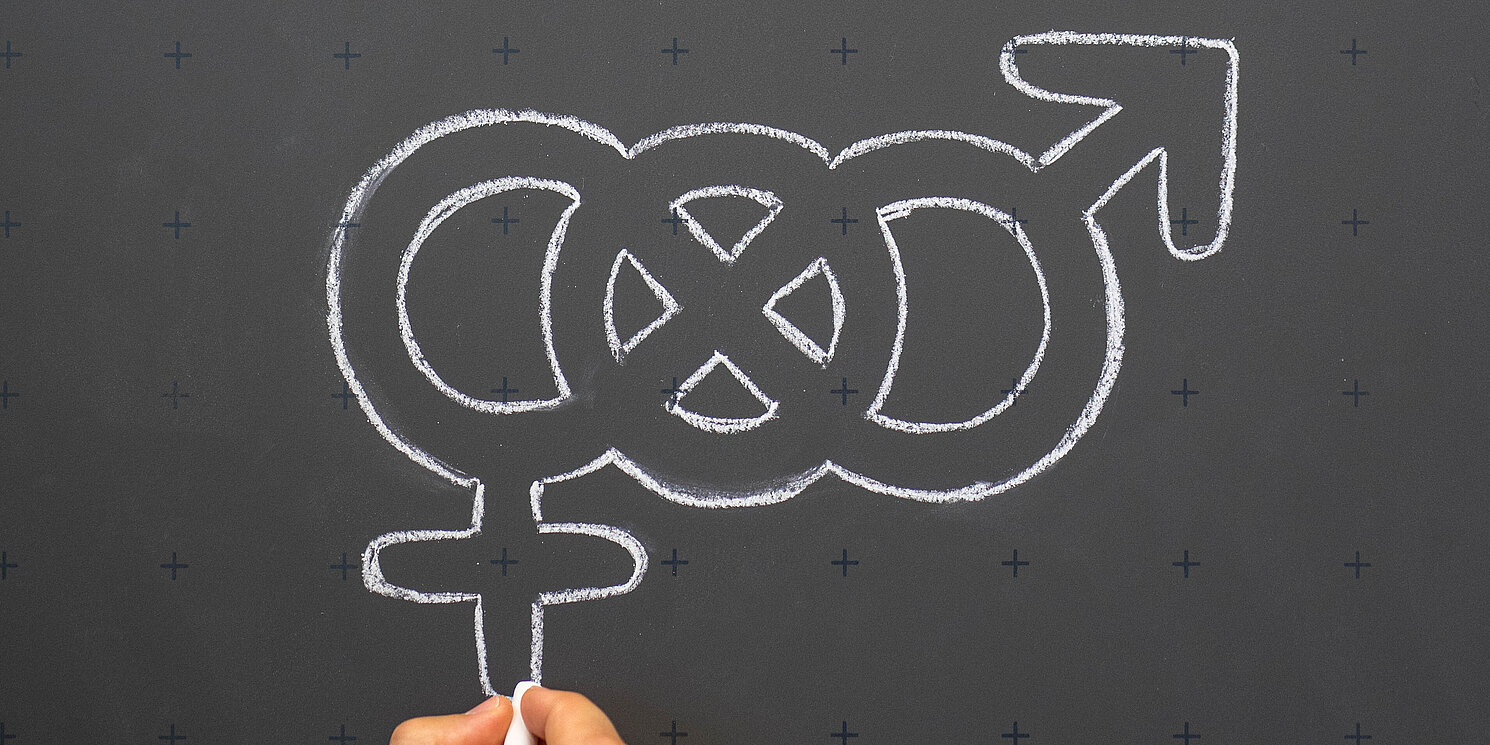
A look at the figures reveals just how significant this difference actually is: the European Commission’s She Figures Index documents the state of gender equality in research and innovation – from higher education and research right through to leadership positions. Germany scores just 62.8 out of 100 points and, alongside Malta, ranks third from the bottom (23rd out of 27). Only Cyprus and Luxembourg rank lower.
These figures already hint at the crux of the matter: sexism has not disappeared. It simply does not always manifest itself where we expect it to – not necessarily as open insults or blatant disparagement, but also in role models, in perceptions of competence, in professional structures and power relations. And it now also takes place in digital spaces. “Sexism hasn’t become more subtle, just different. What has changed is its form,” says Prof. Dr Clarissa Rudolph, Research Professor of Gender Research and Gender Studies at OTH Regensburg.
Rudolph has been conducting academic research into gender relations, equality and women in STEM for many years. In the “Digital Hate” research project, OTH Regensburg, together with other partners, is investigating how digital violence affects female researchers in particular, especially those in socially contested fields of research. The initial findings show that sexist hostility often takes place openly online and is more heavily sexualised when directed at women. Just how this manifests itself in everyday life becomes clear when one looks at the less obvious forms of sexism. After all, sexism does not begin with an insult.
When sexism isn’t obvious
Sometimes it’s precisely those sentences that make you pause for a moment:
“Are you sure?”
“That probably wasn’t meant that way.”
“I wouldn’t read too much into it.”
“Did you perhaps even provoke that?”
Reactions like these can lead those affected to question their own perceptions. Was that really sexist? Am I overreacting? Or should I just let it go? “It doesn’t have to be a serious incident for a situation to be taken seriously,” says Jana Faerber, Equality Officer at OTH Regensburg.
Not every ambiguous remark is automatically sexist. Nevertheless, it should be possible to talk about a situation without having to justify oneself first. Casual or veiled forms in particular can be difficult to categorise – and this is precisely where gender stereotypes come into play, often operating unconsciously.
The significant influence of gender stereotypes
Gender stereotypes will still be influencing, even in 2026, who is considered capable of leadership and who is seen as responsible for care work. According to the European Institute for Gender Equality (EIGE), 31 per cent of men in the EU agree with the statement that men make better leaders than women. Among women, the figure is less than 20 per cent. At the same time, 41 per cent of women with children spend more than 35 hours a week on childcare, compared with just 20 per cent of men. Men as leaders and breadwinners, women as carers: stereotypes influence real-life career and life opportunities.
Such attributions are particularly evident in everyday university life, especially in technical and scientific subjects. For example, a female student presents a technically complex solution. The group discusses it critically. The same proposal might be perceived differently if it came from a man, perhaps because technical competence is subconsciously attributed more often to men.
Yet such attributions are rarely intended maliciously. Many people make sexist or gender-based attributions because they actually believe this is socially accepted or at least unproblematic. However, when it is pointed out to them, they often realise that it was inappropriate.
A qualitative study conducted by OTH Regensburg with female STEM students also demonstrates the extent to which such patterns shape everyday life at university: women in predominantly male-dominated subjects sometimes feel as though they are the exception. “Many, however, do not wish to assume this special role at all. They simply want to be seen as students of their subject,” says Prof. Dr Rudolph. OTH Regensburg is not alone in this situation: the under-representation of women in certain STEM subjects is also evident internationally. In 2023, the proportion of women in Germany in engineering stood at 27.8 per cent and in information and communication technology at 24.8 per cent. In the natural sciences, mathematics and statistics, however, the gender ratio was almost balanced at 52.4 per cent (CEWS 2026b).
Research into sexism – and a look at one’s own university
Conducting academic research into gender relations is one thing; applying the findings to one’s own university is quite another. OTH Regensburg therefore does not limit its engagement with the topic to research alone: a university-wide survey of staff conducted in 2022/23 provided insights into how gender stereotypes and discrimination are perceived in their own day-to-day working lives.
Around a third of respondents stated that they had frequently or sometimes observed women being judged or treated unfairly due to prejudice. A further 22 per cent reported such observations rarely. At the same time, it became apparent that discrimination is not automatically addressed. 21 per cent of respondents who had personally experienced or observed discrimination stated that they had not reacted at all.
These findings therefore also serve as a call for self-reflection. After all, research into sexism does not automatically mean that a university is free from sexist structures. Rather, it offers the opportunity to critically examine one’s own structures and take action where necessary. This is also enshrined in OTH Regensburg’s mission statement and its development objectives, such as in the University Development Plan (HEP). The university is committed to equal opportunities and to combating discrimination.
Knowledge creates opportunities for action
The inter-university supplementary programme in Gender Competence, offered by OTH Regensburg in collaboration with the University of Regensburg, demonstrates how academic inquiry and practical application can come together. Students can engage academically with gender relations, discrimination and equality processes, and learn to recognise gender-specific inequalities and develop ways to bring about change. The programme is open to students from a range of disciplines. This is particularly relevant for a technically oriented university: gender competence is thus not viewed as a topic that concerns only individual degree programmes or equality work, but as knowledge that has an impact on various professional and social spheres.
Alongside this educational programme, OTH Regensburg is also directly addressing its internal structures: for example, unconscious bias training is used in appointment procedures. It is designed to raise awareness that unconscious assumptions and stereotypes can influence the assessment of applicants. In addition, the appointment guidelines have been revised. This brings a key question into focus: how can fair decisions be ensured in contexts where decisions are made regarding academic careers – and thus also regarding power and influence at the university?
Research itself is also addressing current forms of sexism. In its ‘Digital Hate’ research project, OTH Regensburg is investigating how digital violence is developing, specifically against academics working in socially controversial fields such as gender, climate and migration research. The findings are sobering: sexism is encountered here frequently and openly, whether in the form of blatant insults, direct verbal abuse, hostility or even threats. Whilst this also affects men, the attacks against women are more heavily sexualised.
Where those affected wish to respond to such experiences, the university offers specific support and channels for lodging complaints: students and staff can contact the equality officers in cases of discrimination, unequal treatment or sexual harassment. “Sometimes it helps those affected simply to have someone listen,” says Faerber. What further steps are appropriate are discussed together with the person concerned.
Since joining the “Alliance Against Sexism” in 2025, there have also been additional channels for lodging complaints, including the option to file an anonymous complaint about discrimination. Particularly in situations of dependency, a safe channel can be important for initially raising an issue.
Gender equality is not a finished project
Joining the ‘Alliance Against Sexism’ is therefore less an end in itself than a commitment: to take a close look, to scrutinise existing structures and to develop further measures. This also includes initiatives to raise awareness and empower individuals. One example of this is the public speaking workshop for female staff members. The high level of interest – with around 40 applications for twelve places – shows that there is a need for such initiatives.
However, such initiatives are only part of the solution, as work towards gender equality goes further: it is not those affected who must change, but rather it is worth asking where procedures, routines or behaviours might contribute to inequalities. A university cannot tackle societal sexism on its own. Within its own sphere of responsibility, however, it can examine how decisions are made, how power and boundaries are handled, and what kind of culture is fostered at the university. It is not just a matter of empowering individual women or offering support to those affected following an incident. It is also about examining how structures are designed, what behaviours have crept in, and what needs to change. OTH Regensburg therefore plans, amongst other things, to make information and support services more accessible online and to continue monitoring the issue through a further survey.
So do we still need a debate on sexism in 2026? Yes – perhaps precisely because so much now seems to be taken for granted. Sexism manifests itself in gender roles, in the assessment of competence, in power dynamics and in digital spaces. Recognising it is the first step. The more difficult task is to look closely at areas where one’s own organisation might be affected.