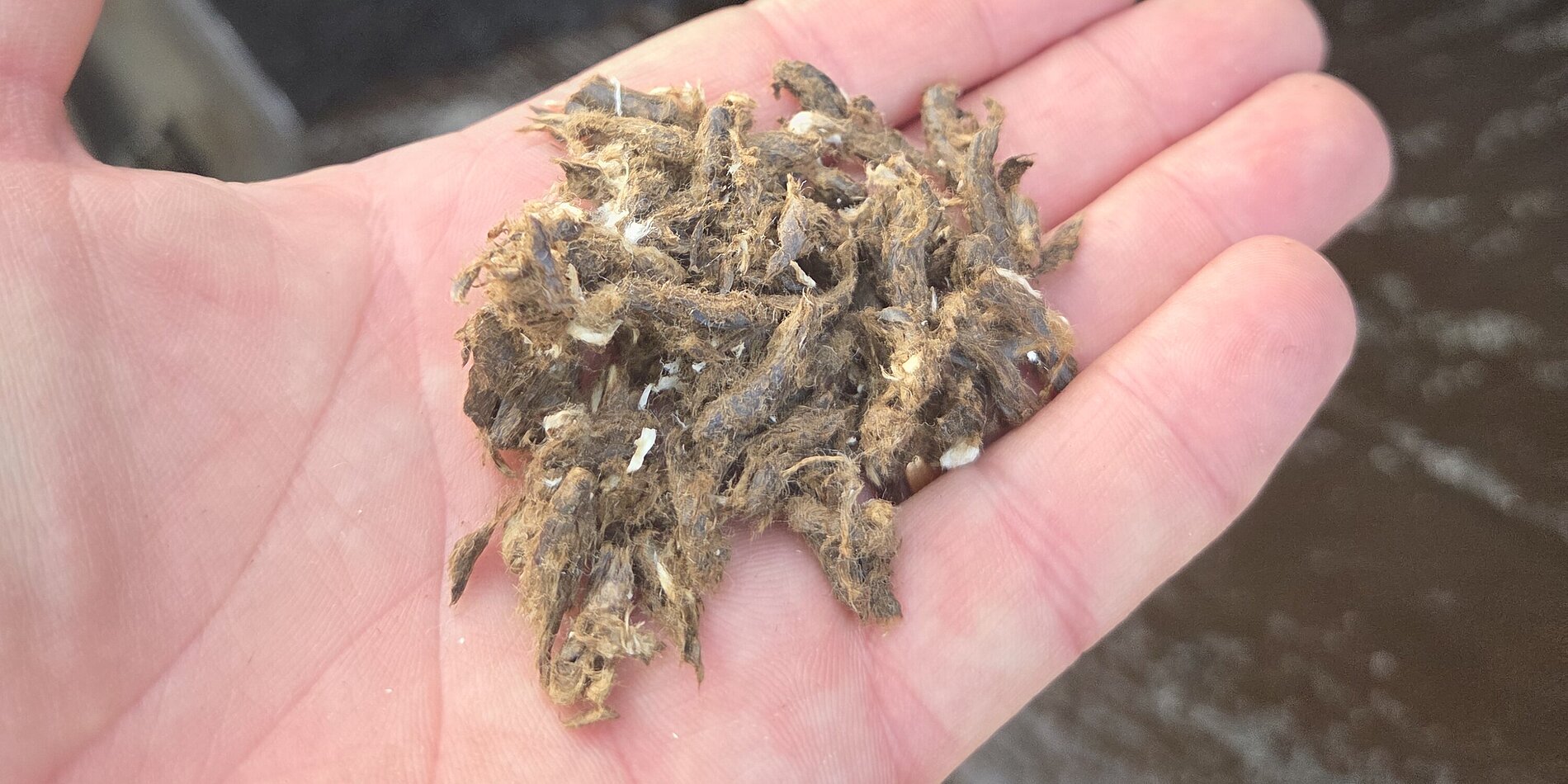
At first glance, the test section on the A99 near Munich hardly differs from other motorway sections. The difference lies beneath the surface: an asphalt has been laid there that researchers at OTH Regensburg have spent several years developing and testing. The acrylic fibres used are intended to make the open-pored asphalt more durable without compromising its special properties.
Open-graded asphalt is primarily used on stretches of road where noise reduction is a key consideration. Its numerous voids can significantly reduce road noise and help to minimise spray when it rains. However, it is precisely this structure that makes the surface more vulnerable than conventional types of asphalt. Over time, individual aggregates can become dislodged through the open surface, damaging the surface course. As a result, some stretches of road need to be resurfaced after as little as ten years.
This is where the research project by Autobahn GmbH, OTH Regensburg and the construction company Richard Schulz comes in. Together, they investigated whether open-pored asphalt could be made more stable by adding fibres. The focus was on what is known as ‘aggregate loss’: if aggregate particles become detached from the surface, this can significantly reduce the service life of the surface course.
Various variants were tested in the Laboratory for Road Construction and Asphalt Technology at OTH Regensburg. Researchers and students investigated, amongst other things, different fibre lengths and proportions. The results ultimately led to the development of a process whereby acrylic fibres in the form of pellets can be evenly mixed into the asphalt.
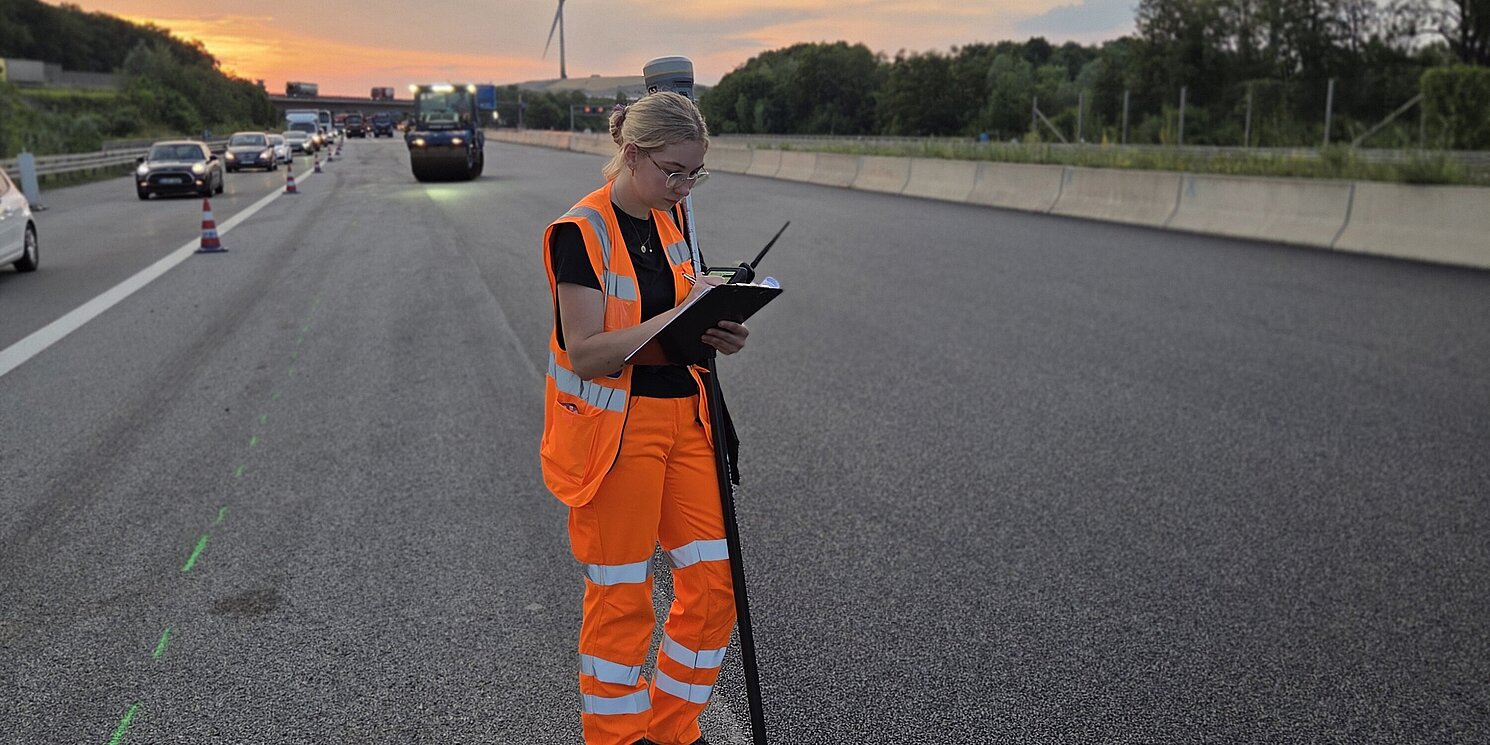
The laboratory tests were followed by a field trial. The asphalt, modified with acrylic fibre pellets, was laid on a 280-metre stretch of the A99 motorway near Munich. One key question was crucial to the project from the outset: can the new mixture be produced and laid under real-world conditions?
Initial findings are positive. Both production at the mixing plant and the laying on the motorway went smoothly. However, it will only be possible to assess whether the fibres actually make the asphalt more durable in the long term after several years.
To enable a comparison of the development, a section using conventional asphalt was constructed directly adjacent to the test section. Both areas will be examined regularly in future. Among other things, the researchers will record changes to the surfaces and analyse the data collected.
The trial on the A99 is intended to show whether the acrylic fibre modification is suitable for sections of road subject to heavier traffic. A decision on this will depend on the results of the forthcoming investigations.