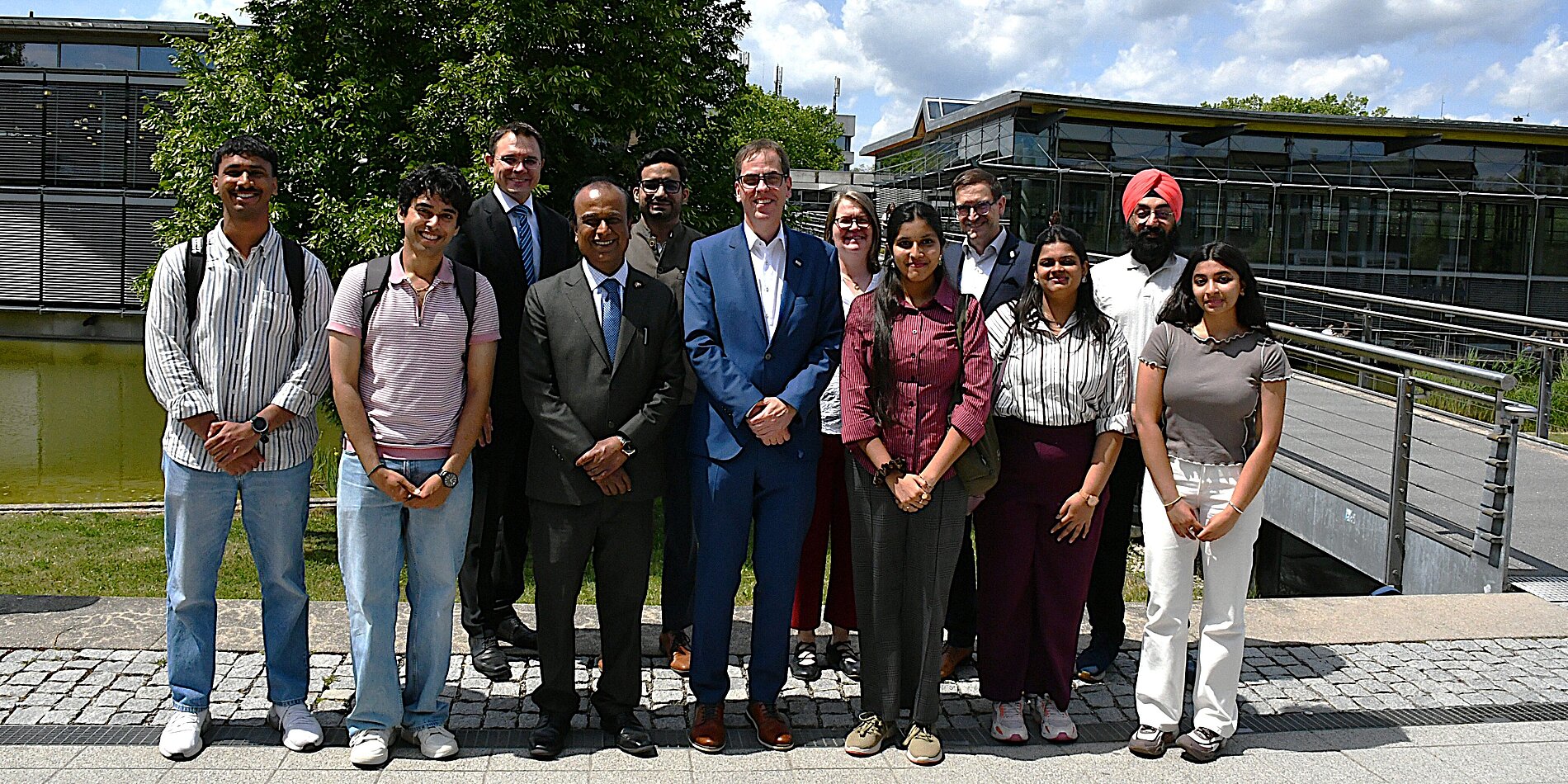
There are currently 327 students from India studying at OTH Regensburg – four years ago, there were just 68. This increase is no coincidence: India is now one of the university’s most important international partner countries.
The reasons for this are obvious. Hardly any other country is currently expanding its higher education and research sector as rapidly as India. Particularly in engineering, computer science and other STEM subjects, new ideas and collaborations are constantly emerging. For OTH Regensburg, it is doubly worthwhile to look in that direction: because of the research, but also because many well-educated young people would like to come to Germany.
In doing so, the university is deliberately focusing on a small number of carefully selected partnerships. Universities in Delhi and Bengaluru are already part of this network, and further collaborations, such as with IIT Mandi, are in the pipeline. Initial discussions have long since developed into joint projects: researchers are working together, summer schools are being organised, and lecturers are coordinating joint teaching formats. Dual-degree programmes are also already on the agenda.
Students benefit from this directly. They can spend a semester in a partner country, work in international project teams or undertake a work placement. Conversely, many students from India choose to study in Regensburg. Some come to do a Master’s degree, whilst others enrol on the international Bachelor’s programmes. Although the subject-specific studies are taught in English, German is part of the curriculum right from the start. This means that those who wish to work in Germany later on do not have to start from scratch.
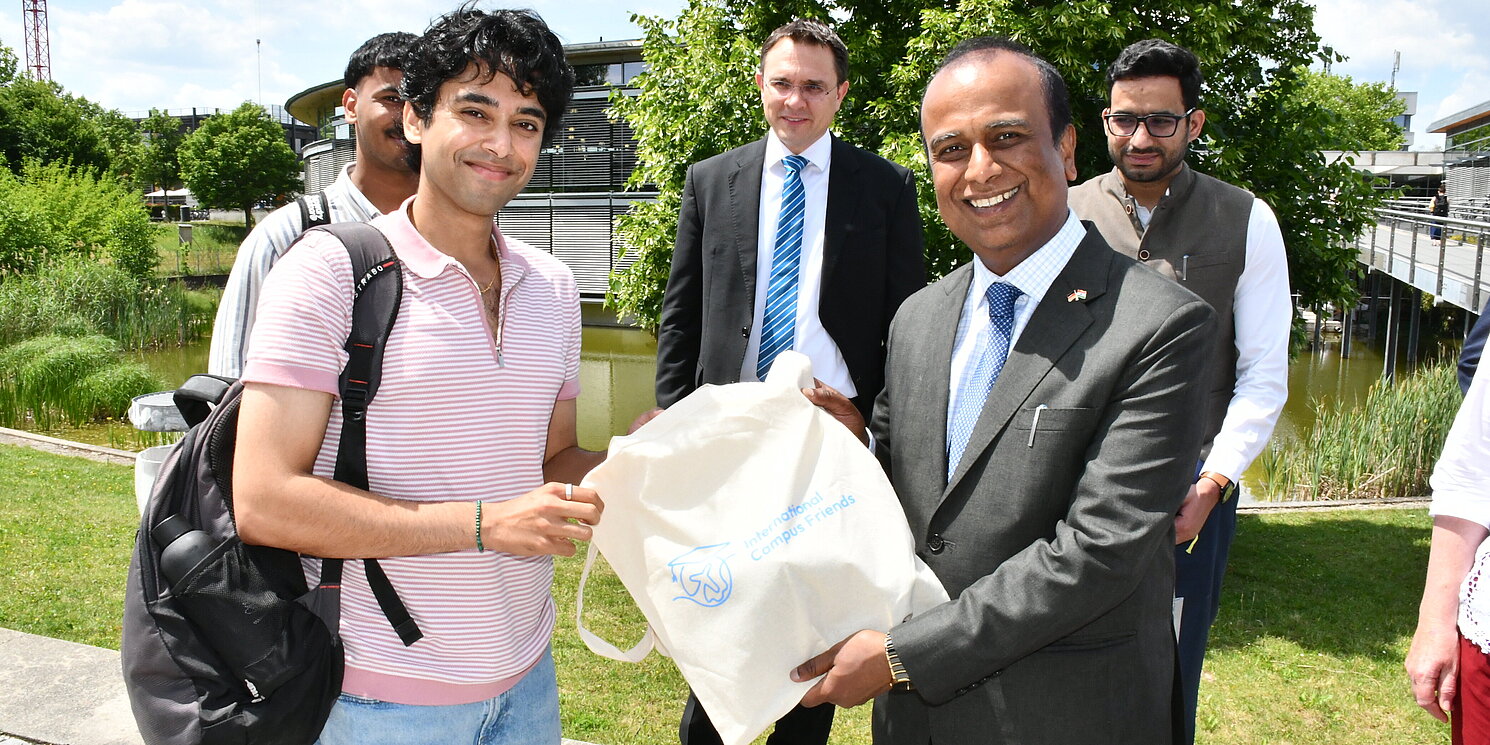
However, the start of a degree course often has little to do with lecture theatres at first: the initial focus is on finding accommodation, filling in forms, taking out insurance or making that first bus journey. So much is new – and this is precisely where the Buddy Programme, International Campus Friends and the Welcome and Mentoring schemes run by the International Office help students settle into life in Regensburg, not only with the practicalities but also with everyday university life.
Student exchange programmes alone are therefore no longer the whole story: initial research collaborations have got underway, lecturers are developing joint courses, and former contacts are turning into projects on which teams from both sides are working together.
Just how much these relationships are growing in importance was evident in early June during a visit by the Indian Consul-General, Shatrughna Sinha. Following discussions with President Prof. Dr Ralph Schneider and other members of the university management, he took time out for the Indian students: Over lunch together in the canteen, they told him about their everyday lives in Regensburg: about lectures and dealing with the authorities, but also about how life in a new city is slowly starting to feel familiar.
“Close cooperation with Indian universities opens up a wide range of opportunities for our students, lecturers and applied research. The Consul-General’s visit underlines the growing importance of these partnerships,” says Prof. Dr Westner.