Hydrogen is the most abundant chemical element in the universe and plays a central role in the energy transition. On Earth, it occurs predominantly in the form of water, natural gas and crude oil. As a versatile energy carrier and chemical feedstock, it offers the potential to replace fossil fuels and reduce greenhouse gas emissions in energy-intensive sectors. Hydrogen can be used in various sectors – from energy supply and the transport sector to industry, where it is utilised both as an energy source and as a raw material.
Generally speaking, hydrogen is always a colourless gas. The so-called ‘hydrogen colours’ provide information on how the hydrogen was produced. The Federal Ministry of Research, Technology and Space describes the individual categories as follows:
Green hydrogen is produced by the electrolysis of water. Electricity from renewable energy sources is used for this process. Consequently, no CO₂ emissions are produced during the production of green hydrogen.
Grey hydrogen is usually produced from fossil natural gas using steam reforming. This process generates around 10 tonnes of CO₂ per tonne of hydrogen. The CO₂ is released into the atmosphere.
Blue hydrogen is grey hydrogen produced in a way that involves the partial capture and underground storage of CO₂ (CCS, Carbon Capture and Storage). A maximum of 90 per cent of the CO₂ can be stored.


Orange hydrogen is hydrogen produced from waste and residual materials. No additional CO₂ emissions are generated during its production.

Turquoise hydrogen is hydrogen produced by the thermal cracking of methane (methane pyrolysis). Instead of CO₂, this process produces solid carbon, which consequently does not escape into the atmosphere.
From research to application
Research activities at OTH Regensburg range from the analysis of international hydrogen markets, through the production and storage of hydrogen, to applications in industry, transport and energy supply. With the Danube Hydrogen Cluster at the Kelheim Technology Campus, the university also has a research infrastructure for investigating hydrogen, hydrogen derivatives and their applications.
Another key component is the Hydrogen Technology Application Centre (WTAZ) in Pfeffenhausen. In future, the focus there will be primarily on the practical application of hydrogen technologies. The centre is intended to enable companies and research institutions to test, evaluate and further develop hydrogen propulsion systems and refuelling technology under real-world conditions.
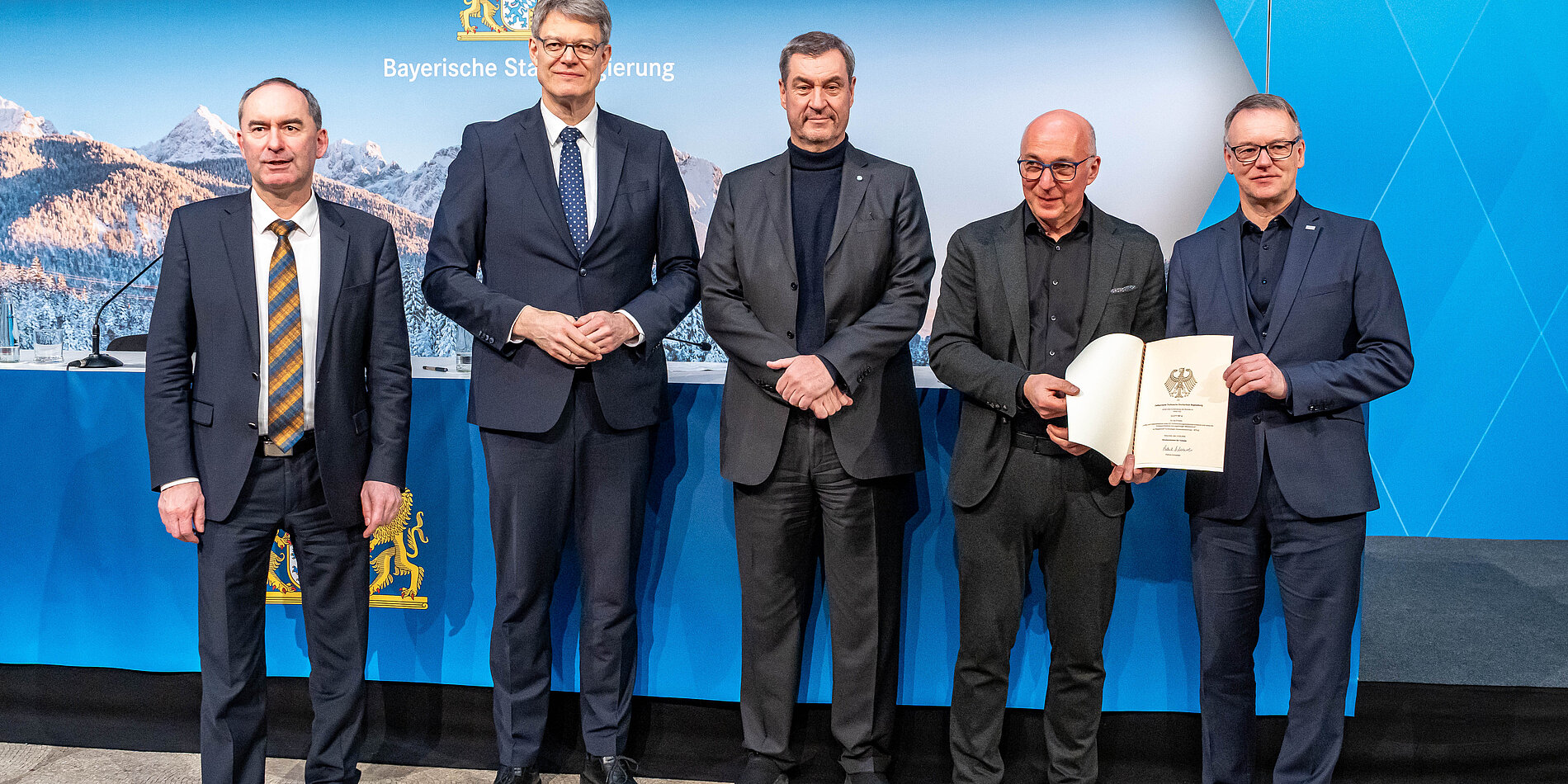
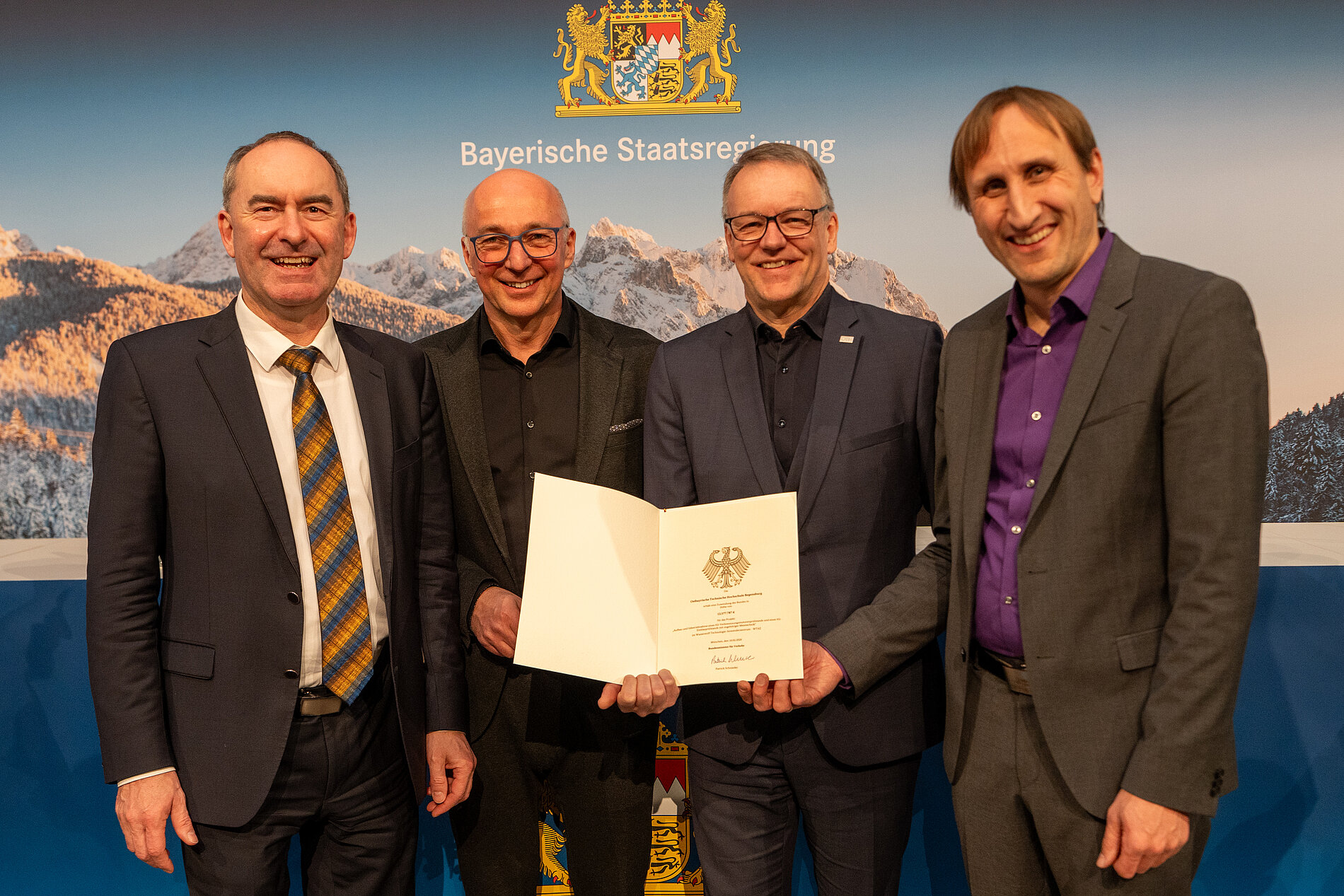
In February 2026, OTH Regensburg, together with the companies HyTACC and HyTACC CRYO, as well as the universities of applied sciences TH Ingolstadt (THI) and Landshut University of Applied Sciences, received funding approvals for the globally unique hydrogen supply infrastructure and the test facilities of theTechnology User Centre (WTAZ) from Federal Minister of Transport Patrick Schnieder, in the presence of the Bavarian Minister-President Dr Markus Söder and the Bavarian Minister of State Hubert Aiwanger. This marks the start of the implementation phase for the Hydrogen Technology User Centre on the site in Pfeffenhausen, where the electrolyser of the HyPerformer hydrogen model region HyBayern began trial operations back in autumn 2024. As part of the funding for the National Hydrogen Innovation and Technology Centre (ITZ), the federal government is providing a grant of 32 million euros for the three universities and up to 22 million euros for commercial infrastructure providers.
Green hydrogen for transport and industry
OTH Regensburg is taking the lead in the construction and operation of an H₂ internal combustion engine test bench and a hydrogen injection rate test bench. The project manager is Prof. Dr Hans-Peter Rabl, scientific director of the Danube Hydrogen Cluster Technology Campus in Kelheim.
The main areas of focus at the WTAZ, as the southern site of the ITZ, are hydrogen propulsion systems and refuelling technology for heavy goods vehicles and short-haul air transport, as well as unmanned aerial vehicles (drones) using liquid hydrogen (LH2), cryocompressed hydrogen (CRYOGAS, CcH₂) and gaseous hydrogen at pressures of up to 700 bar (CGH₂). The WTAZ provides a basic hydrogen infrastructure for the testing, inspection and certification of propulsion components, as well as for hydrogen refuelling technology involving high mass flows. The hydrogen required to operate the test and inspection centre can be supplied entirely ‘green’ from the neighbouring HyBayern electrolyser or from external sources. The liquefier is designed to produce green liquid hydrogen using a sustainable process and to make it available for use on-site and throughout the region.
The WTAZ (ITZ SÜD) is receiving a total of 54 million euros in funding from the Federal Ministry of Transport (BMV) under the ‘Guideline on the Funding of Projects in the Context of Establishing a Decentralised Hydrogen Innovation and Technology Centre’. Funding for this measure is also being provided under the German Recovery and Resilience Plan (DARP) via the European Recovery and Resilience Facility (ARF) as part of the NextGenerationEU programme. The funding guideline is coordinated by NOW GmbH and implemented by the Jülich Project Management Organisation (PtJ).