Who is involved in your project?
Prof Dr Detleff Schermer, Prof Dr Wolfgang Finckh, Philipp Hofmann and Rausch Therm-Stein GmbH
What is your research project about?
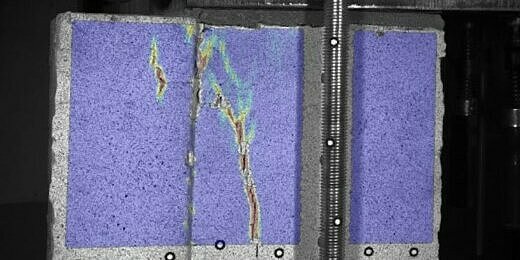
The MaxTrag research project is developing a load-bearing optimisation for hollow chamber blocks made of lightweight concrete on the basis of experimental investigations. Whereas previously the design of new hole pattern geometries was primarily aimed at optimising thermal insulation properties, the focus is now on load-bearing behaviour. An alternative test method is being designed to realistically record the relevant loads. Based on the experimental results, load-optimised hole patterns are being developed that not only increase the load-bearing capacity, but also reduce material consumption and thus contribute to sustainability.
What excites you about the project?
The interdisciplinary combination of research and practical application is a central aspect of this project. The experimental investigations have to be harmonised with the numerical simulation and the optimisation of the hole pattern geometries. In addition, there are manufacturing challenges to overcome, such as developing a suitable concrete material and adapting the manufacturing process.
How can findings from the project be applied in practice?
Due to the direct application reference, new stone geometries with optimised load-bearing capacity and reduced material usage are being developed for practical use. The findings are incorporated into the design of load-optimised hollow bricks that improve both structural safety and resource efficiency. The close integration of experimental investigations, numerical simulation and production technology realisation means that the bricks developed can be directly transferred to the production of prototypes. In addition, the investigations carried out contribute to recording the realistic load-bearing behaviour of masonry, which is advantageous for future standardisation processes.
On our website you will find an overview of the current funding projects at OTH Regensburg.