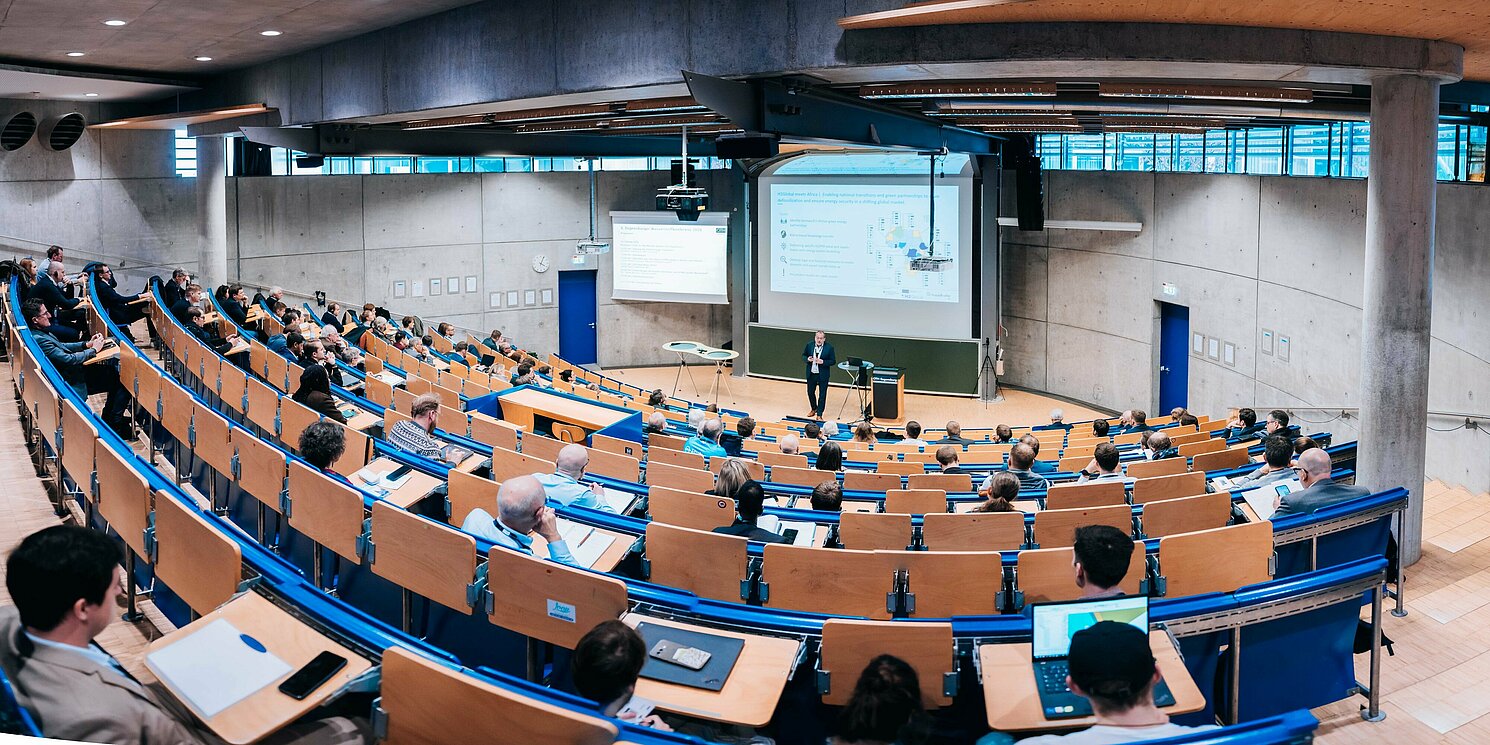
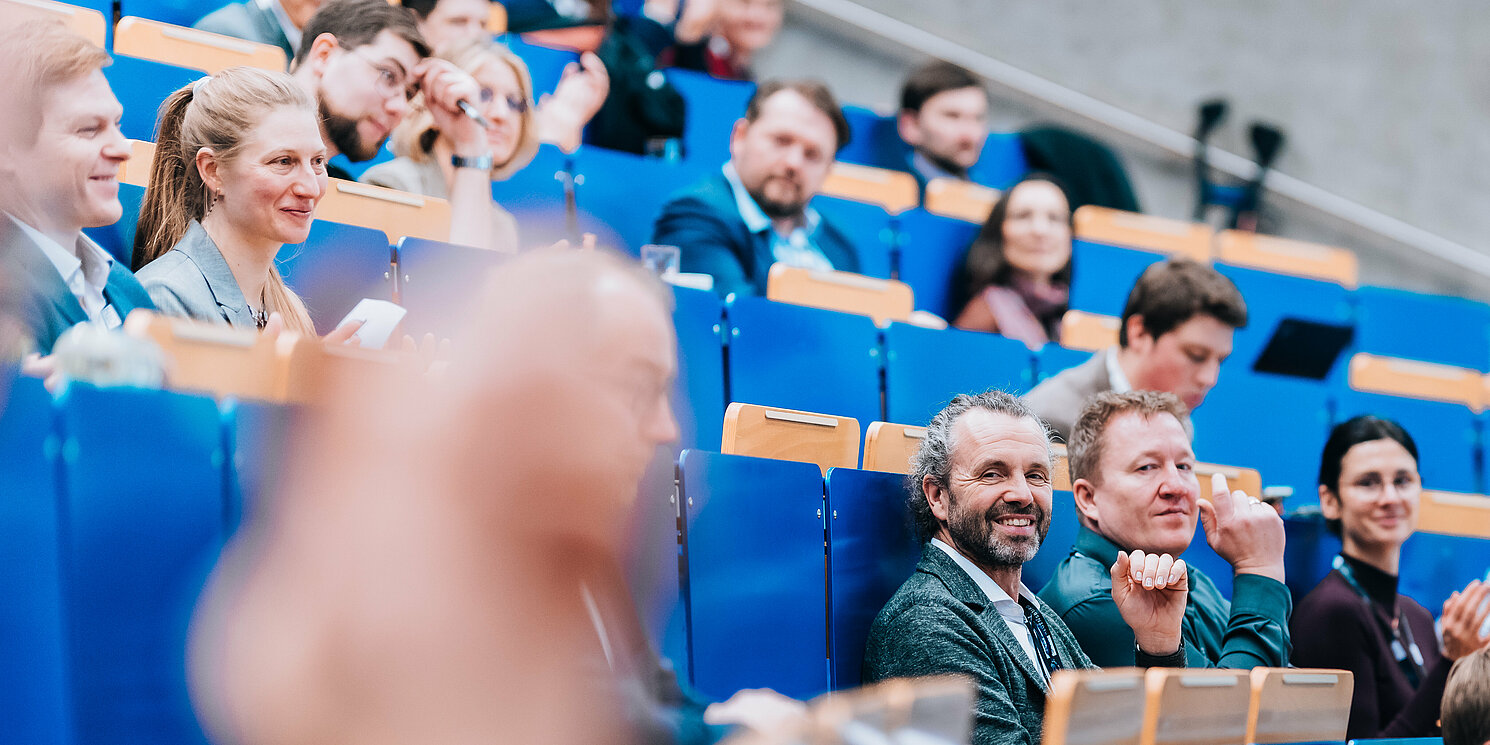
The ramp-up of hydrogen is not a sprint, but a marathon. This message was a recurring theme throughout the opening of the 8th Regensburg Hydrogen Conference at OTH Regensburg. Under the theme ‘Hydrogen ramp-up – challenges and prospects’, around 150 participants from business, science, politics and administration discussed ways to achieve a climate-neutral energy future on 24 and 25 February. This two-day event is supported by the Regensburg Chamber of Industry and Commerce for Upper Palatinate/Kelheim, Bayern Innovativ GmbH and the Bavarian Hydrogen Centre (H2.B).
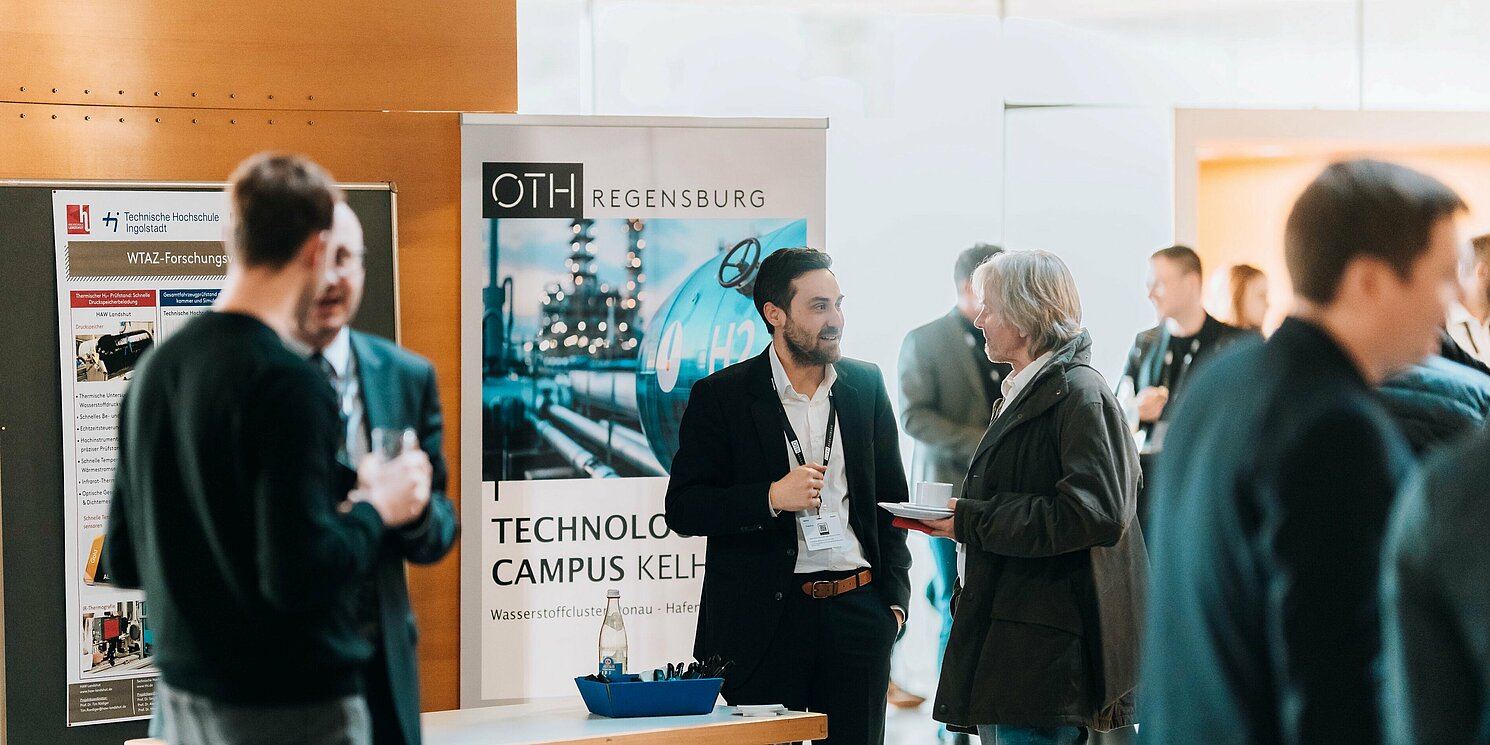
It was already clear in the foyer that the conference is not only a discussion platform, but also a networking space. Representatives from numerous companies engaged in conversation, gathered information at stands, including those for the Hydrogen Technology and Application Centre (WTAZ) in Pfeffenhausen, and exchanged ideas on specific projects such as citizen energy initiatives in Regensburg. Specially baked ‘H2 cookies’ and an ‘H2 cake’ added a touch of humour. Simultaneous translation into Czech also underscored the international orientation of the event.
The conference series was initiated in 2012 by Michael Sterner, who moderated the opening day and provided context for the speakers' technical backgrounds.
OTH Regensburg drives hydrogen ramp-up with flagship project
In his welcoming address, Prof. Dr. Ralph Schneider, President of OTH Regensburg, emphasised the role of the university as a bridge between research and application: "The hydrogen ramp-up is a task for society as a whole. As a university of applied sciences, we see our mission as transferring research results to industry, bringing innovations to market maturity and training the skilled workers who will carry out this transformation. It is no longer just about strategy papers; it is about implementation, reliability and speed."
OTH President Schneider went into more detail about the flagship WTAZ project, in which OTH Regensburg, together with Landshut University of Applied Sciences and Ingolstadt University of Technology, is testing and developing hydrogen technologies and bringing them to market maturity in collaboration with industry partners. In mid-February, OTH Regensburg received a funding approval notice for around 12.5 million euros for the WTAZ. Participants were able to network with the project coordinators at the stand in the foyer.
Green hydrogen too expensive? Regulation, costs and political levers
Tobias Gotthardt, State Secretary in the Bavarian State Ministry of Economic Affairs, Regional Development and Energy, addressed the participants via video message. He emphasised that hydrogen is an essential building block for achieving climate targets. Although Bavaria is well positioned with its Hydrogen Strategy 2.0, he also made it clear that the ramp-up is progressing more slowly than hoped for.
Silke Stahl from the Federal Ministry for Economic Affairs and Energy assessed the situation from a federal perspective. She emphasised that the federal government is sticking to its hydrogen ramp-up, but is working on structural and content-related adjustments. Regulatory requirements make projects complex and costly. Green hydrogen is still significantly more expensive than fossil alternatives. Ambitious targets, such as expanding electrolysis capacity to 10 gigawatts by 2030, currently contrast with an installed capacity of around 200 megawatts. The key questions are therefore: Where can regulation be simplified? How can public funds be used efficiently? And which markets with a high willingness to pay should be focused on first?
Topics such as the grid utility of electrolysers, expiring grid fee exemptions and the future price of CO₂ were also discussed intensively. The planned Hydrogen Acceleration Act is intended to shorten planning procedures and increase investment security.
Decentralised electrolysis as an economic game changer
Dr Tobias Brunner from Hynergy GmbH provided an optimistic counterpoint to the complex regulatory framework. With a high degree of technical depth, he demonstrated that the ramp-up of hydrogen can already be economically successful in practice. He showed that hydrogen can already be used economically in mobility today – provided that technological and strategic levers are used consistently.
Using the Pfeffenhausen site as an example, he demonstrated how a concept for electricity procurement that has been refined over many years – a combination of electricity trading and balancing power – can meet the strict criteria for green hydrogen. The fully automated plant there does not require any on-site personnel and produces hydrogen at prices that already enable market ramp-up in heavy-duty transport.
Brunner also spoke out clearly in favour of alkaline electrolysis: not only is it proven, but it also does not require critical raw materials such as iridium or questionable PFAS compounds. By combining Chinese stack technology on an industrial scale with German engineering, a price level of around 1,000 euros per kilowatt of electrolysis capacity can be achieved. With regard to the upcoming GHG quota, Brunner sees decentralised production as a source of great hope: Pfeffenhausen proves that this model works. In cooperation with OTH Regensburg, Landshut University of Applied Sciences and TH Ingolstadt, there is a powerful consortium in place to massively advance hydrogen mobility in the region.
Hydrogen as a geopolitical factor
Meik Clemens Laufer from the Federal Foreign Office, who joined the event online, highlighted the foreign policy dimension. Hydrogen diplomacy is becoming increasingly important in view of global supply chains and geopolitical shifts. The energy transition is also a question of strategic partnerships and reducing unilateral dependencies.
The presentations and comments made it clear that the ramp-up of hydrogen is politically desirable and technologically feasible, but economically and regulatorily challenging. Representatives from industry and the financial world emphasised the importance of reliable political decisions. At the same time, reference was made to the economic costs of climate change, which could be many times higher in the long term than today's investments.
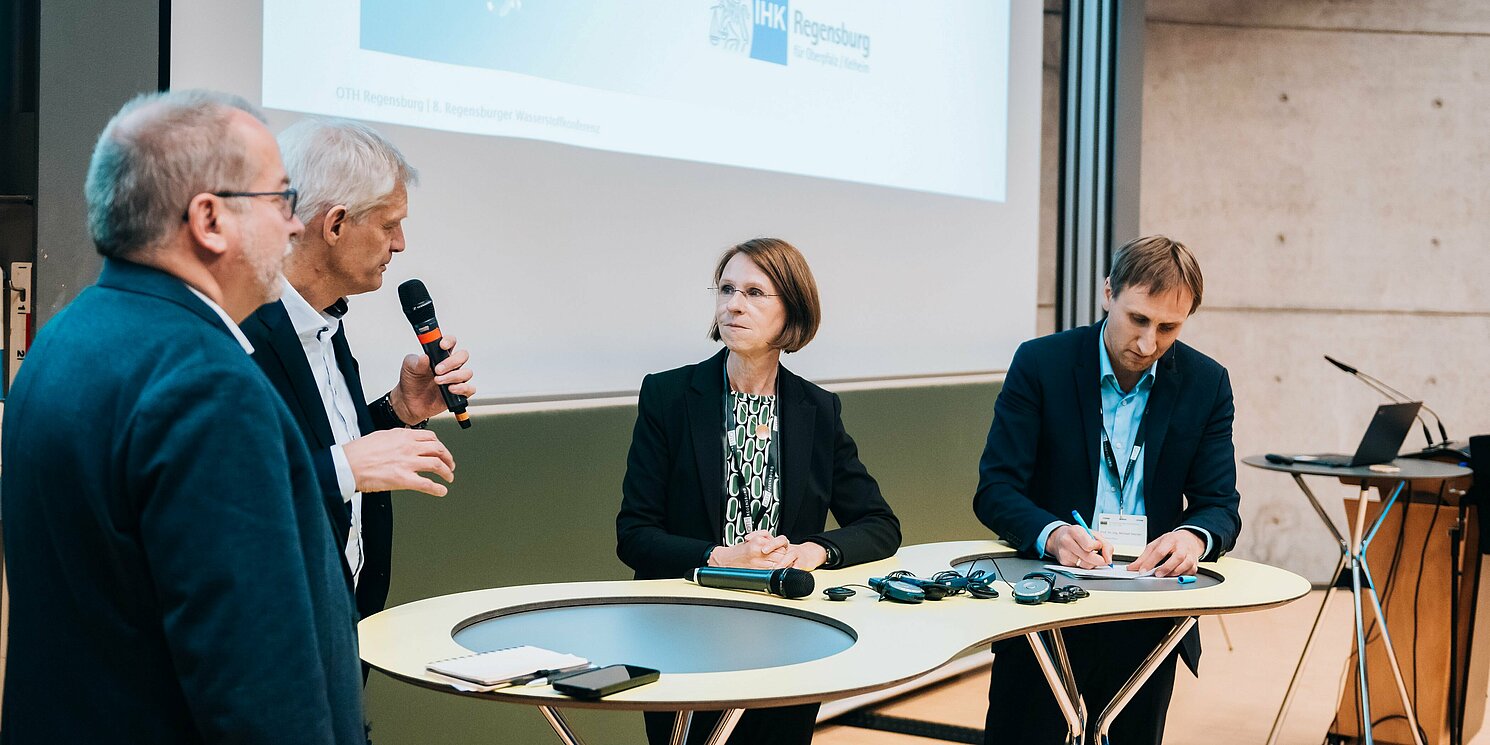
In the late afternoon, the first day of the conference culminated in a panel discussion in which key areas of tension such as market versus regulation, imports versus domestic production, and speed versus planning security were once again addressed.