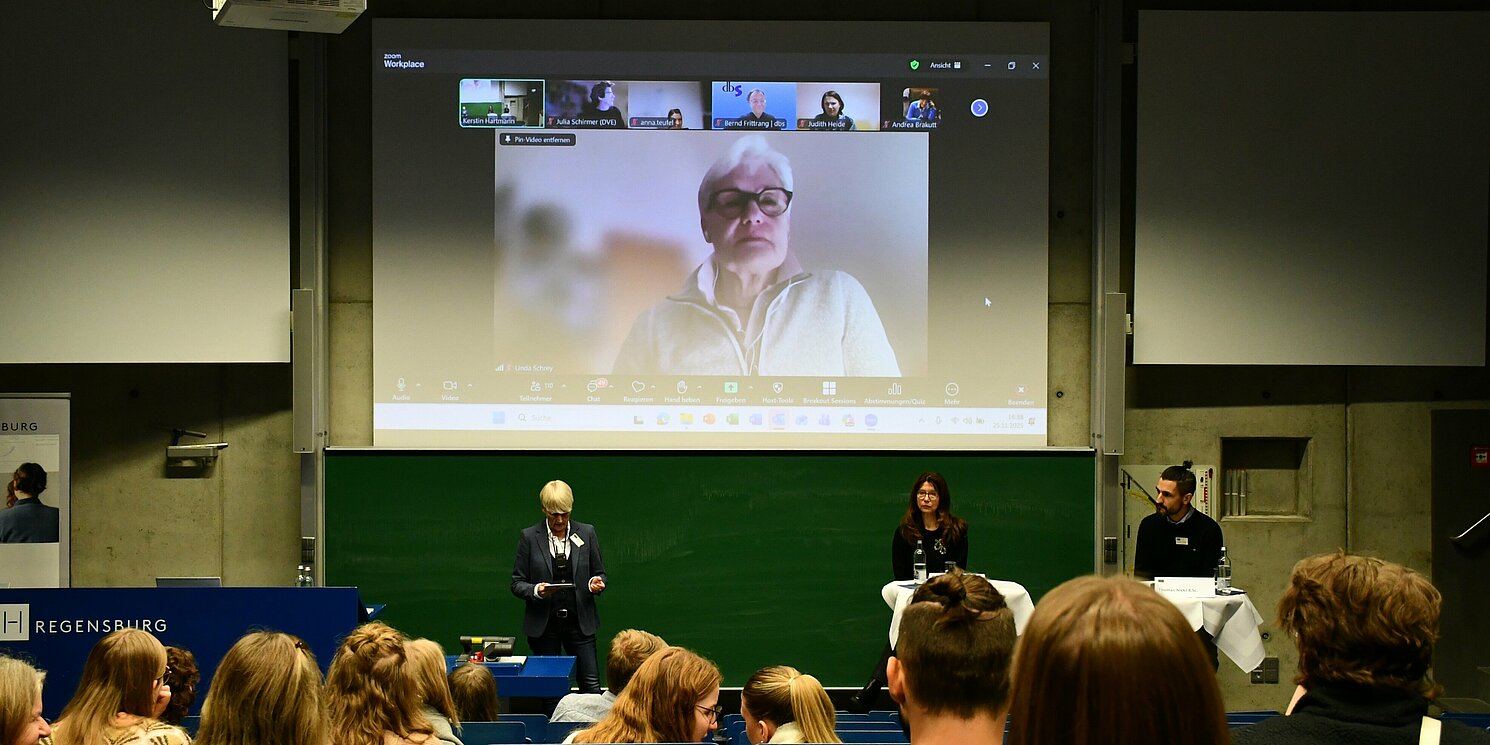
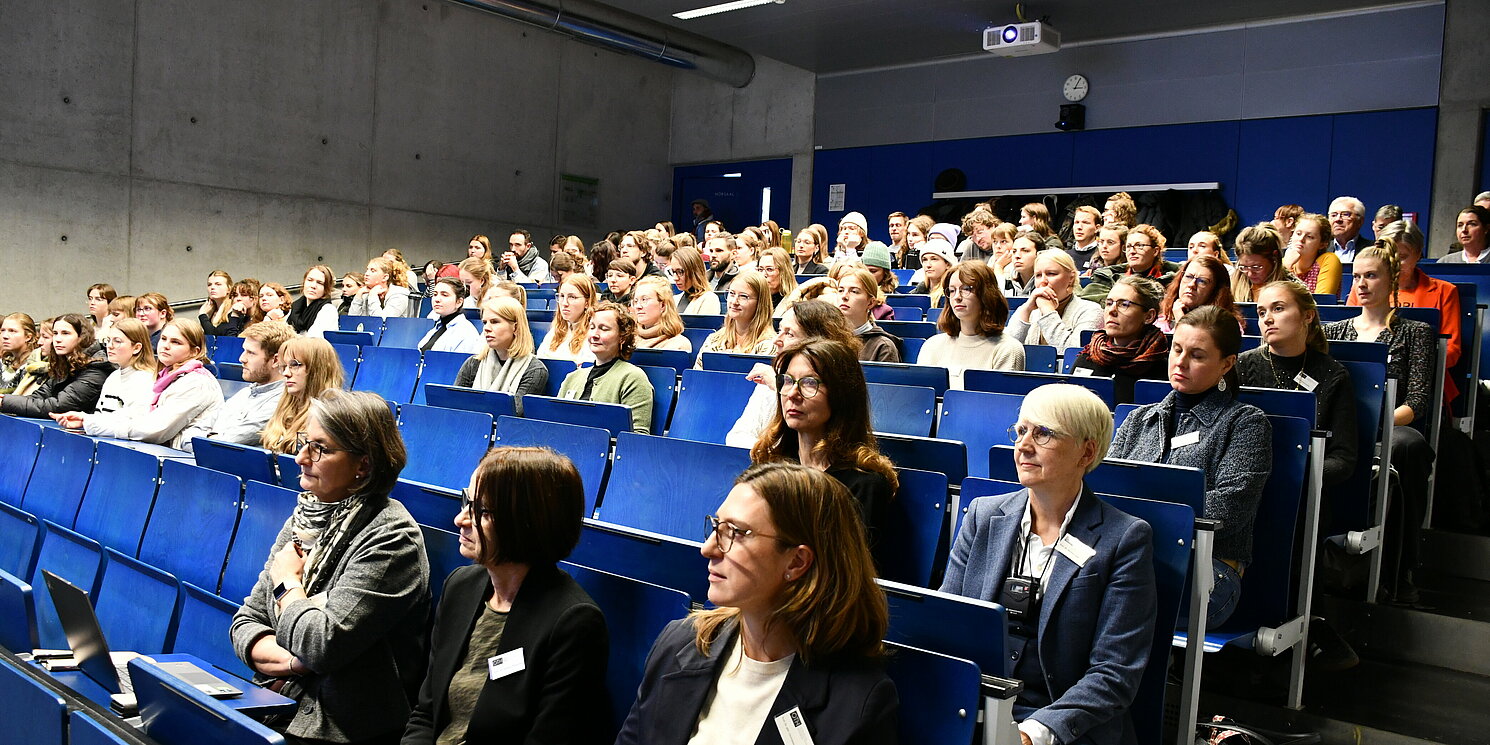
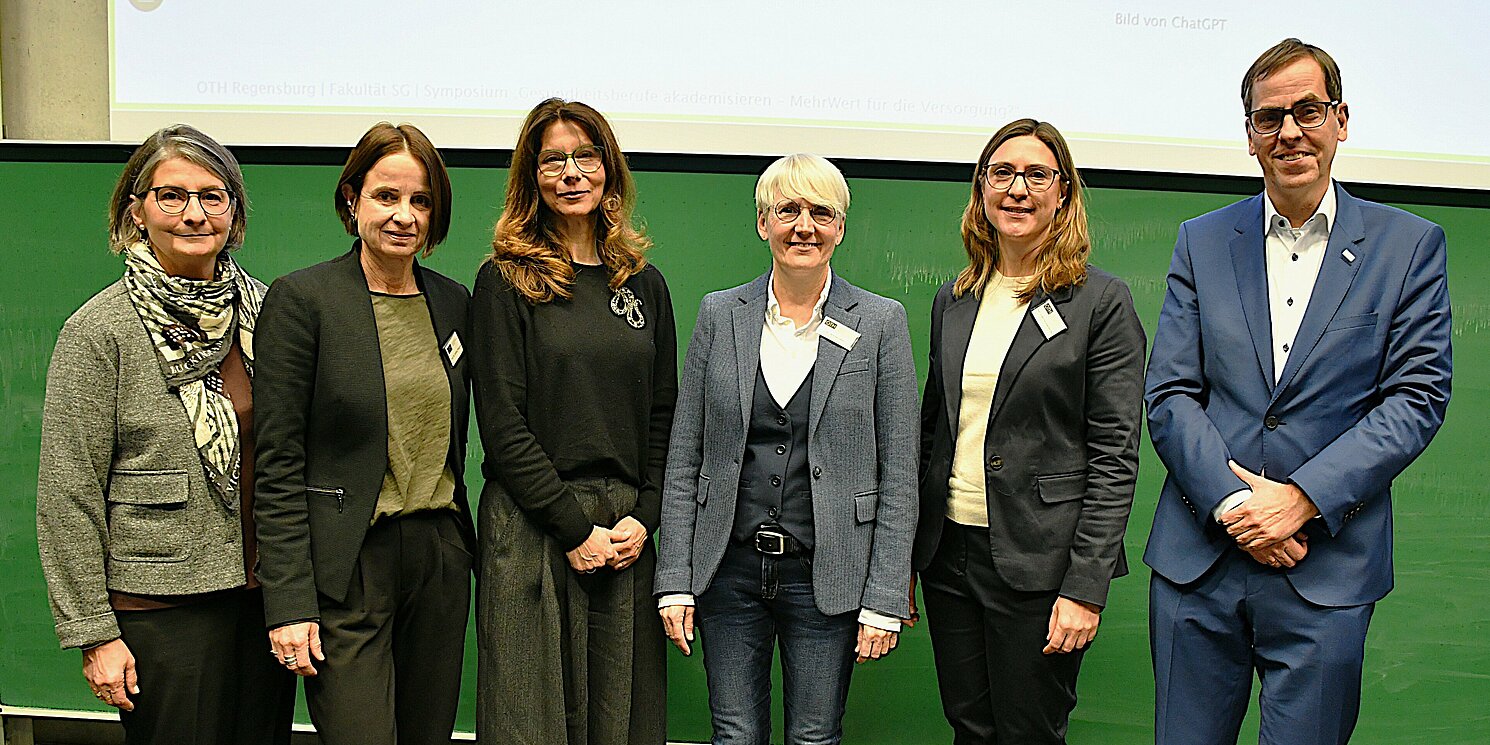
A high-profile symposium entitled ‘Academicising healthcare professions – added value for healthcare provision?’ took place at OTH Regensburg on 25 November 2025. Representatives from academia and practice discussed key issues relating to the future of healthcare professions, improving the quality of care and the potential of academic education in the healthcare sector. The event was held in a hybrid format and attracted great interest both on site and online. The focus was on the keynote speech by Prof. Dr. Uta Gaidys, member of the Science Council, who assessed the developments of recent years, recommendations for the formation of disciplines and the importance of university qualifications in healthcare. She pointed to challenges such as the increasing shift to outpatient care, staff shortages, technical developments and the continuing limited career paths for university graduates in many healthcare professions. In further presentations, Prof. Dr. Andrea Pfingsten and Prof. Dr. Christiane Wissing from OTH Regensburg used current studies to show that academically trained healthcare professionals make a measurable contribution to improving the quality of care.
The skills acquired through university education enable the incorporation of knowledge from research and the introduction of new care models such as direct access to physiotherapy and medical tasks in nursing. This results in shorter treatment times and lower overall costs, for example.
Interdisciplinary structures at OTH Regensburg as a driver for innovation
In his welcoming address, the President of OTH Regensburg, Prof. Dr. Ralph Schneider, emphasised the university's strategic focus on the health sector. The Regensburg Centre of Health Sciences and Technology (RCHST), the Institute for Social Research and Technology Assessment (IST) and the Regensburg Centre of Biomedical Engineering (RCBE) play a key role in this regard. These institutions combine research and teaching at the interfaces of health, technology, computer science and social sciences and provide the framework for innovative projects and practical solutions.
President Schneider emphasises social added value
President Schneider emphasised: ‘We are experiencing a transformation that requires new answers. Academically trained healthcare professionals make a decisive contribution to shaping care in an innovative, evidence-based and sustainable manner.’
OTH Regensburg is therefore consistently developing its interdisciplinary research and training structures in order to strengthen healthcare in the region in the long term.
In a subsequent panel discussion with Prof. Dr. Uta Gaidys, physiotherapist and practice owner Thomas Nickl, and speech therapist Dietlinde Schrey-Dern, it became clear that academisation brings with it both opportunities and areas of tension. In addition to higher quality standards, issues such as remuneration, recognition in other European countries and the need for flexible career progression opportunities within the healthcare professions were also discussed.
Nickl emphasised from his own experience how valuable a sound scientific education is for patient communication and professional development, even if this has not yet been financially rewarded in practice.
The symposium impressively demonstrated how important the academisation of healthcare professions is for the future of the German healthcare system. As a special sign of unity and commitment, it should be emphasised that four different professions came together in this context to jointly advocate for the academisation of healthcare professions. It also became clear that progress in the quality of care, research and interdisciplinary cooperation is only possible if universities, politicians and practitioners work together to find sustainable solutions.