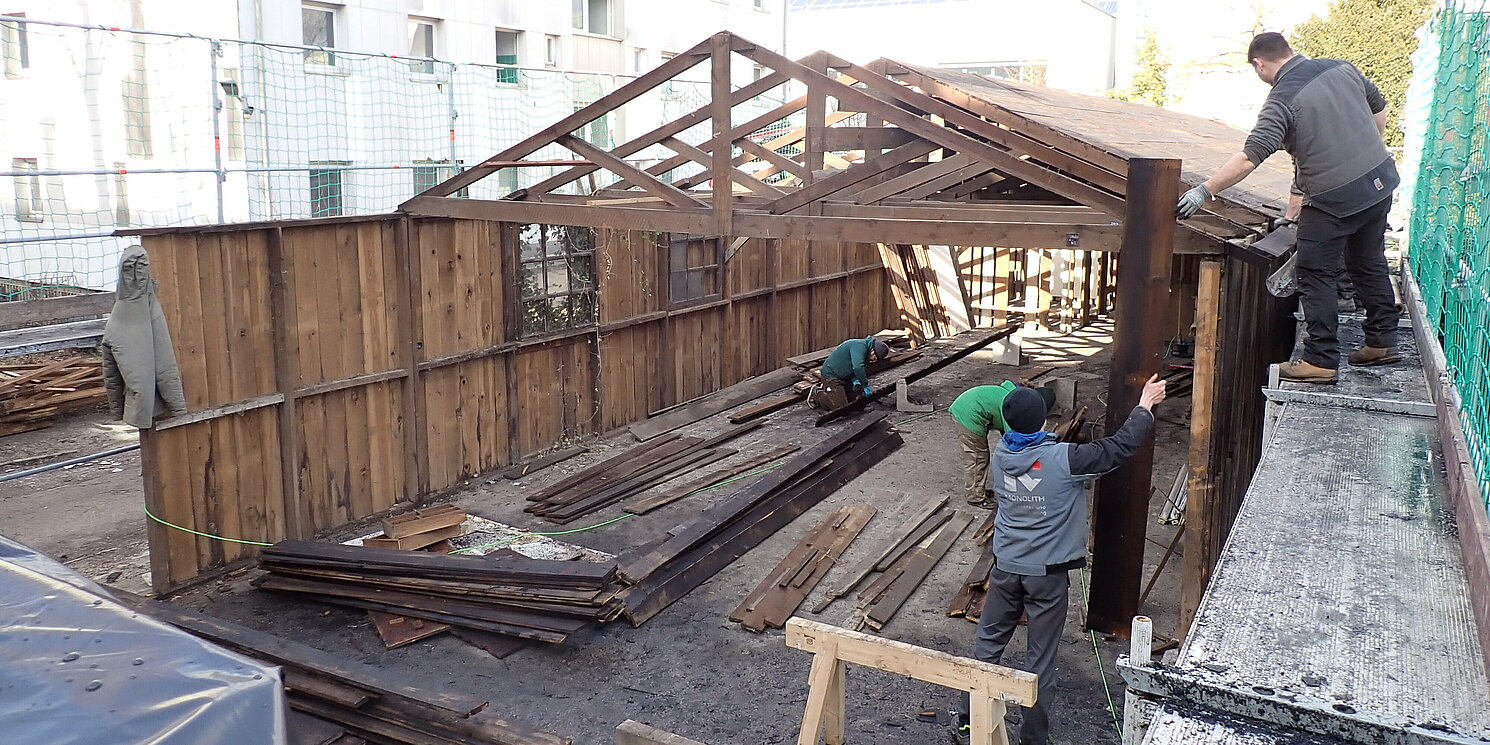
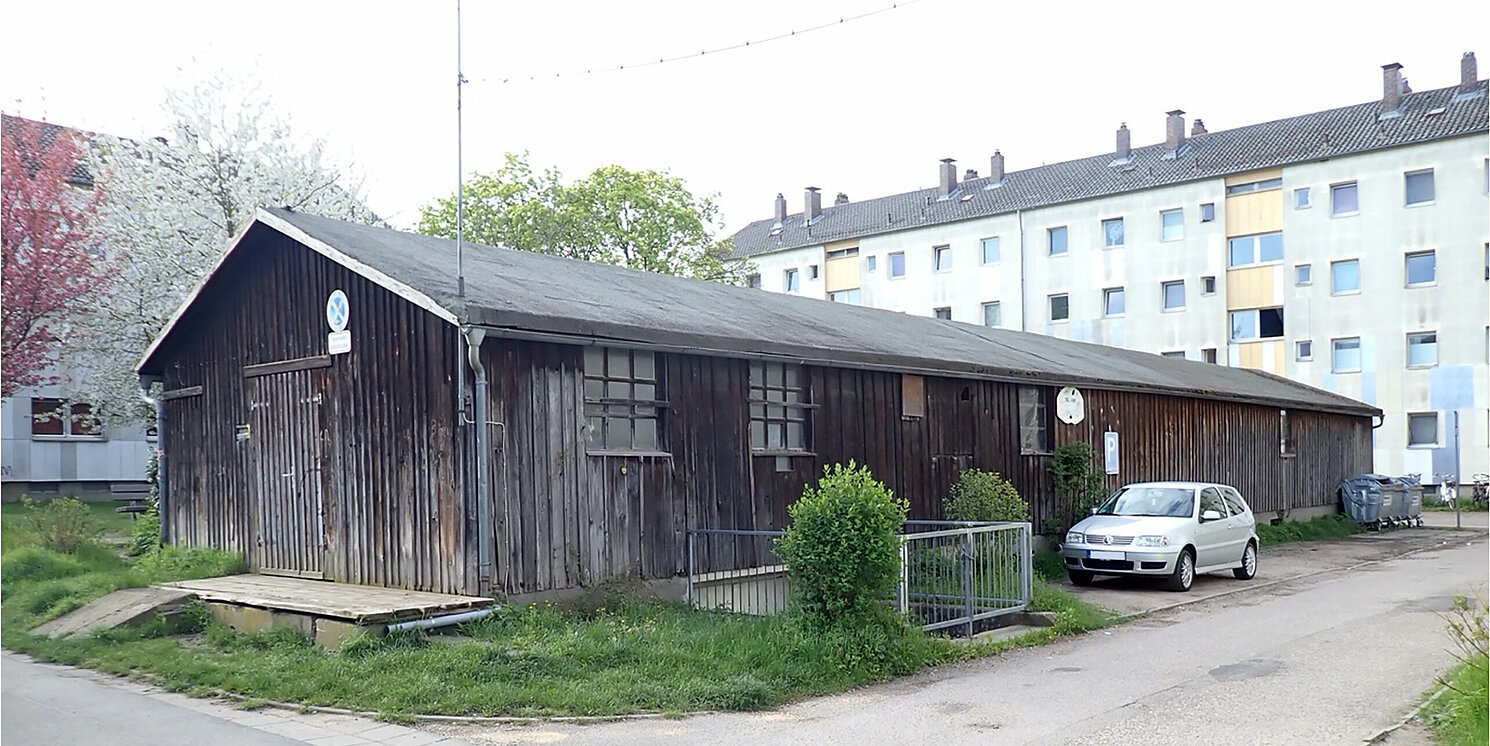
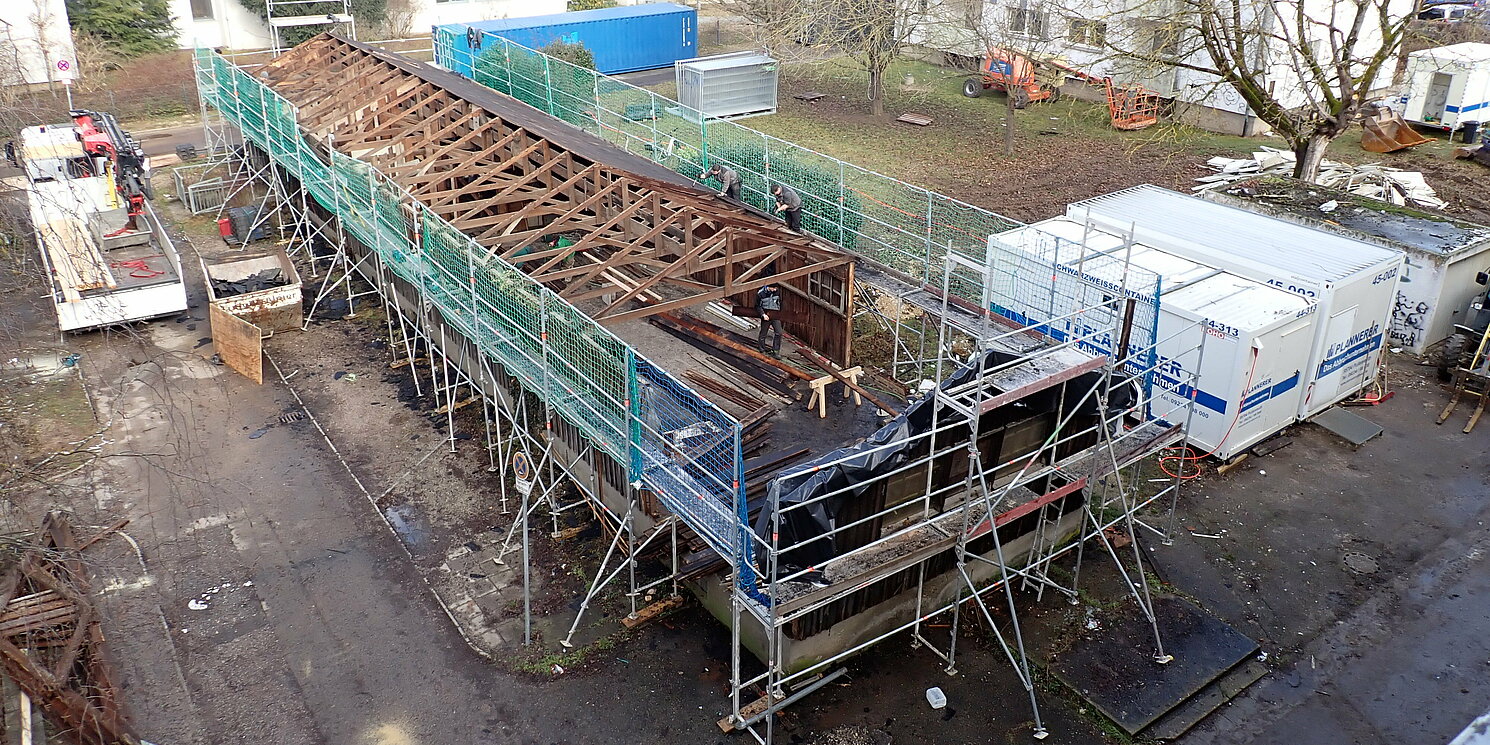
From Tuesday, 17 February 2026, to Friday, 20 February 2026, a wooden barrack more than 80 years old was professionally dismantled on Plattlinger Straße in the Hohes Kreuz district of Regensburg. The aim was to rebuild it elsewhere and preserve it permanently as an authentic historical testimony to the city's history.
This was recently reported not only in the regional daily press, but also on regional television station TVA.
The fact that this came to pass is largely thanks to the results of a master's thesis in the Historical Building Research programme at the Faculty of Architecture, which was initiated and supervised by Prof. Dr. Dietmar Kurapkat in the summer semester of 2021.
A modest building with a varied history
This rather inconspicuous piece of history had received little attention from the municipal monument protection authority or the Bavarian State Office for Monument Preservation until then.
As building research on the property and accompanying archive research in the course of the master's thesis revealed, the barracks had been erected by the Americans in 1945 after the end of the war as a military hospital barracks for one of the largest prisoner-of-war camps in southern Germany, in whose 190 barracks more than 11,000 Wehrmacht soldiers and SS members were held at times. Later, the camp was also used to imprison politically compromised civilians as part of the ‘denazification’ process and finally to house displaced persons and refugees from the Sudetenland and other areas. In the course of these changes in use, the barracks underwent several structural alterations, including the addition of a basement in 1949 to store the belongings of German refugees.
Nevertheless, this barracks is the only one that has been preserved in its authentic form and, with its historical multi-layeredness, is a valuable testimony to the causal connections between war guilt, defeat, expulsion and migration. The barracks thus also stands for the beginning of a history that continues to this day in the Hohes Kreuz district and shapes its identity.
Collaboration to preserve a special piece of history
Against this backdrop, the city of Regensburg and the Historical Association for Upper Palatinate and Regensburg (HVOR) have joined forces to have the barracks dismantled and thus preserved as a piece of history.