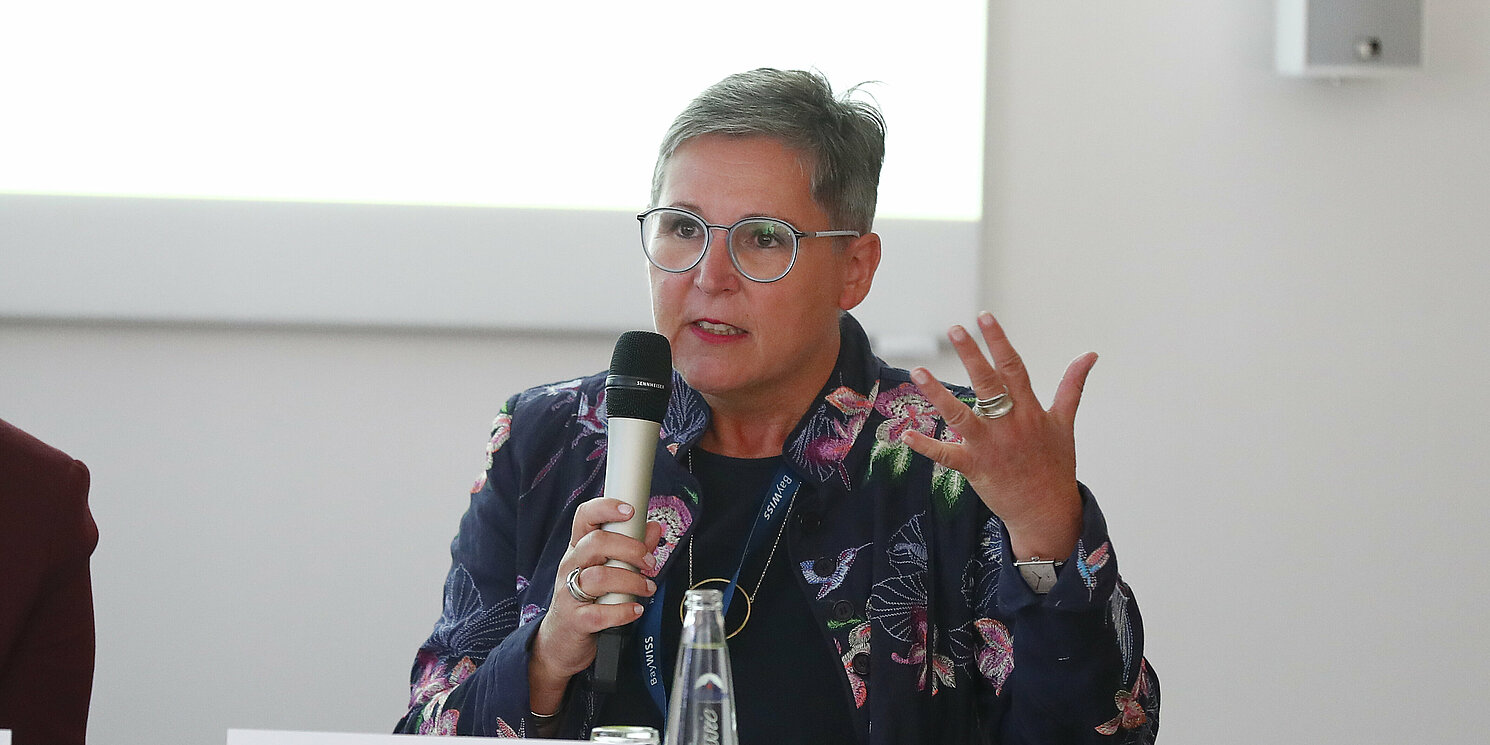
How can healthcare provision in Germany be secured in the long term? This question lies at the heart of the recent publication *Reformbedarf in der Primärversorgung. Für ein zukunftsfestes Gesundheits- und Pflegewesen* (The Need for Reform in Primary Care: Towards a Future-Proof Health and Care System), published by the Friedrich Ebert Foundation. Prof. Dr Annette Meussling-Sentpali, Head of the Health Research Cluster at OTH Regensburg, also contributed to the publication. In particular, she contributes the perspective of nursing science and academic training.
The publication clearly shows that primary care – the first point of contact for patients, ranging from GPs and nursing to prevention and counselling – is central to a functioning healthcare system and goes far beyond the currently much-discussed GP system. At the same time, it is structurally underdeveloped and increasingly overburdened in Germany.
“In some places, the system is on the verge of collapsing,” says Prof. Dr Meussling-Sentpali. This is not just about GP care, but a complex structure: from outpatient care and paediatrics to long-term care and palliative care, psychological counselling and case management. “This diversity has so far been neither adequately coordinated nor systematically managed.”
Care shortages are already evident today, particularly in rural areas – including in Eastern Bavaria. The consequences extend beyond medical care and affect trust in state structures as a whole.
Greater responsibility for nursing staff
A key finding of the study is the system’s strong focus on doctors. Other healthcare professions, particularly nursing, have not yet been sufficiently integrated. “Nursing care is already a cornerstone of the system today and will become even more important in the future,” explains Prof. Dr Meussling-Sentpali. Academically qualified nursing professionals, such as community health nurses, could play a key role, for example in caring for people with chronic illnesses or in preventing unnecessary hospital admissions.
The groundwork for this has already been laid at OTH Regensburg: the part-time Bachelor’s programmes in Nursing Management and Evidence-Based Nursing Practice, as well as the Master’s programme in Advanced Nursing Practice (ANP), teach precisely those advanced skills that have long been established in international contexts.
However, there is a structural problem: “Our graduates possess highly specialised knowledge, but are often unable to apply it within the current system because the necessary legal and billing frameworks are lacking.” Prof. Dr Meussling-Sentpali sees an urgent need for political action in this regard.
Reform proposals: better management, regional networks, greater digitalisation
The publication proposes a fundamental overhaul of primary care. A key element is the introduction of regional care structures in which different professional groups work closely together to coordinate care at a local level. Another key component is better patient management, for example through digital triage systems or health portals. The aim is to reduce unnecessary visits to the doctor and to deploy resources more effectively.
Digitalisation also plays a central role: “We finally need systems that communicate with one another, from emergency care to aftercare,” says Prof. Dr Meussling-Sentpali. At the same time, she emphasises that technology is no substitute for specialist staff, but must support them.
For OTH Regensburg, the reform requirements present a clear mandate: to further develop interprofessional education and to promote health literacy more widely within society. “More than half the population struggles to navigate the healthcare system. This is where we, as a university, must step in, through education, public awareness and practice-oriented research,” explains Prof. Dr Meussling-Sentpali.
A growing interest in nursing degree programmes shows that things are already starting to change: since the Nursing Education Strengthening Act came into force, OTH Regensburg has seen a rise in applicant numbers.
At the university, students can take their state nursing examination alongside a bachelor’s degree, gain further qualifications and specialise in clinical nursing through a master’s programme, and even go on to do a PhD. The challenge now lies in providing sufficient practical training placements and integrating graduates into the system in a sustainable manner.
Health policy: reforms are not enough
Looking at current developments in health policy, including the reform at federal level, Prof. Dr Meussling-Sentpali sees important steps being taken, but not yet a fundamental change to the system. “Adjustments are being made in many areas, but often addressing symptoms rather than causes,” she says. What is needed, she argues, is a consistent reorientation towards coordinated, team-based and needs-oriented care.
In ten years’ time, the vision is that primary care could be the central steering element of the healthcare system: organised regionally, digitally supported and delivered by interprofessional teams. OTH Regensburg aims to actively shape this transformation through innovative degree programmes, close partnerships with the healthcare sector and scientific expe
The publication *Reform Needs in Primary Care* is available to download free of charge here.