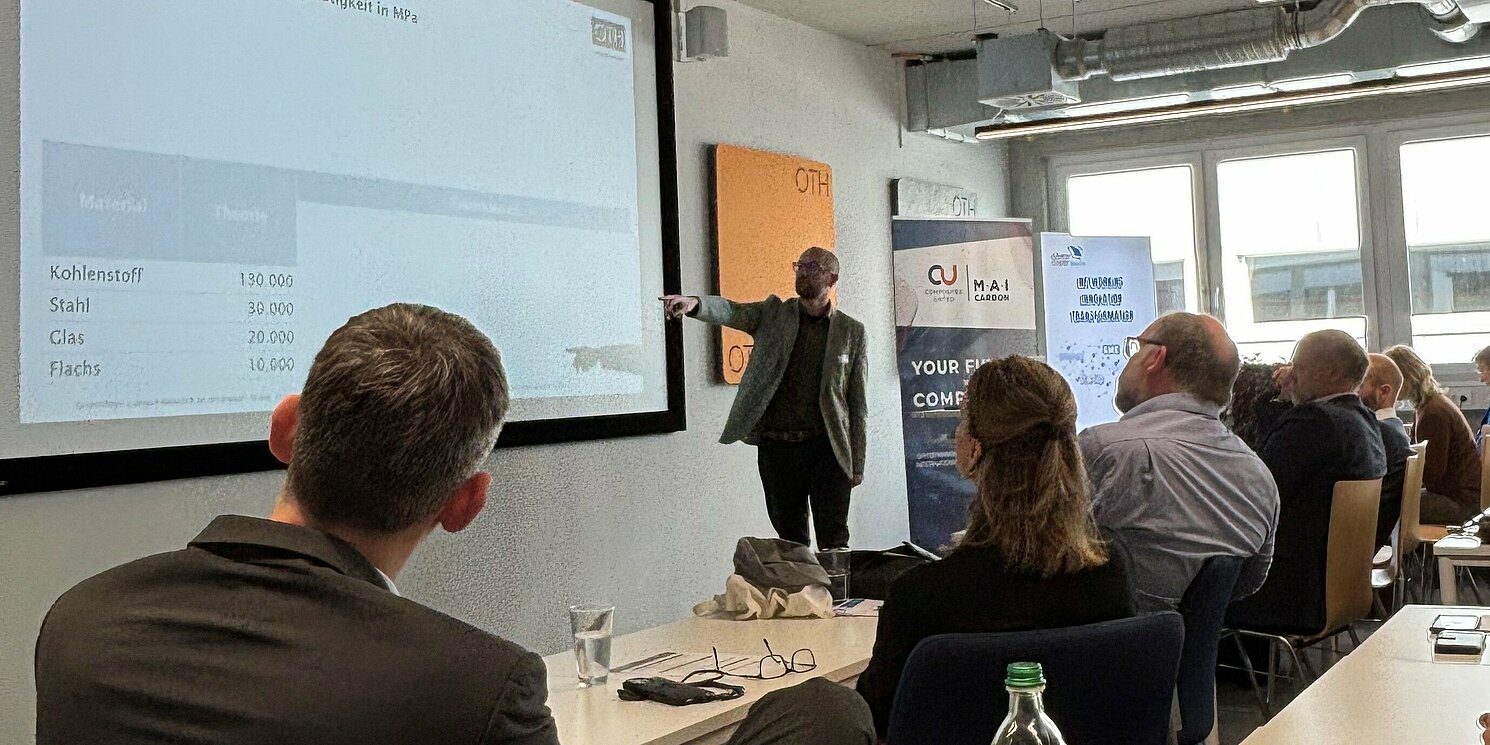
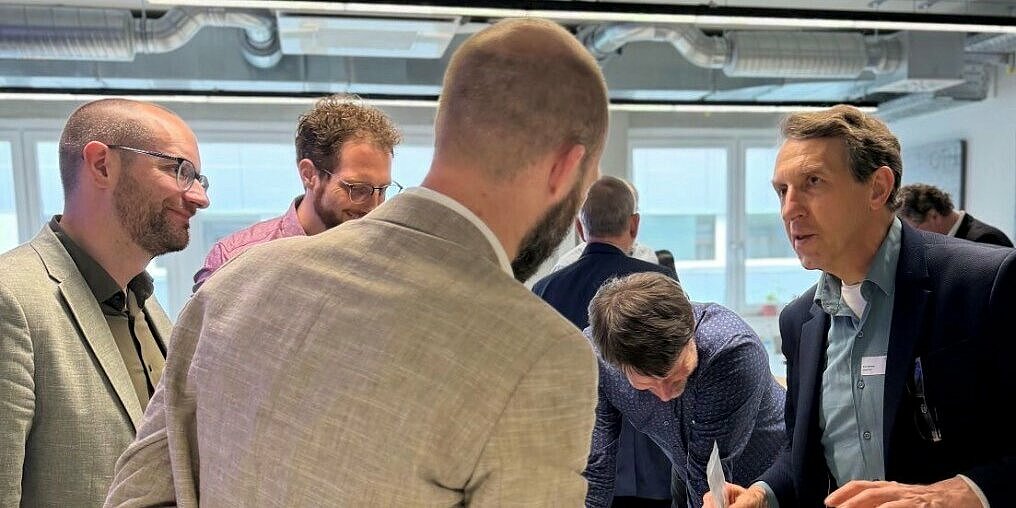
The expert forum “Materials in Dialogue: Biocomposites and CFRP – Opportunities and Practical Applications”, held at the Technology Campus Neustadt an der Donau, marked an important step towards new perspectives in the field of sustainable materials. During the two-day event, it became clear that the transition to sustainable fibre composites is in full swing – yet at the same time, it requires a rethink of processes, applications and business models.
A key success of the expert forum was the fruitful and intensive exchange between academia and industry. The event provided an important platform for directly linking current research findings with industrial requirements and discussing joint solutions. This dialogue impressively demonstrated how crucial the close integration of both sectors is for the successful implementation of sustainable material innovations. A key contribution came from the presentation by Dr Andreas Kastenmeier, Head of Operations at the Technology Campus Neustadt an der Donau. He illustrated the existing challenges between scientific development and industrial application, whilst also highlighting concrete ways in which these two ‘worlds’ can be brought closer together.
Focus on natural fibres – with great potential and clear limitations
The technical focus of the event was on bio-based materials, particularly natural fibres such as hemp and flax. These open up new possibilities for low-carbon lightweight construction solutions and offer interesting functional properties, for example in terms of vibration damping or design. At the same time, it became clear that their industrial use is not a foregone conclusion. Challenges exist, amongst other things, in terms of material consistency, temperature resistance and integration into existing processes. There was agreement that biocomposites are not a direct replacement for existing materials. They realise their full potential above all when applications are specifically tailored to their properties and new design approaches are taken into account.
Recycling and circularity as key drivers
Alongside bio-based materials, the recycling of carbon fibre-reinforced plastic (CFRP) also came into sharper focus. Recent developments show that recycled carbon fibres are increasingly enabling high-performance applications – provided that material properties, processes and areas of application are precisely matched. A clear message emerged throughout the two-day event: the key to greater sustainability lies in a systemic approach. Topics such as design for circularity, end-of-life strategies and hybrid material concepts are continuing to gain in importance.
“We see enormous potential in sustainable composites – but at the same time, there are many unanswered questions regarding practical implementation,” said Sven Blanck, Managing Director of MAI Carbon.