Since April 27, 2026, OTH Master's student Leon Dresel worked at the HVL Robotics Lab at the Førde campus of the Western Norway University of Applied Sciences (Høgskulen på Vestlandet, HVL). During his three-week stay, he was involved in the FutuRaPS (Future Raspberry Production System for Western Norway) project, funded by the Norwegian Research Council and aimed at advancing the automation of raspberry production in Western Norway. His contribution focused on the development and testing of control algorithms for the project's mobile robotic platforms.
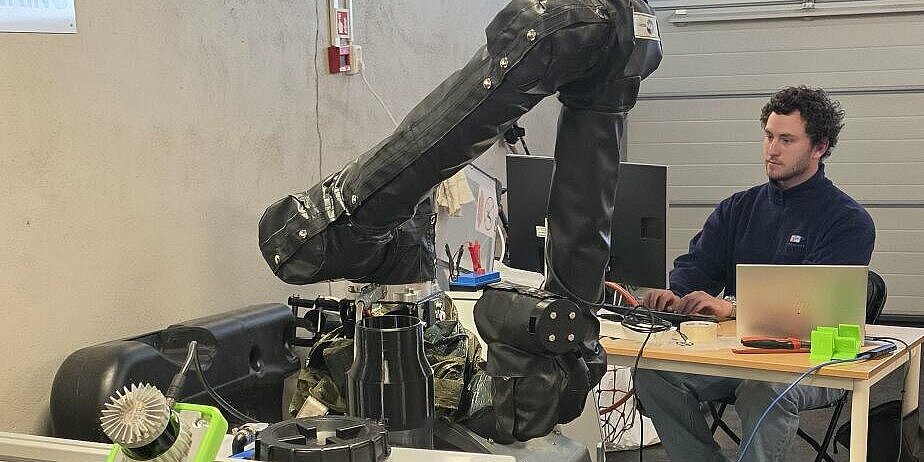
At the lab, Leon worked with two research platforms: a tracked Alitrack platform equipped with a UR10 six-axis robotic arm and a wheeled Clearpath Husky platform. Both systems were used within the project, among other applications, for the precise spraying of crop protection products on raspberry plants in polytunnels. The stay was supervised by Prof. Dr. Thomas Linner (Building Lab, OTH Regensburg) in collaboration with the HVL Robotics Group led by Prof. Martin Fodstad Stølen, with technical supervision provided by Dr. Amel Dechemi.
Leon Dresel, 25 years old, from Regensburg
In which fields did you study and conduct research?
I studied the Master's program in Applied Research in Engineering at OTH Regensburg, having previously completed my Bachelor's degree in Mechanical Engineering. At the Building Lab under Prof. Linner, I worked on mobile robots for interior construction applications. Specifically, my work focused on perception using LiDAR and cameras, control systems, and integration with ROS2, both on mobile platforms and in combination with robotic arms.
How did your enthusiasm for this field begin?
My first significant exposure to robotics came during my Bachelor's thesis in Sweden, where I had the opportunity to work with robotic arms for the first time. I was fascinated by the interaction between mechanics and software and by how quickly processes could be implemented using robotic systems. During my Master's studies, I moved into the field of construction because I saw significant potential for automation through robotics.
How did the cooperation with the HVL Robotics Lab come about, and why did you choose Norway?
The connection to the HVL Robotics Lab was established by Prof. Linner. Together, we considered where I could gain practical experience with mobile robots operating outdoors. At the Building Lab, our work primarily focused on indoor applications, and I felt that I was missing this outdoor perspective. The FutuRaPS project at HVL was therefore an excellent fit, even though its application context was agriculture. Many of the challenges were the same as those encountered in construction.
What were the strengths and unique characteristics of the host institution?
What impressed me most was the combination of advanced equipment and the people working there. The platforms I was able to work with were high-quality research systems, and I was given a great deal of trust from the very beginning. Equally important were the colleagues and fellow students in the lab. Everyone took the time to properly introduce me to the systems and was always approachable whenever I had questions. As a result, the three weeks turned into a highly productive and enjoyable experience.
How did Norway and Germany complement each other in terms of their strengths in research and development?
At HVL, there was a clear focus on outdoor mobile robotics, particularly in agriculture. At our Building Lab, the emphasis was more on indoor applications in the construction industry. However, when looking more closely, the challenges were remarkably similar. Both sectors face labor shortages, both operate in semi-structured environments where people move freely, and in both cases the availability of data is limited. Much of what the researchers in Norway had developed could be transferred to our research questions, and vice versa.
How did you plan to bring your research into industry?
At the Building Lab, we worked on several projects with industrial partners, for example with Lindner on the automation of raised-floor installation and on logistics robots for construction sites. What I learned at HVL about LiDAR-based perception and autonomous navigation could be directly applied to all of these projects.
How was your stay funded?
The stay was funded through the DAAD support program of the ARTEMIS University Alliance. HVL provided me with a workspace, hardware, and technical supervision.
Which experience in Norway had the greatest impact on you?
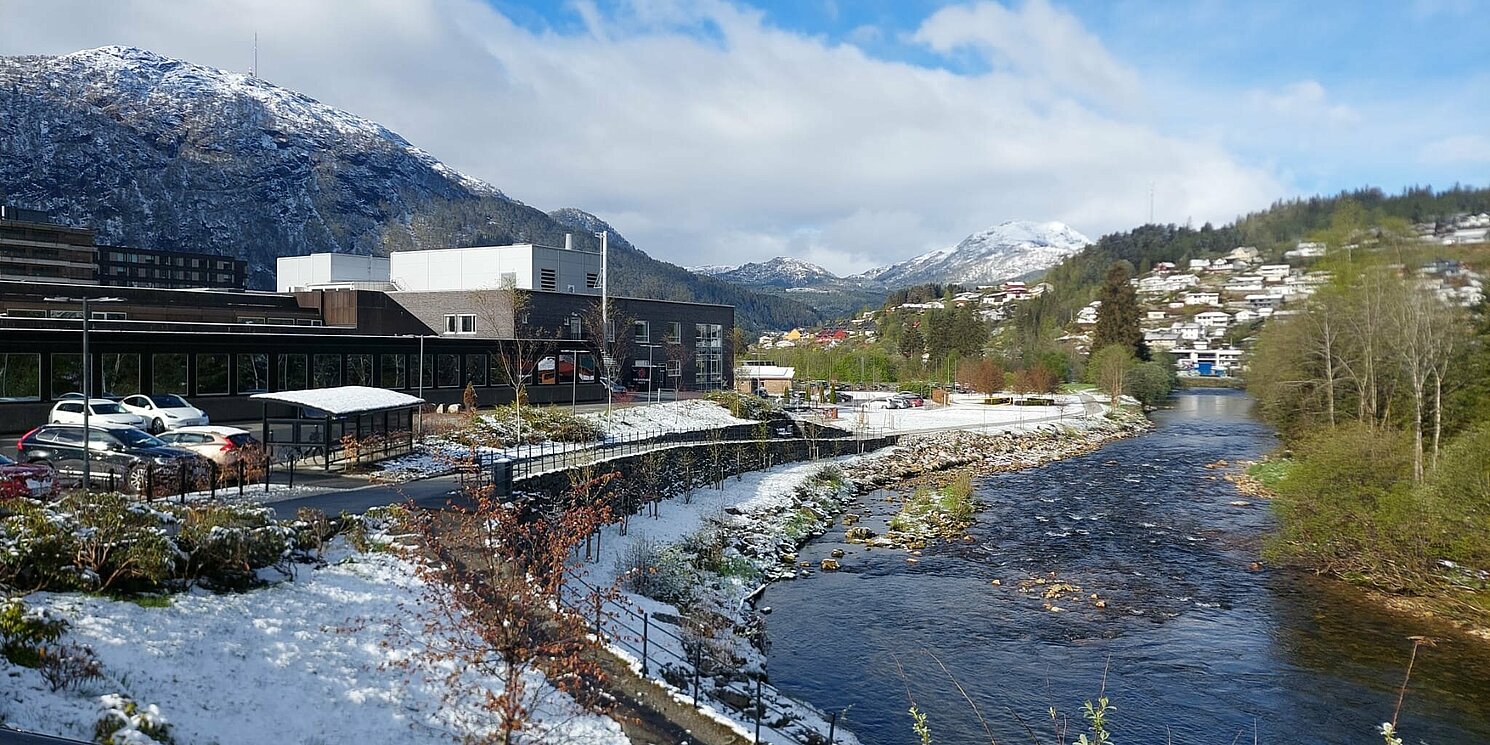
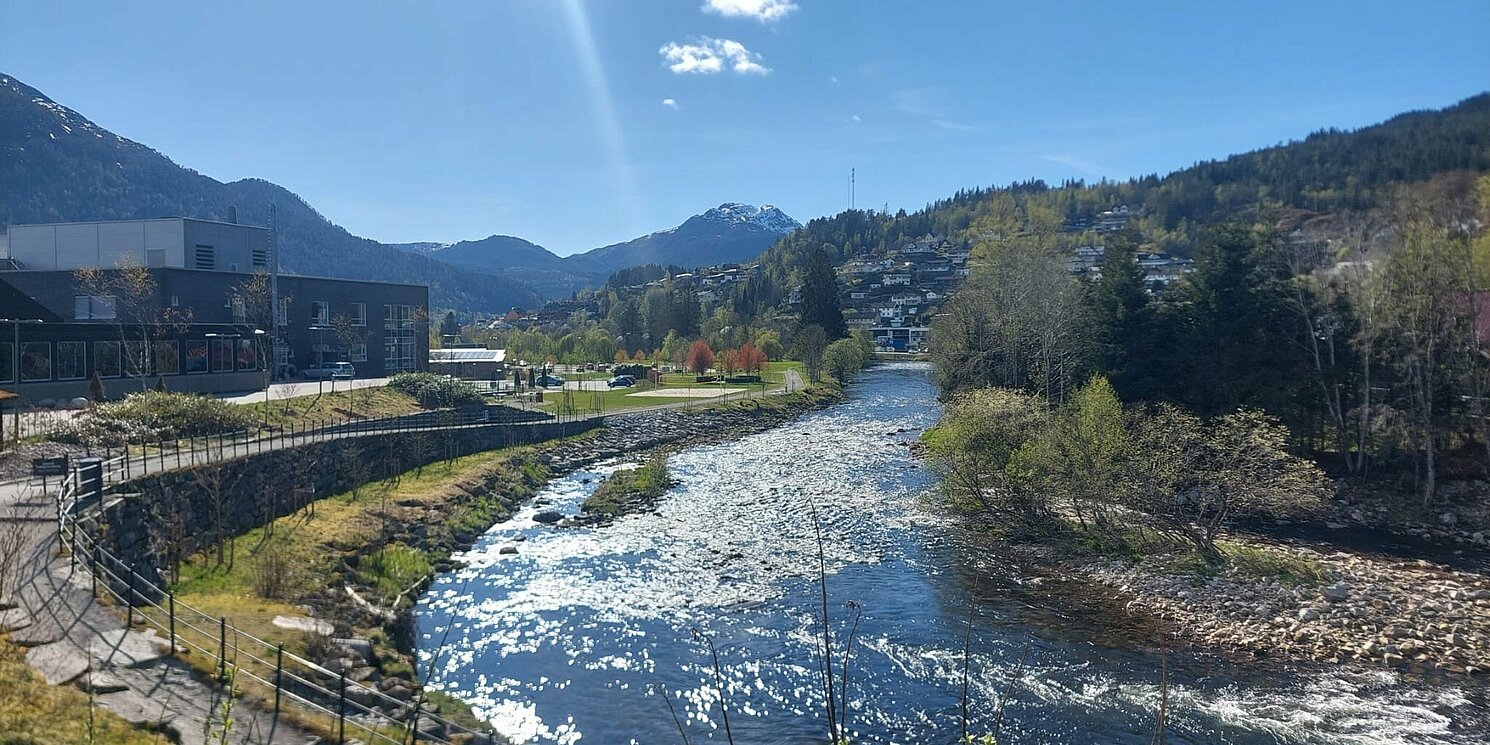
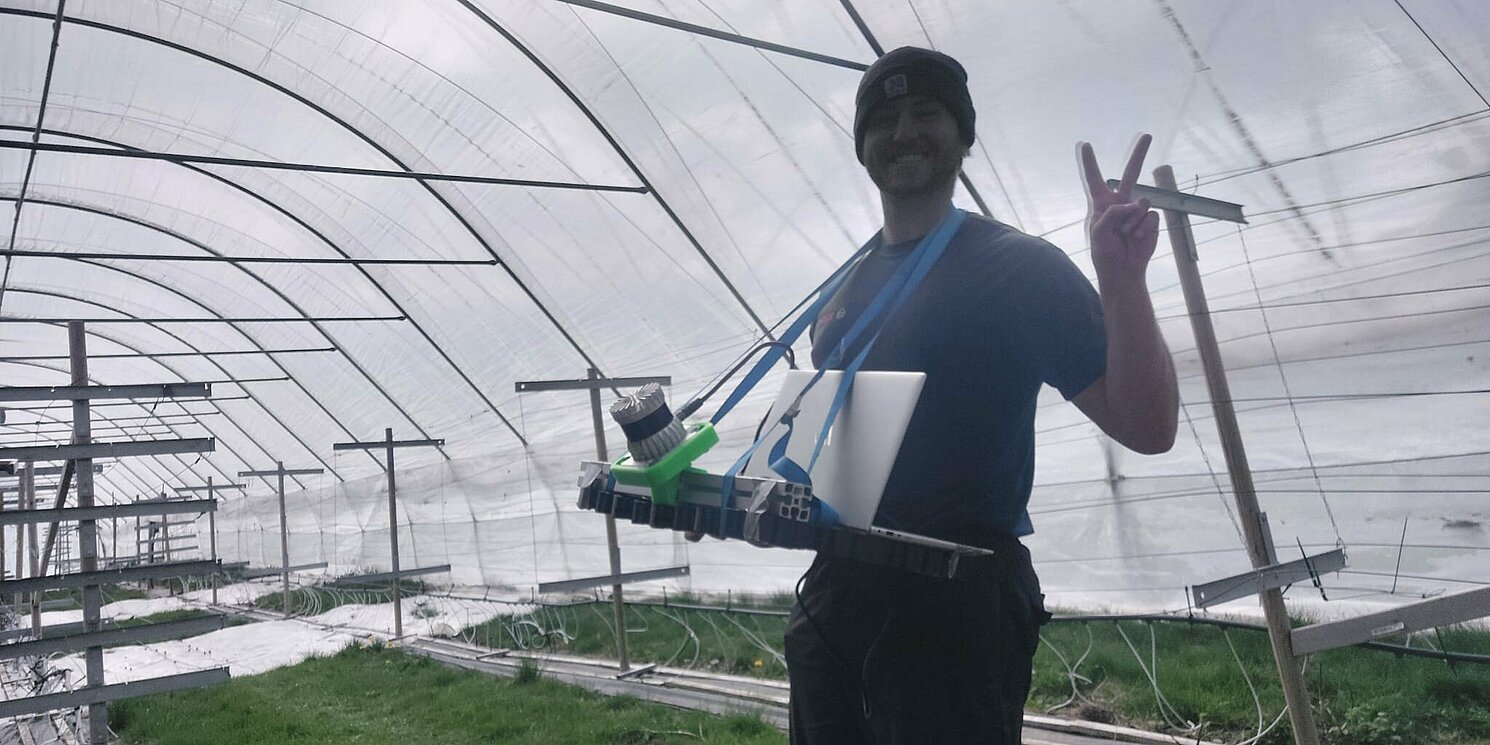
From a professional perspective, the day spent at the raspberry plantation in Leikanger was the highlight. We collected LiDAR point clouds there in order to test my control algorithms using real-world data. There is a considerable difference between simulation and field conditions, and that day quickly revealed the challenges that arise in real deployments. Outside of work, I was particularly impressed by the landscape. The fjords were truly spectacular, and the public bus network made it easy to travel almost anywhere. The weather was favorable as well, leaving plenty of time for hiking.
What advice would you give to OTH Regensburg students interested in studying abroad?
Talk to your supervisors about the topic early on. Many international contacts already exist; they are simply not always visible from the outside. Also, do not underestimate shorter stays. Three weeks can be enough to achieve a great deal if the topic is closely aligned with your research focus and you arrive well prepared. In my case, organizing a stay in Norway was straightforward, and everything—from travel arrangements to daily life on site—went smoothly.