The Chemnitz Theatre has been closed since 2021 due to significant structural defects. The planned renovation is difficult to finance due to skyrocketing costs of around 35 million euros. The theatre and puppet theatre are currently using a former spinning mill as a temporary home – a new plan now envisages establishing and expanding the so-called Spinnbau on a permanent basis. Architecture and building climate control students have developed ideas for this and presented them on site in Chemnitz.
Fresh ideas for the old theatre and the Spinnbau in Chemnitz
In the ‘Construction’ seminar led by Prof. Marc-Philip Reichwald, architecture students at OTH Regensburg, in cooperation with the Chemnitz City Planning Office, developed concepts for the transformation of vacant industrial buildings, specifically for the theatre and the Spinnbau, but also for the city of Chemnitz in general.
The student research project ‘Building in Existing Structures – Transformation of the Chemnitz Theatre’ focused on design, conversion, construction and project organisation. Building climate control students were responsible for climate design and energy concepts. The students analysed the buildings on site and developed a feasibility study showing how the historic buildings can be transformed back into a vibrant cultural venue.
Bringing light into dark spaces
Due to significant structural defects, the windowless stage tower of the theatre is currently unused. What was previously considered a weak point is now seen by the students as potential: their design envisages opening up the roof, making the tower accessible to the public and setting up a library with a café there.
The former auditorium is to be transformed into a green, light-flooded courtyard, serving as a central meeting place that connects the foyer, stage tower and back-of-house area.
Breaking through horizontal structures and creating vertical connections
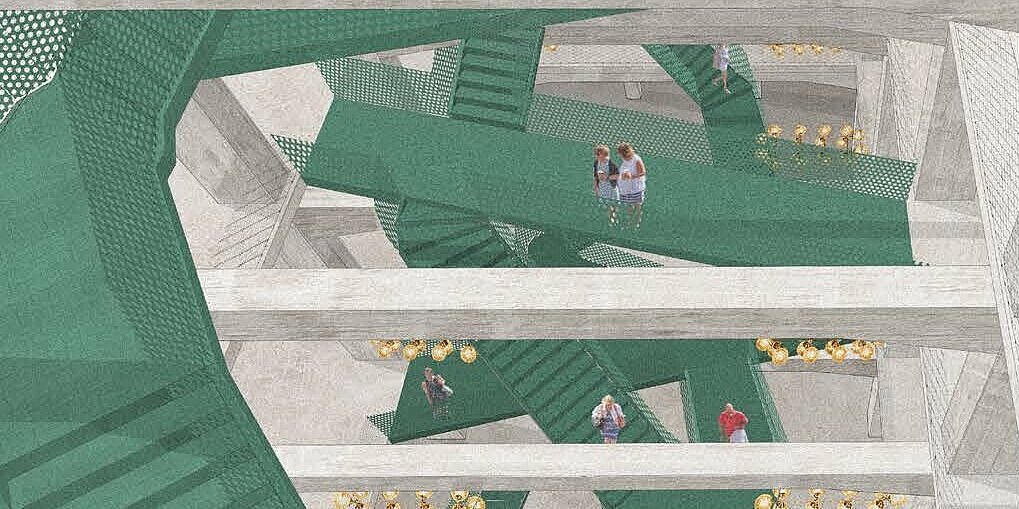
Although the Spinnbau does not have a classic stage tower, it offers great spatial potential. Through targeted interventions in the building fabric, the students propose new, multi-storey connections to break through the horizontal structure and create vertical connections. At the same time, the entire area around the Spinnbau is to be revitalised: the outdoor area could offer space for creative work, a bridge over the railway tracks could create a direct connection to the TU campus and attract new audiences.
City representatives are impressed
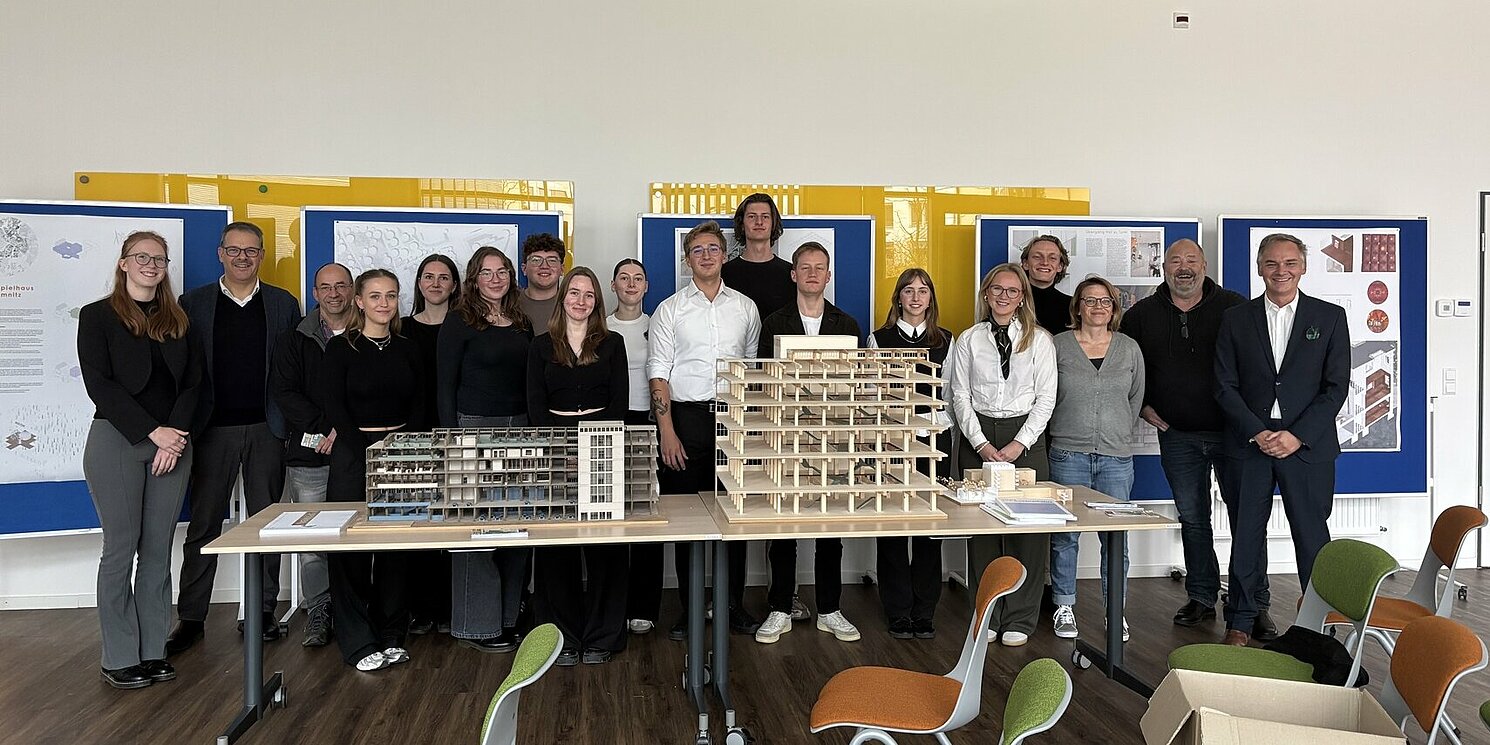
The concept impressed representatives of the Chemnitz City Planning Office and Monument Authority so much at the presentation at OTH Regensburg that another meeting was held in Chemnitz: Thirteen students and Prof. Marc-Philip Reichwald were invited to present their work to Thomas Kütter, Mayor for Urban Development and Construction, representatives of the city planning office and the Chemnitz theatre management, and discuss their ideas.