PROMPT: Detecting and locating methane leaks more quickly
Prof. Dr Matthias Ehrnsperger and Prof. Dr Rudolf Bierl from the Sensor Technology Application Centre (SappZ) are tackling a pressing problem in the PROMPT project (“Innovative, mobile trace gas sensor system for the detection and localisation of methane and ethane emissions”): Worldwide, large quantities of methane escape into the atmosphere from gas infrastructure, for example through pipeline leaks. Methane is one of the most potent greenhouse gases and contributes significantly to global warming.
Since August 2024, the European Methane Regulation has required operators of fossil fuel infrastructure to monitor emissions more closely and repair leaks more quickly. However, existing systems are often costly, inflexible or insufficiently accurate.
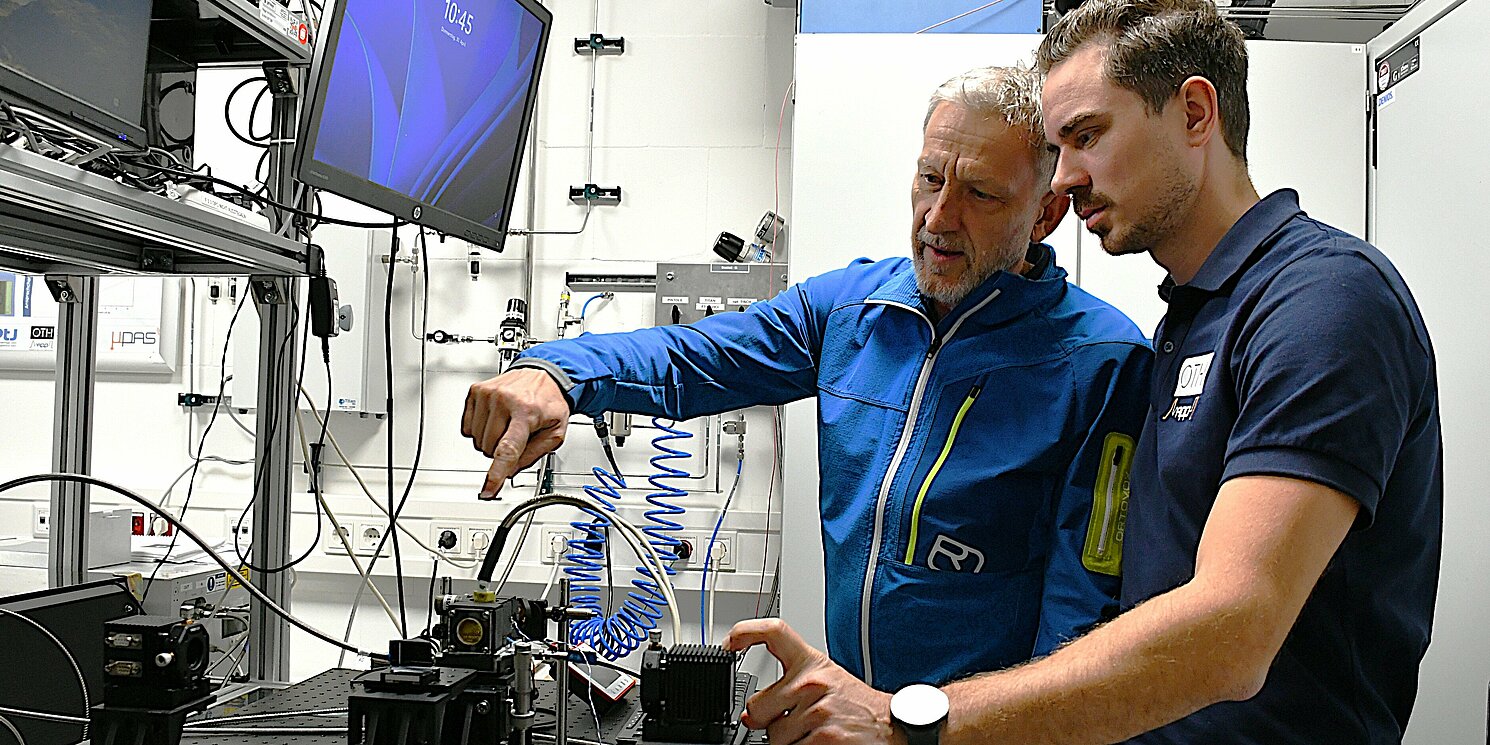
This is where PROMPT comes in: using photoacoustic spectroscopy – a technique in which absorbed light is converted into sound to identify substances – the researchers are developing a highly sensitive, robust and cost-effective sensor system for mobile use, for example integrated into drones or autonomous robots. Artificial intelligence methods are also being used to enable the system to independently detect and locate emission sources. The technology is being tested both in the laboratory and under real-world conditions on gas networks.
PROMPT is receiving funding of just under two million euros over four years. The project leader is Prof. Dr Matthias Ehrnsperger. The following companies are participating as industry partners (without funding): m-u-t GmbH (Wedel near Hamburg), Bayernwerk Netz GmbH, REWAG from Regensburg and GlobeFlight GmbH from Barbing.
Whilst PROMPT aims to precisely detect climate-damaging emissions and thus enable their reduction, the second project is investigating how the greenhouse gas CO2 can be efficiently converted into valuable products.
MiPla: Mini-plasma for analysis and climate-friendly chemistry
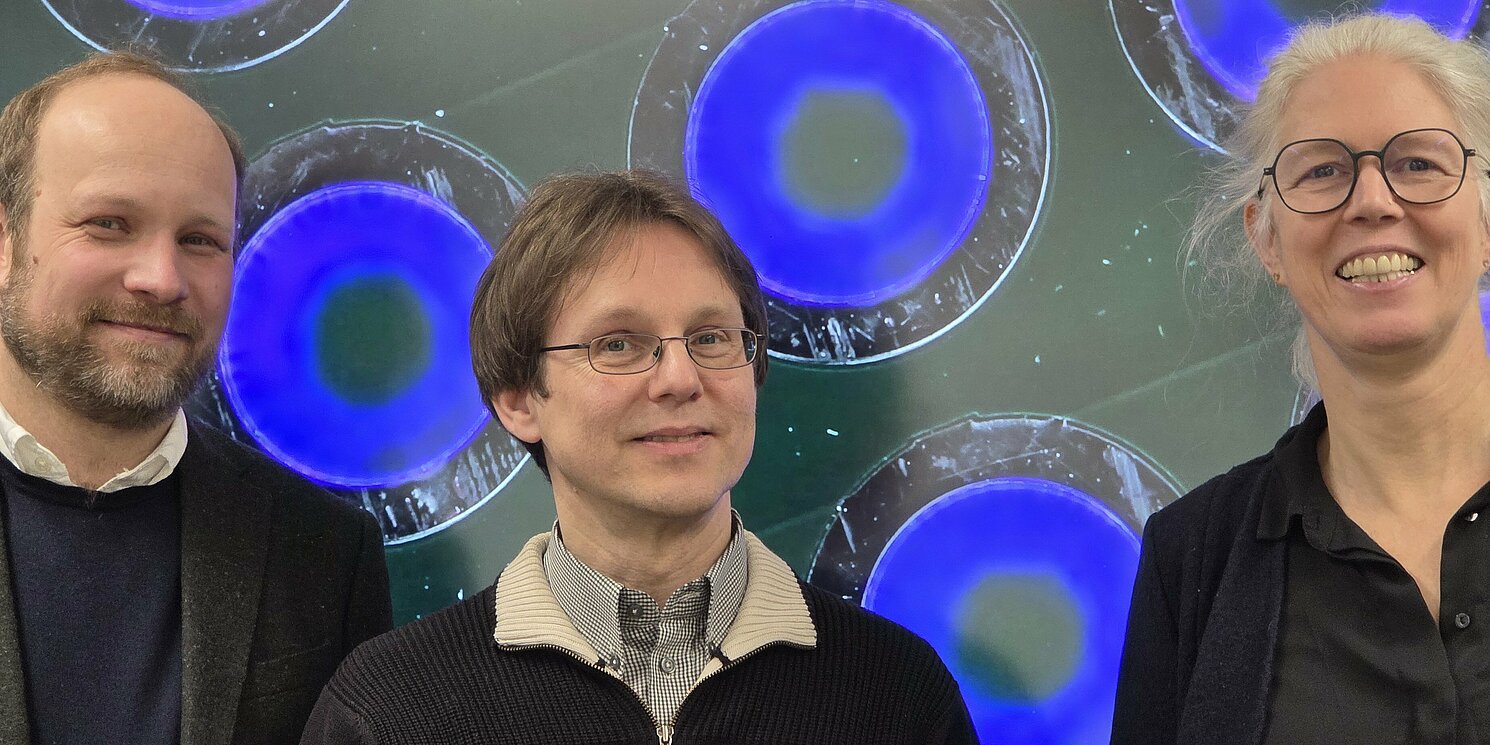
The MiPla project (“Miniaturised plasma sources for applications in chemical analysis and synthesis”) focuses on the development of micro-plasma sources and their use in the analysis of gases and the efficient decomposition of carbon dioxide. The project is led by Prof. Dr Rupert Schreiner. Prof. Dr Corinna Kaulen and Prof. Dr Philipp Keil are also involved.
Plasmas are gases in which molecules and atoms assume excited states and partially release electrons. This results in a mixture of charged and uncharged particles. Plasma sources supply the gases with the energy required for this process. In contrast to the familiar ‘hot’ plasmas found in stars or nuclear fusion facilities, this project focuses on plasmas that are barely warmer than room temperature. This makes them an interesting area of research with a wide range of potential applications.
One application involves chemical reactions with high activation energy: in plasma, these reactions can take place at significantly lower temperatures because the atoms and molecules there exist in higher-energy, excited states. One reaction that becomes more efficient in plasma is the decomposition of carbon dioxide (CO₂) into carbon monoxide (CO) and oxygen (O) to produce valuable chemicals such as methanol. By combining microplasmas with specially developed nanoscale catalysts, the MiPla project aims to further increase the efficiency of this reaction. It is a key component in making industrial processes climate-neutral by separating CO2 from exhaust gases and reusing it.
Compared to conventional variants, microplasma sources require significantly lower ignition and operating voltages and are therefore easier to operate and more cost-effective to implement. Furthermore, scaling up to large areas and high volumes is easily achievable at a later stage. In the MiPla project, the researchers aim to realise and optimise microplasma sources using microsystem technology. To this end, they are investigating which materials and geometries must be used in the implementation and in which operating mode the microplasma sources should be controlled to achieve optimal and efficient plasma generation.
Flagship research projects in the University Development Plan
With these two research projects, the Faculty of Applied Natural and Cultural Sciences is fully in line with the objectives of OTH Regensburg’s University Development Plan (HEP). The projects place a strong emphasis on sustainability, a key development priority.
Through innovative ideas and practice-oriented research projects closely linked to industry, OTH Regensburg ensures the transfer of research findings into society.
The HAW-ForschungsPraxis programme:
Through ‘HAW-ForschungsPraxis’, the Federal Ministry of Research, Technology and Space supports open-topic projects developed in close collaboration with partners from industry and society. The aim is to strengthen applied research and bring innovations into practice more quickly.