DIGINET is developing a digital platform for real-time performance management and predictive maintenance of critical energy networks. The focus is particularly on infrastructure for natural gas, hydrogen and CO2. The aim is to enable energy networks to be operated even more safely, efficiently and proactively in the future.
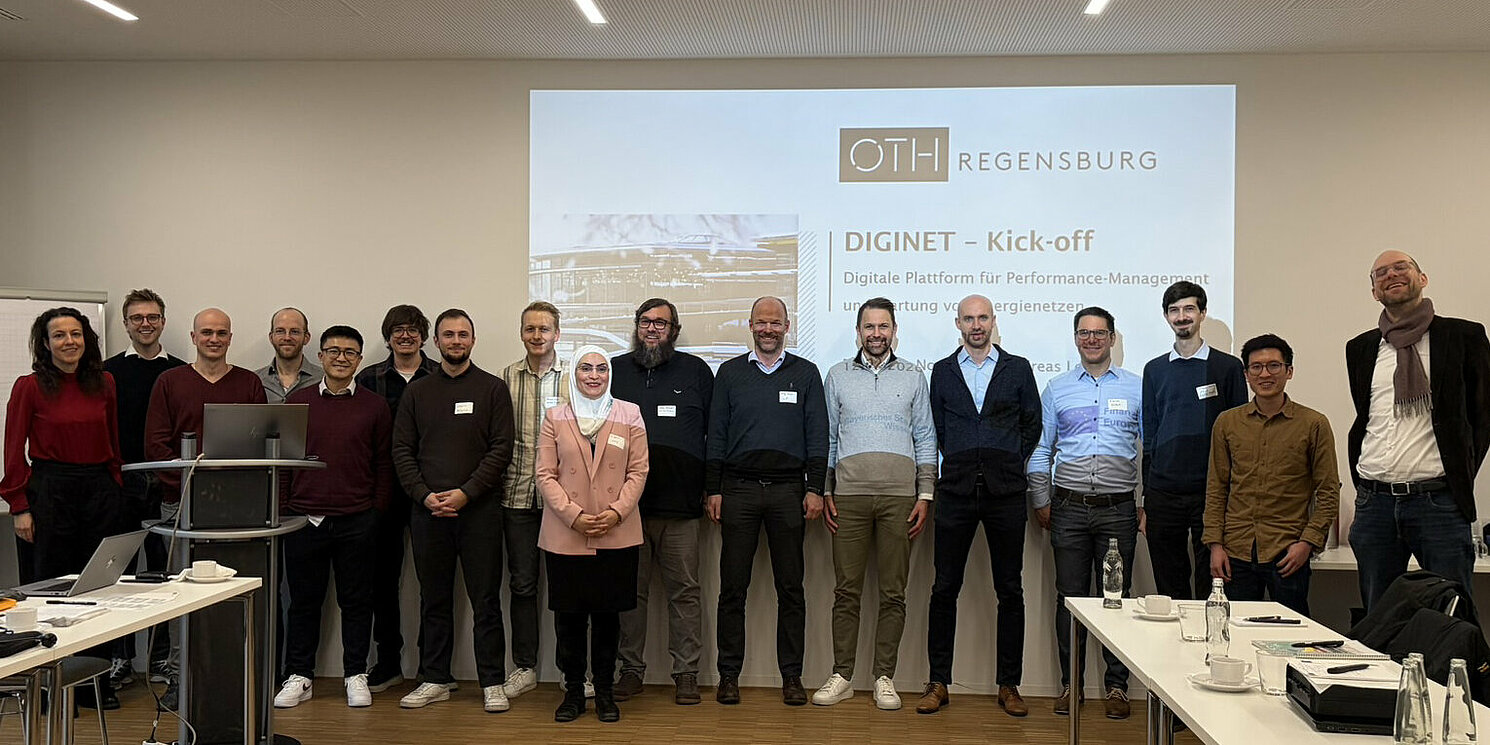
Representatives of the industry partners and the research team from OTH Regensburg came together for the kick-off meeting. The partners contribute expertise in areas including energy infrastructure, network operations, sensor technology, simulation, engineering and plant operations. Together with Prof. Dr Aida Nonn, Prof. Dr Andreas Lesser and the DIGINET team, they discussed key technical issues, work packages and interfaces for the upcoming project phases.
The workshop focused on practical and technically challenging topics such as multi-scale simulation, the integration of control systems and data historian systems, and innovative sensor concepts. It became clear that the project addresses key challenges facing the future energy infrastructure – from condition monitoring and fault assessment to AI-supported predictive models.
Focus on AI, simulation and digital twins
The scientific and technical work within DIGINET is divided into three main areas:
- Flow and operating conditions: Further development of multi-scale CFD models for the analysis of complex operating conditions in energy networks.
- Structural integrity and defect assessment: Combining numerical methods with intelligent analysis of inspection data to assess damage, leaks, corrosion and other potential risks.
- Data-driven predictions and AI-supported digital twins: Development of models that combine physical process knowledge with artificial intelligence, including through physics-informed neural networks.
DIGINET is designed to support the energy sector in its transition from reactive, interval-based maintenance to predictive, data- and model-based decision-making processes. In this way, the project contributes to a resilient, efficient and climate-friendly energy infrastructure.
The project is funded by the European Social Fund Plus (ESF+) and the Bavarian State Ministry of Science and the Arts (StMWK). The project will run from 1 January 2026 to 31 December 2028.