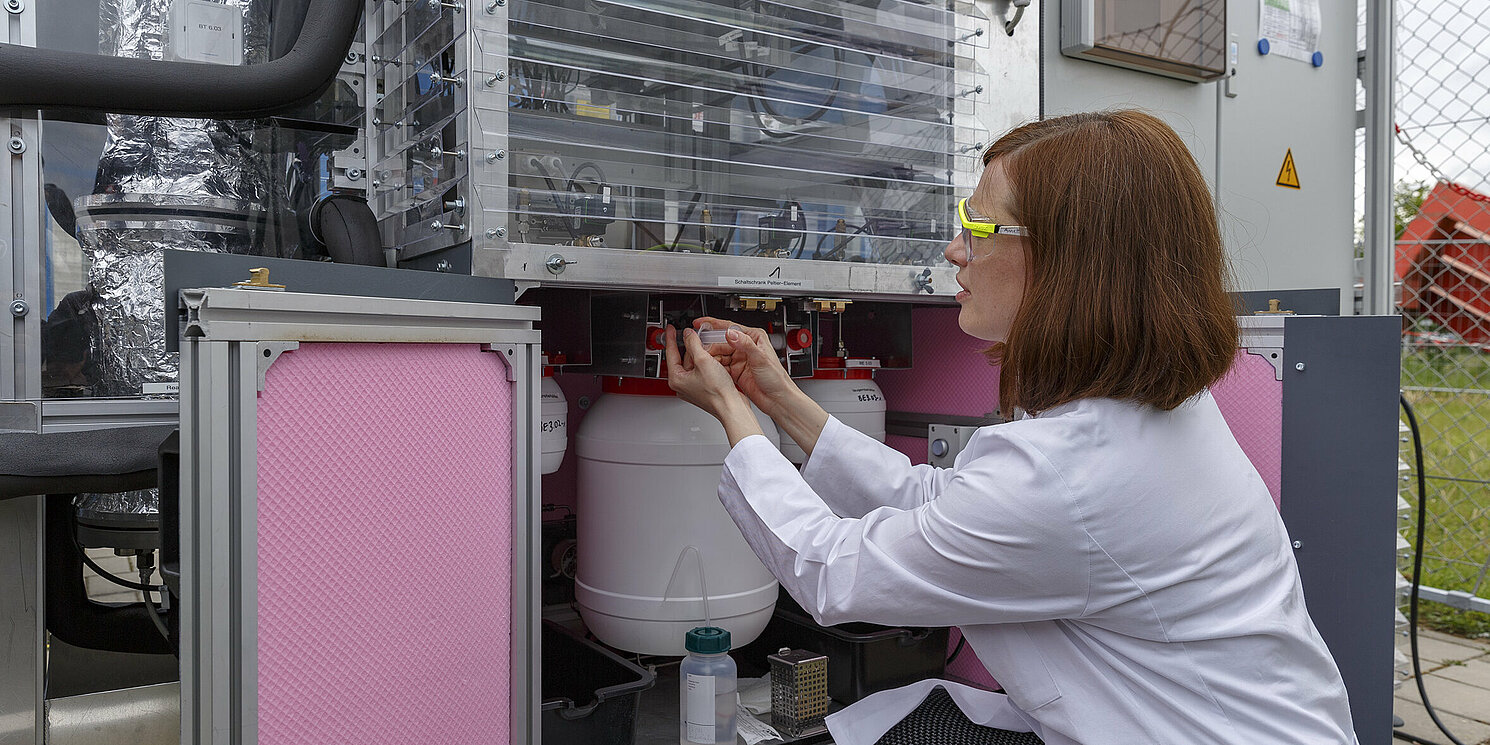
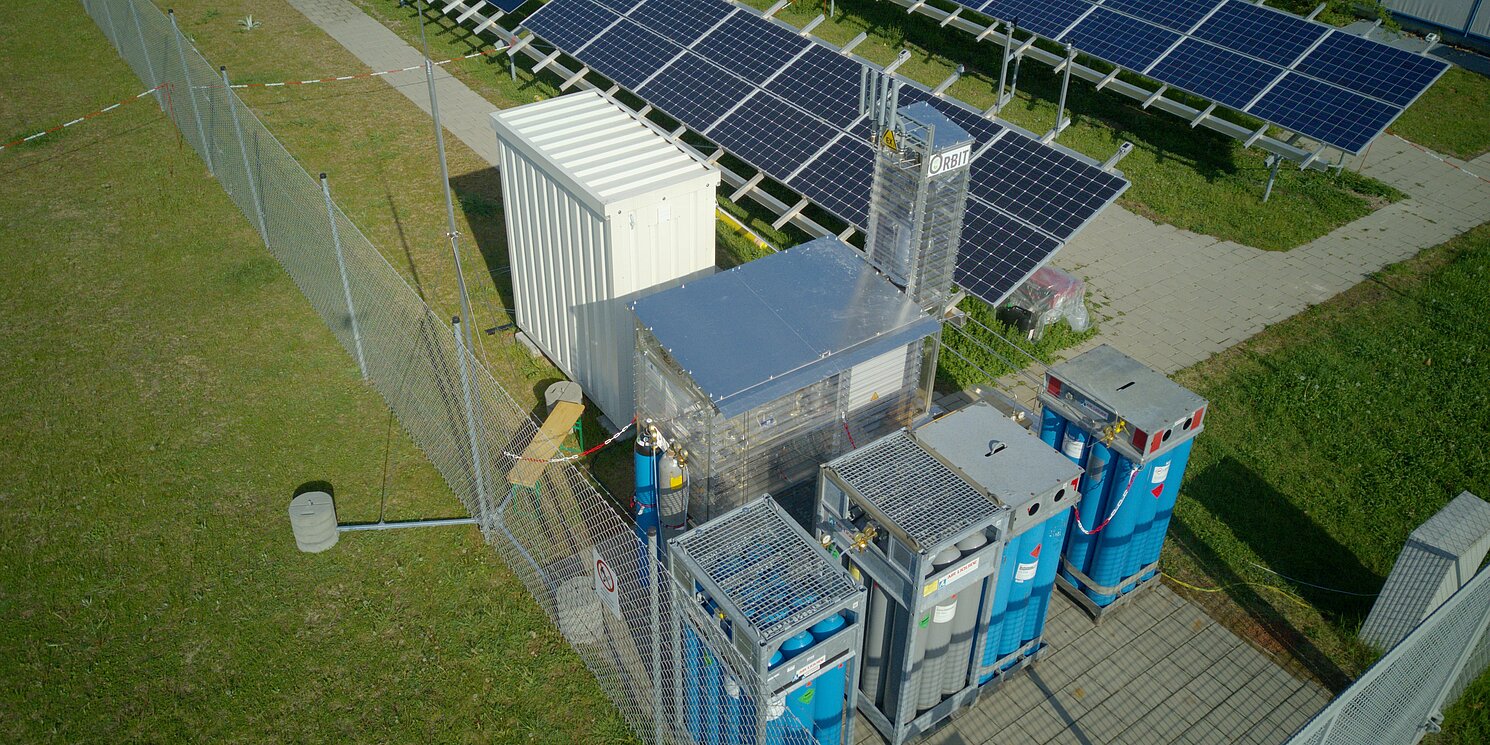
At the heart of ORBIT II lies the question of how CO₂ and green hydrogen can be converted into synthetic methane using methanogenic archaea. This renewable methane can replace fossil natural gas, particularly in sectors that are difficult to electrify, such as parts of the chemical industry. The microorganisms operate under comparatively mild conditions and are far more tolerant of gas impurities than catalytic systems, making the technology robust and adaptable to a wide range of industrial environments. A key innovation is the use of a trickle‑bed bioreactor, a configuration that has been little explored so far and is now being tested under real conditions.
Field trial at a sewage treatment plant: a concept applicable worldwide
A central element of the project is a field test at a wastewater treatment plant. Because such facilities exist worldwide, the concept has significant international transfer potential. Early results show that raw digester gas can be used directly as a CO₂ source without extensive purification. This makes the technology attractive for both urban and rural regions, wherever renewable electricity and CO₂ streams are available.
Prof. Michael Sterner, project lead and Professor of Energy Storage, Energy Economics, Hydrogen and Renewable Energies, highlights the global relevance: “Biological methanation connects biotechnology with the energy transition. Wastewater treatment plants exist in almost every country, which means our approach can be applied worldwide. We show how microorganisms can help replace fossil natural gas while making productive use of industrial CO₂ streams.”
Interdisciplinary collaboration as a key to success
The project thrives on interdisciplinary collaboration between the different partners. Biotechnologists, process engineers, and energy system experts work closely with industrial and municipal partners. Because the technology must be adapted to local conditions — from renewable energy availability to national gas grid regulations — ORBIT II provides a strong foundation for international cooperation and comparative studies across different countries.
From a biotechnological perspective, the robustness of the microorganisms is particularly striking. Daniel Rank, research associate in the project, explains: “Our archaea are remarkably resilient. They tolerate impurities, operate under mild conditions and make the entire process flexible. This opens up global application possibilities — from industrial exhaust gases to wastewater treatment plants.”
Communicating the science behind the project is also essential. One common misconception is that producing methane is inherently harmful to the climate. In the context of biological methanation, however, the process forms a closed carbon cycle: the CO₂ released during methane use is the same CO₂ that was originally captured from biogenic or industrial sources. No additional greenhouse effect is created.
OTH Regensburg as an internationally connected research hub
ORBIT II also illustrates the strengths of OTH Regensburg as a research institution. The university brings together long‑standing expertise in Power‑to‑Gas technologies, strong networks in industry and public infrastructure, and a research environment that spans biotechnology, energy systems analysis and hydrogen technologies. This diversity makes OTH Regensburg an attractive destination for international researchers.
Research associate Michael Heberl emphasises this interdisciplinary environment: “At OTH Regensburg, biotechnology, energy technology and system analysis come together in a very natural way. International researchers can work on real applications — from laboratory experiments to field tests.”
The findings show that biological methanation has significant global potential. ORBIT II demonstrates how modern biotechnology can make a tangible contribution to the energy transition — in Germany and around the world.