Competitive athletes with severe hearing impairments, known as Deaflympic athletes, require effective sports psychology training in addition to effective physical and sport-specific training measures in order to achieve optimal athletic performance. What is now largely established in the field of Olympic and Paralympic competitive sports does not apply to Deaflympic sports. As a result, deaf athletes also lack targeted sports psychology training to optimize their performance. They are denied a proven reserve of performance potential.
A research gap in Deaflympic sports closed
Prof. Dr. Rainer Schliermann from the Faculty of Social and Health Sciences at OTH Regensburg wanted to close this gap by working on two research projects funded by the Federal Institute for Sports Science (BISP) and the Federal Ministry of the Interior (BMI). Together with his research team, he analyzed the conditions under which deaf or severely hearing-impaired athletes can systematically and effectively use sports psychology training to improve their performance.
The research, which took several years, was conducted in collaboration with the German Deaf Sports Association (DGSV) and other partners, combining different means of communication and various data collection methods. This yielded valuable insights into sports psychology training for the Deaflympics. The research attracted considerable international interest, as no comparable studies had been conducted previously. The projects resulted in, among other things, a completed doctorate (Dr. Alon Markov-Glazer; University of Jena), several peer-reviewed publications, and collaborations with experts from the US.
Practical solutions for deaf athletes
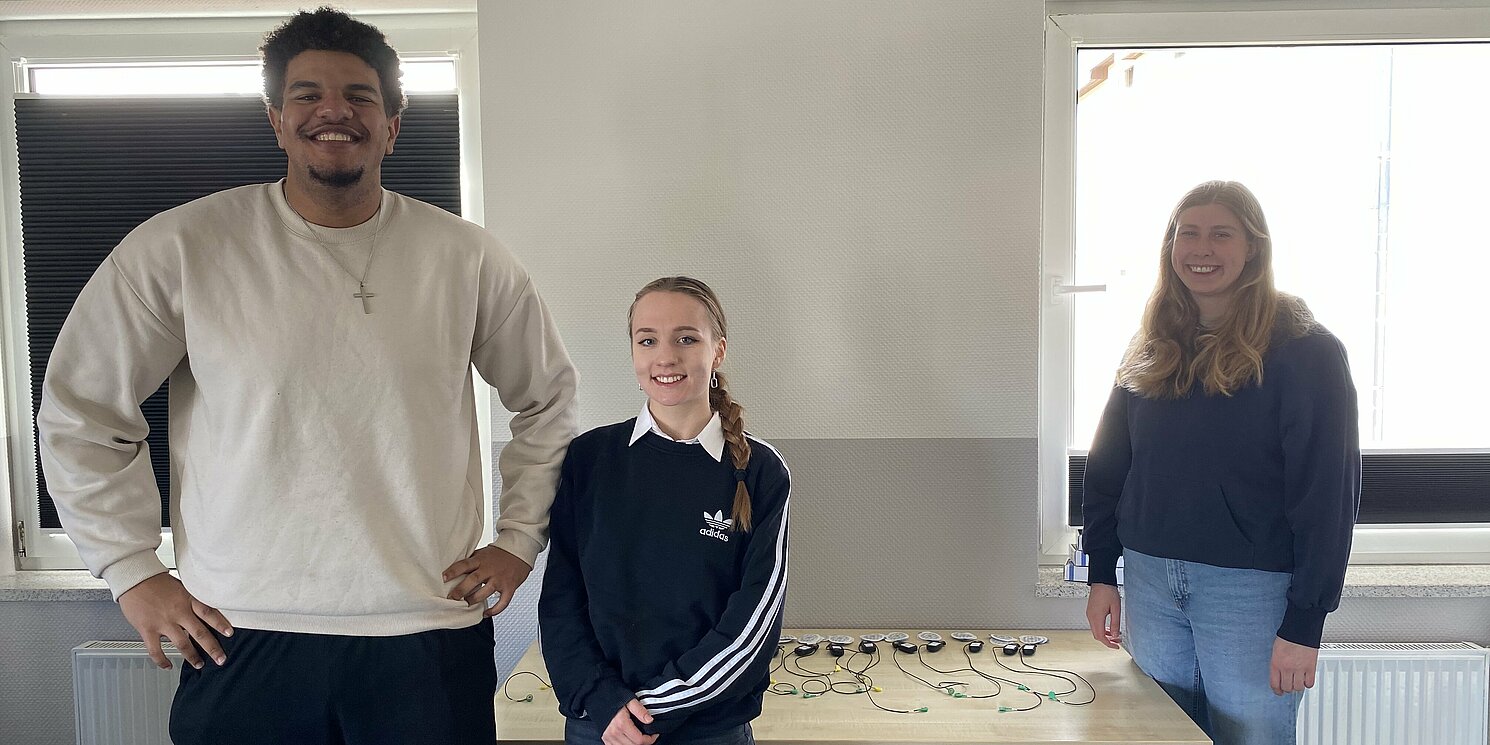
“Together with my long-time colleague, Dr. Alon Markov-Glazer, and the student assistants (SHKs), we have put in a tremendous amount of effort to achieve results and create ‘products’ that now make effective sports psychology training with deaf athletes in Germany considerably easier for the first time,” says Prof. Schliermann, emphasizing the relevance of the research. Among other things, there is now a psychometrically tested and routinely applicable monitoring procedure for recording stress and recovery in a sports context in German Sign Language (DGS), the so-called Recovery-Stress Questionnaire/Sports, as well as PMR relaxation training. “It was great to see how committed and enthusiastic everyone was in taking on the project and working on it. Without Alon and my student research assistants, we would not have been able to achieve the project goals,” says Schliermann, proud of his now former research team.