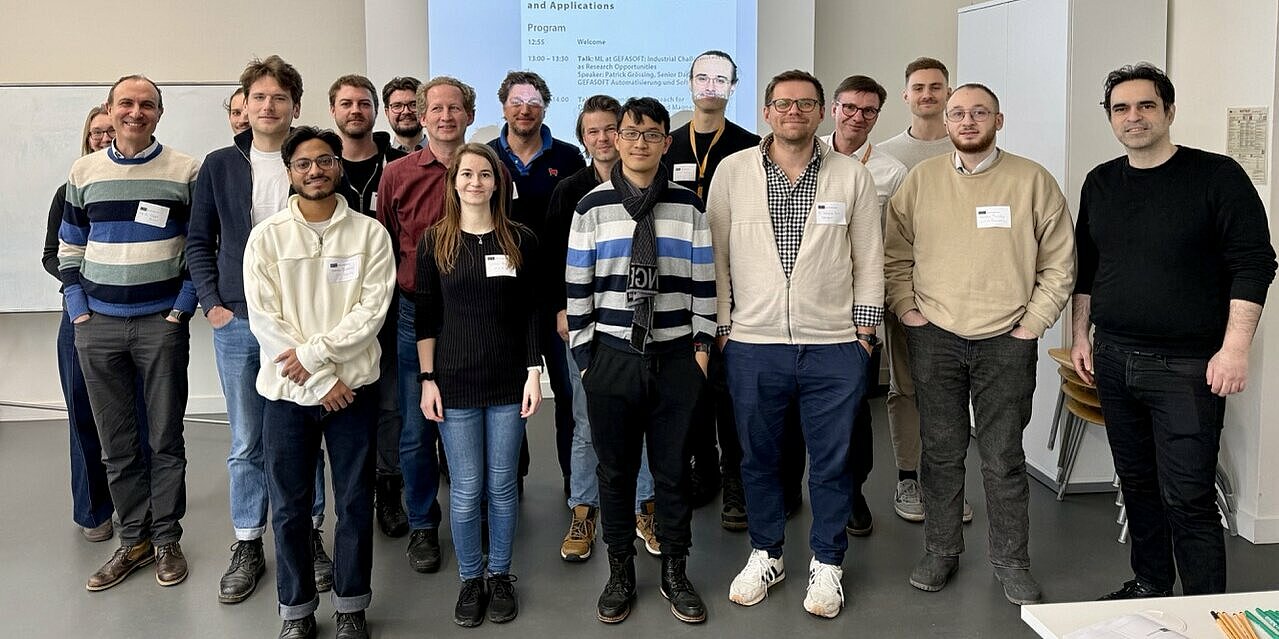
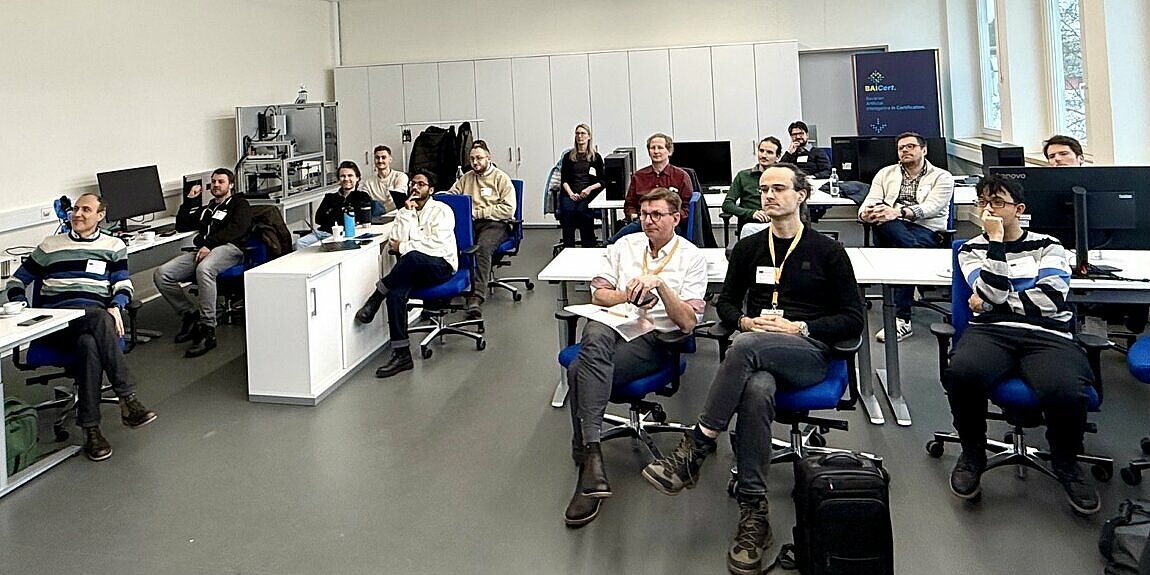
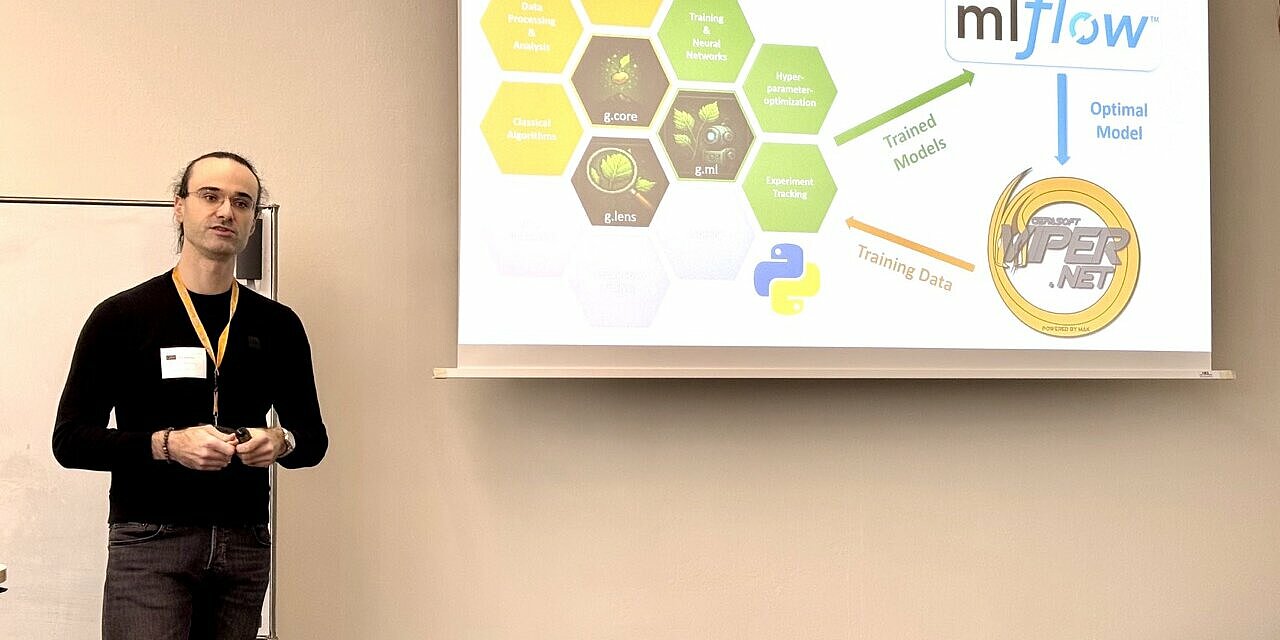
The event took place at the Prüfening Campus in the Laboratory for Imaging and Data Science and brought together scientists from various universities and representatives from industry.
The thematically focused workshop addressed current issues in the fields of computer vision, machine learning and their applications. The aim of the new format is to strengthen academic exchange between the participating locations, initiate scientific cooperation and, at the same time, specifically promote dialogue with regional industry.
The kick-off workshop was organised by Prof. Dr. Jürgen Frikel and Prof. Dr. Filippo Riccio (OTH Regensburg) together with Prof. Dr. Martin Storath and Prof. Dr. Andreas Weinmann from the Technical University of Würzburg-Schweinfurt.
Impulses from industry and research
The programme of the first workshop impressively reflected the breadth and topicality of the subject area. It kicked off with a presentation by Patrick Grössing and Christian Schärtl from GEFASOFT Automatisierung und Software GmbH, who presented specific industrial issues from practice and explicitly addressed them to the scientific community as open research questions. The presentation showed how real-world applications can provide new scientific impetus and initiate cooperation between universities and industry.
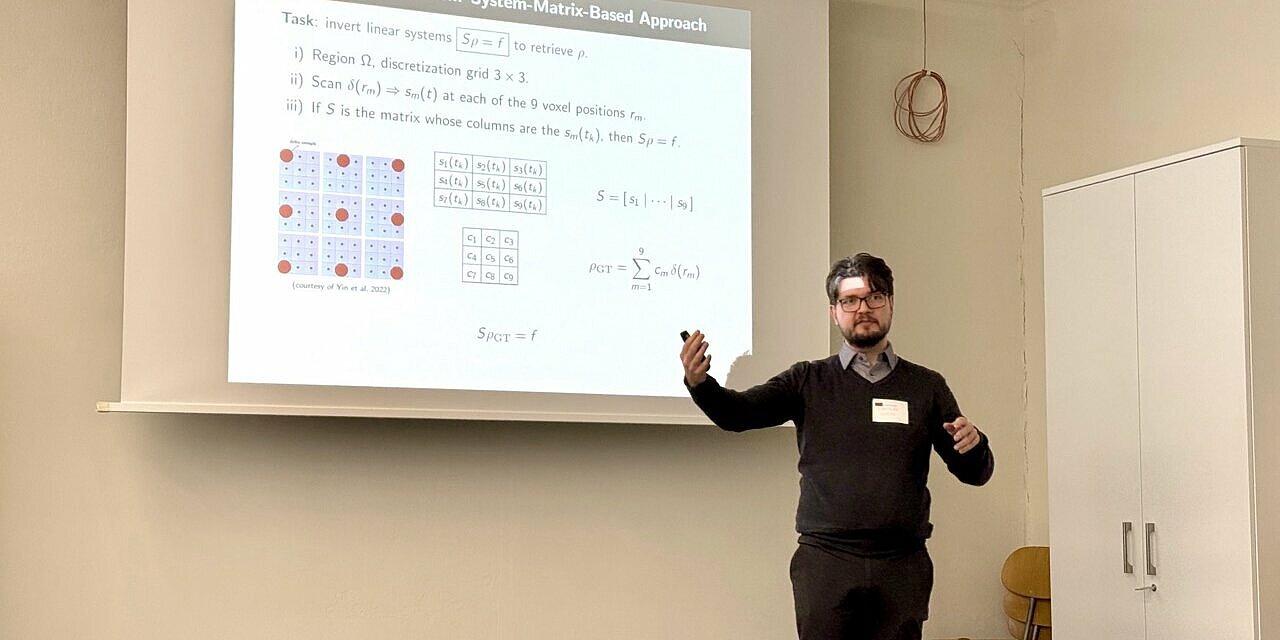
This was supplemented by scientific presentations from the participating universities, which presented the current state of research in their respective fields. Vladyslav Gapyak (Darmstadt University of Applied Sciences) presented modern plug-and-play approaches for inverse problems in magnetic particle imaging, while Prof. Dr. Andreas Weinmann presented current methods for drone detection from RGB image data. Both contributions highlighted the close interconnection between mathematical modelling, machine learning and application-oriented image processing.
From kick-off to established event
The workshop is to take place once per semester in future, alternating between the OTH Regensburg (Prüfening Campus) and Würzburg or Schweinfurt locations. This will establish a sustainable platform for regular scientific exchange in the Main-Danube region.
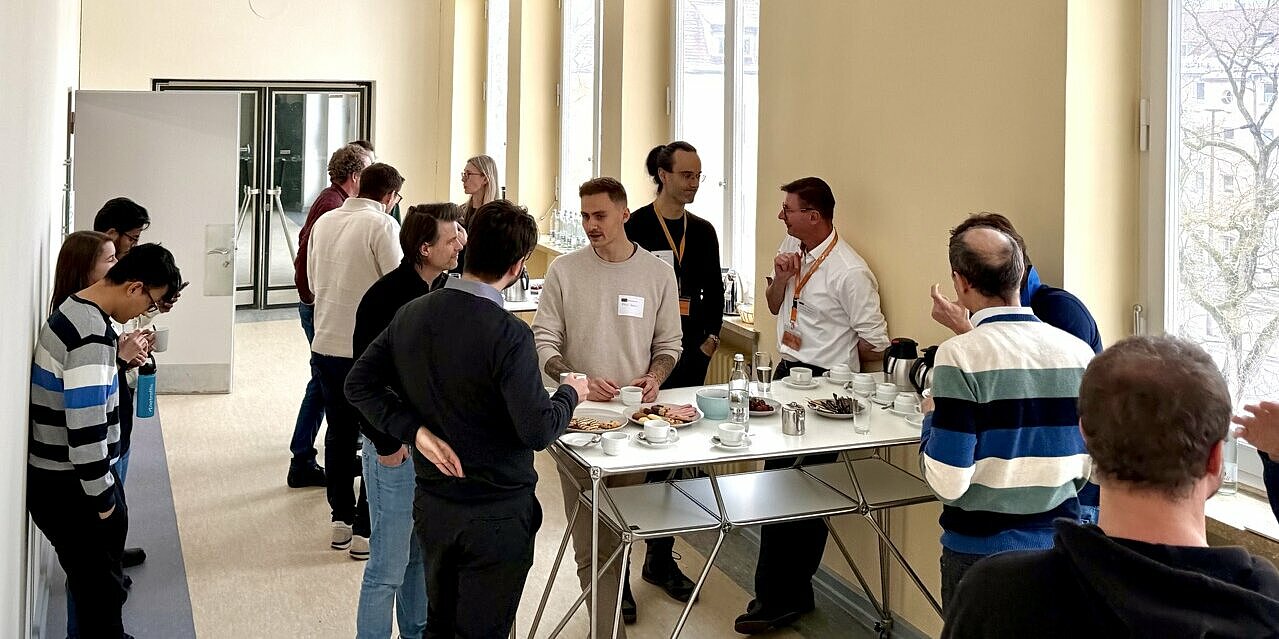
A particular concern of the organisers is to offer young scientists an open and friendly environment in which they can present their work, discuss it and make new contacts. The intensive discussion following the presentations and the personal exchanges during the breaks confirmed this concept already at the first meeting.
The launch of the Main-Danube Workshop was considered a great success by all participants and forms a strong basis for the continuation and further expansion of the workshop series.