In order to promote young architects, the BDA (Association of German Architects) Bavarian State Association has been awarding the ‘BDA Study Prize’ since 2016, which is a separate category of the renowned BDA Prize Bavaria and receives special recognition. The award recognises study projects that demonstrate architectural quality criteria and make a relevant contribution to current social issues and challenges.
Simple and sustainable
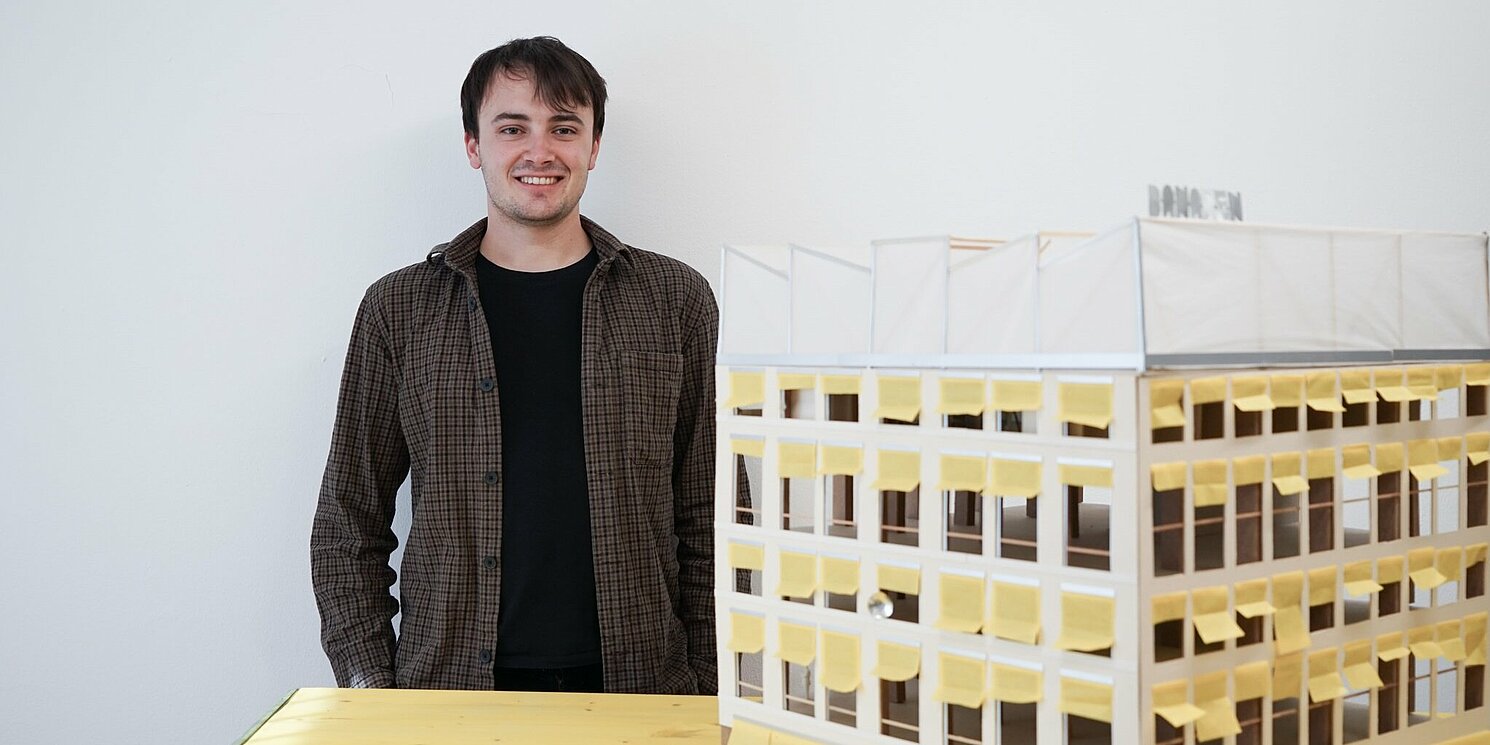
Julius Schönberger impressed the jury with his Matrix project. This was created as part of his bachelor's thesis at OTH Regensburg, supervised by Professor Markus Emde, and deals with structural visions for the future of the Regensburg campus. "Building has become increasingly complex over time. I was interested in ways to counteract this," says the prizewinner. For Julius Schönberger, planning that simplifies processes such as approval procedures or enables different uses for identical buildings is an expression of ‘simple construction’. At the same time, the aspect of sustainability was also important to him. ‘How simple and sustainable can it be?’ was his key question when writing his bachelor's thesis.
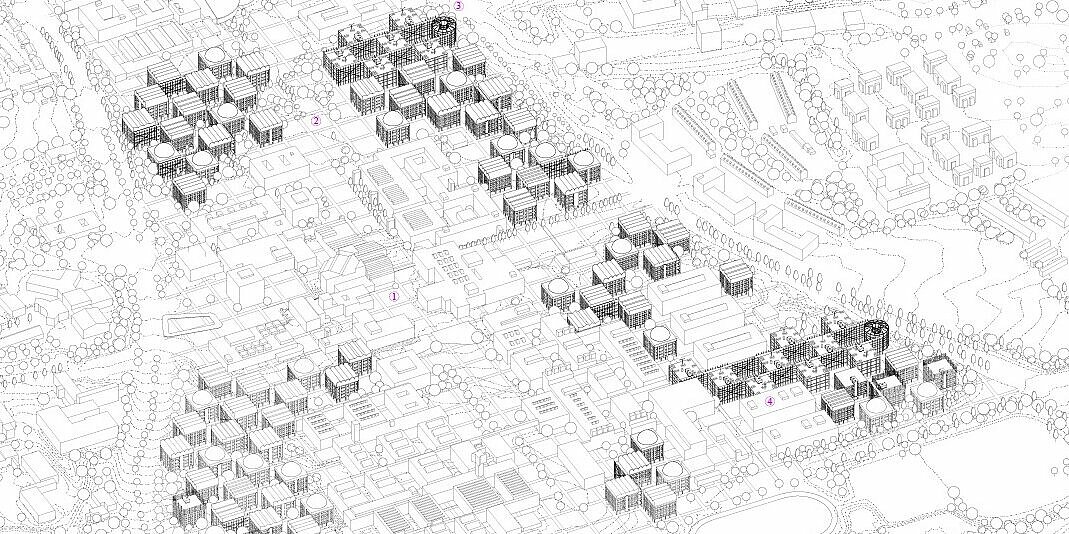
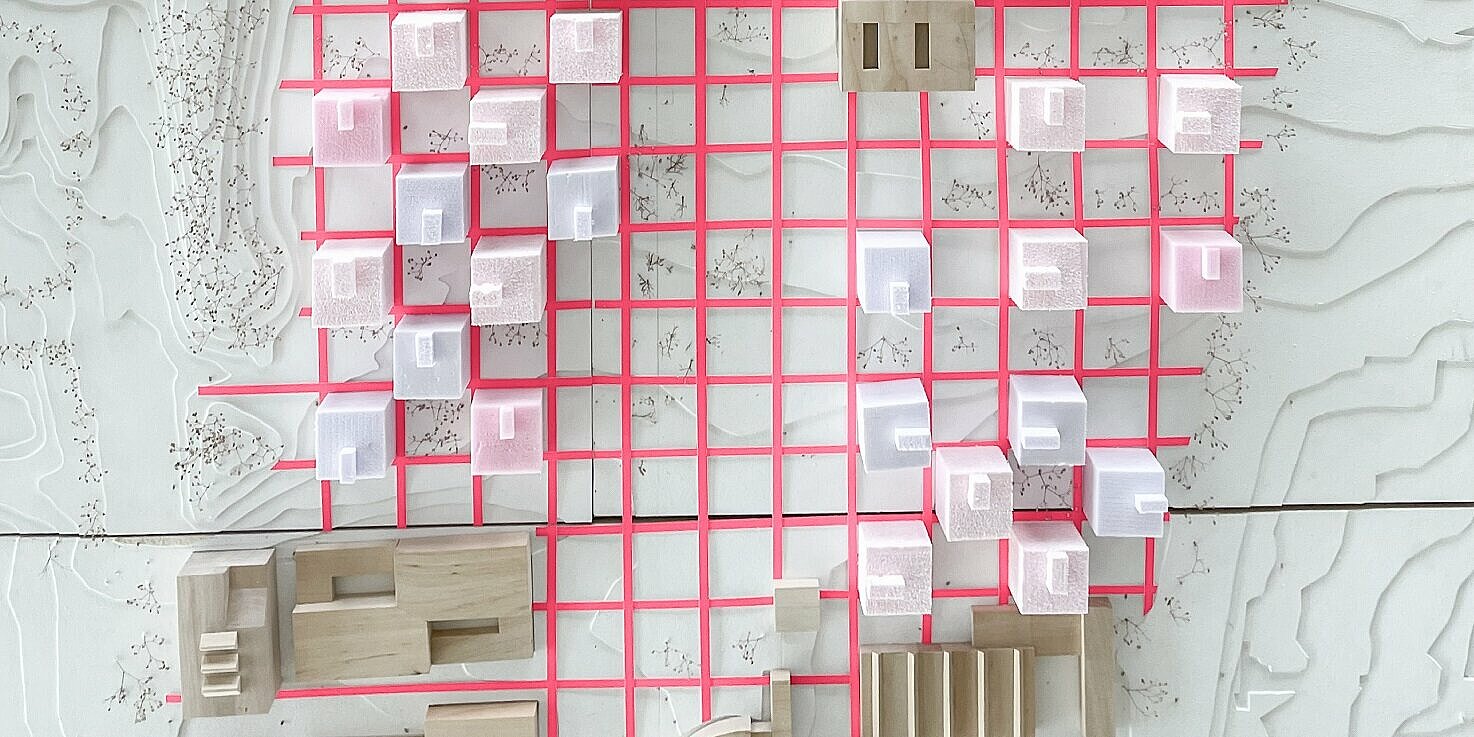
His solution is a matrix, similar to a large grid, which ties in with the existing basic grid of the campus architecture and develops it further. The horizontal and vertical axes define the roads and paths, while the individual fields in the matrix are the areas in which buildings can be constructed. Although these buildings are largely identical, the intelligent planning allows for different and flexible uses. The development of the buildings is made possible by the matrix and saves on infrastructure. For example, heat generation, development and infrastructure can be centralised and therefore carried out much more efficiently. In addition to the cost savings and acceleration of the construction processes, reductions in CO² emissions are also possible. For example, reversible wood-concrete composite ceilings were used, which can be easily separated or recycled at the end of their service life.
Campus as a real-time laboratory
"In his Matrix project, Julius Schönberger achieves a kind of synthesis of several utopias. Echoes of the structuralism of the 1960s, a large-scale urban planning ambition, a rethinking of the university campus as a high-density city, a matrix as a constructive grid with the aim of minimising energy consumption. The campus becomes a real-time laboratory. A highly contemporary vision of the future," was the jury's assessment of the award.
Even if the BDA award came as a surprise to him, Julius Schönberger's bachelor's thesis had already been honoured with the Best Practice Award from the Faculty of Architecture in the past. He is currently interested in the question of how historical building techniques can be further developed into contemporary architecture. For example, how can the half-timbered construction techniques of the past be transformed in such a way that something new can be created today? How can historical building materials such as hemp, coal, lime or clay be utilised today to meet contemporary challenges? The prizewinner, who is currently studying for a Master's degree in architecture at OTH Regensburg, is preoccupied with such considerations.
Prestigious architecture prize in three categories
The BDA Landesverband Bayern has been awarding the ‘BDA Preis Bayern’ since 1967. The prize is awarded jointly to clients and architects every three years and is intended to help raise public awareness of architecture that harmonises high-quality design with a commitment to socially sustainable and environmentally friendly construction. The prize awarded by BDA Bayern is one of the most prestigious architecture prizes in the country. In 2025, a total of 16 projects were honoured, including six prizes and six commendations, the BDA Members' Prize and a study prize with two commendations.