Can architecture be used as a yardstick for measuring a society's democratic self-image? Buildings in the context of politics, education and demography in particular should serve as a manifesto of democracy, reflecting social attitudes. The way buildings from undemocratic eras are dealt with also reveals the nature of today's society.
In short keynote speeches, buildings and settlements were examined in terms of their original intention and history of use:
Dr Dorothea Roos presented the Bundesschule Bernau – a Bauhaus educational building that has continued to be used in very different political systems. She showed how resilient the architectural concept is and what influence it has on its users.
Dr Regine Hess examined the interaction between architecture and migration using the settlements of Waldkraiburg and Eisenhüttenstadt as examples. She began by referring to the Brandenburg Gate as a defining national symbol on coins from both German states. Comparing the settlements, she showed how architectural language is used as a non-verbal means of communication to convey social attitudes.
Prof. Dr. Elke Nagel drew a line from the Nazi concentration camps to the chancellor's bungalow in the young Federal Republic. The deliberate distinction from Nazi architecture shaped the buildings of the Bonn Republic: humility, openness and transparency were intended to make the democratic reorientation visible. Examining the architectural evidence of Nazi tyranny remains essential to this day.
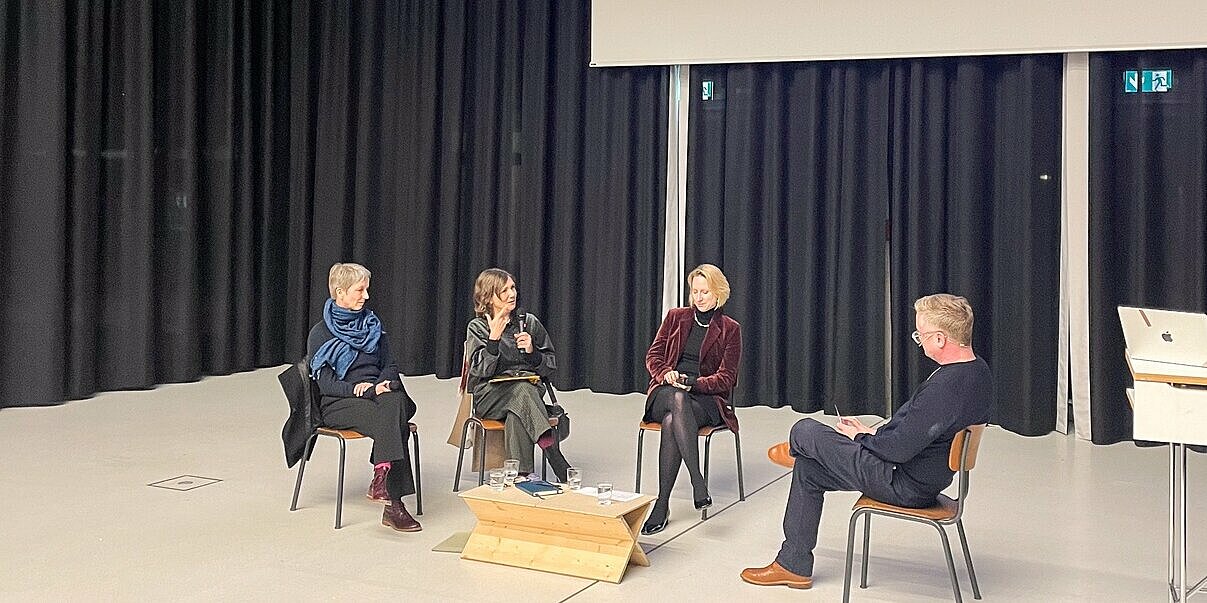
The subsequent discussion, moderated by Prof. Andreas Emminger, focused on key questions: Which architectural elements express democratic values? What can be learned from this for today's planning – both on a settlement scale and for representative individual buildings?
The potential of early migrant settlements for integration and inclusion was highlighted, as was the importance of transparency and equality as democratic guiding principles.
A lively exchange with the audience ensued on where democratic spaces are perceived in their own environment. Finally, the speakers formulated personal lessons learned from the democratic building ideas of the 20th century.